Dinner · Part 2 of 3: Instructions
Slow Cooker Autumn Vegetable Lasagna Step-by-step instructions
- Prep
- Cook
- Total
- Serves
- 6
Before you start
Before beginning the assembly, gather all ingredients and ensure the butternut squash and mushrooms are properly prepared. Shredding the squash uniformly and slicing the mushrooms into thin, even pieces will ensure they cook at the same rate as the lasagna sheets.
Have your slow cooker insert ready on a stable surface, and ensure you have a glass measuring cup for the tomato coulis. Preparing these elements ahead of time allows for a seamless layering process, ensuring that the assembly remains efficient and that the slow cooker can be started promptly without any delays.
Ingredients at a glance (5)
- 9 sheets lasagna sheets
- 2 cups shredded butternut squash
- 2 cups sliced mushrooms
- 2 cups shredded cheese
- 2 cups tomato coulis
Instructions
Initial Assembly
- Layering the basePlace a single layer of lasagna sheets at the bottom of the slow cooker insert. Ensure the base is covered to prevent sticking during the cooking process.Look for The bottom should be evenly covered with pasta.Tip Break the sheets if necessary to fit the shape of the oval cooker.
At the end of the initial assembly, the slow cooker should be neatly layered with pasta, vegetables, and sauce. The ingredients should look vibrant and well-distributed, with the tomato coulis beginning to seep into the lower layers. Check that the edges of the lasagna sheets are tucked in to prevent them from curling or drying out during the cooking process. Everything should look organized and ready for the long, slow heat to begin the transformation into a tender, integrated lasagna.
The Cooking Phase
- Adding vegetables and cheeseScatter the shredded butternut squash and mushrooms over the pasta layer. Sprinkle a portion of the shredded cheese on top to add creaminess to the vegetable mixture.Look for Spread the vegetables evenly to ensure consistent cooking.Tip Distribute the mushrooms uniformly for the best flavor balance.
During the cooking phase, the slow cooker will release a rich, savory aroma as the vegetables soften and the tomato coulis bubbles. The lasagna should appear to be simmering gently, with the steam trapped inside the cooker.
Check occasionally through the lid that the sauce remains at a steady simmer. The ingredients will gradually settle, and the cheese will start to melt into the top layer, creating a glossy, inviting surface that indicates the dish is progressing toward a tender, fully cooked state.
Final Resting
- Pouring sauce and finishingPour the tomato coulis over the layered ingredients. Repeat the layering process until all ingredients are used, finishing with a generous layer of cheese, then cover and cook on low for four hours.Look for The sauce should seep through the layers.Tip Ensure the top layer of pasta is well-covered by sauce to prevent drying.
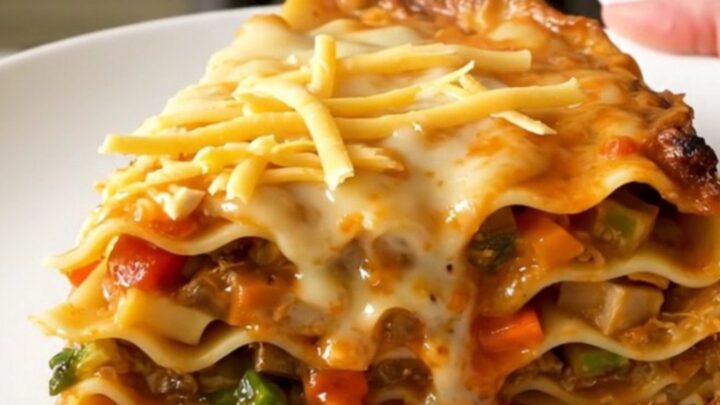
After the cooking is complete, the lasagna should appear firm and set, with the cheese fully melted and golden on top. The sauce should be thick and clinging to the pasta, rather than pooled at the bottom. Before serving, the ten-minute rest is critical; during this time, the dish will firm up significantly, making it much easier to lift out a clean slice. The lasagna should look inviting and steaming, with all elements perfectly combined and ready to be plated on a warm serving dish.
Common mistakes
A common mistake is using pasta sheets that are too thick or failing to ensure they are adequately covered by the sauce, which can result in undercooked, crunchy layers. Always ensure that the tomato coulis is distributed evenly between each layer to provide enough moisture for the pasta to rehydrate.
Another error is overloading the slow cooker, which can prevent heat from circulating properly and lead to uneven cooking. Avoid the temptation to open the lid frequently during the cooking process, as this releases heat and steam, significantly increasing the total time required for the lasagna to reach the proper doneness.
How to tell it’s done
The lasagna is done when the pasta sheets are fork-tender and the tomato coulis has thickened slightly, binding the layers together into a cohesive dish. The cheese on top should be completely melted and golden, indicating that the heat has penetrated throughout the entire assembly.
When you insert a knife into the center, it should slide through the pasta with minimal resistance, and the vegetables should be soft and fully cooked. Allow the dish to rest for ten minutes after turning off the slow cooker to let the layers set, ensuring a clean slice when serving.
Up next · Part 3 of 3
2 variations · storage & make-ahead · 3 answers · printable card
Tips, FAQ & printable recipe (Part 3)← Back to the ingredients (Part 1)