Dinner · Part 2 of 3: Instructions
Slow Cooker Autumn Root Vegetable and Thyme Soup Step-by-step instructions
- Prep
- Cook
- Total
- Serves
- 6
Before you start
Start by thoroughly washing and peeling all the root vegetables to remove any dirt or tough skins. Use a sharp chef knife to dice the potatoes and carrots into consistent, one-inch cubes. Uniformity in size is critical, as it ensures that every piece of vegetable softens at the same rate during the long cooking cycle.
Once everything is chopped, have your beef broth measured and ready, and check that your slow cooker is clean and positioned on a level, heat-resistant surface away from any wall outlets or clutter.
Ingredients at a glance (6)
- 2 lbs potatoes, peeled and diced
- 1 lb carrots, peeled and diced
- 3 cups parsnips, chopped
- 2 cups turnips, chopped
- 1 tbsp dried thyme
- 6 cups beef broth
Instructions
Vegetable preparation
- Prepare and combine ingredientsPeel and dice the potatoes and carrots into uniform pieces. Chop the parsnips and turnips. Add the potatoes and carrots to the bottom of the slow cooker, then layer the parsnips and turnips on top.Look for Vegetables should be cut into even sizes to ensure they cook at the same rate.Tip Keeping the pieces uniform helps the texture remain consistent once blended.
At the end of this phase, all vegetables should be peeled, chopped, and placed in the slow cooker. The potatoes, carrots, parsnips, and turnips should be arranged in a loose, even layer in the bottom of the vessel. Ensure your workspace is clean and that you have removed all vegetable scraps before moving on to the seasoning step. Everything should be ready for the addition of the aromatics and the liquid, which will be the final step before starting the slow cooking process.
Seasoning and broth addition
- Season and pour brothSprinkle the dried thyme evenly over the vegetables. Pour the beef broth over the mixture until the vegetables are just covered by the liquid.Look for The broth should almost submerge the vegetables for efficient cooking.Tip Ensure the thyme is distributed across the surface to flavor the entire pot.
During this phase, the thyme is scattered over the vegetables and the beef broth is poured in. The mixture should smell fragrant and earthy. Check that the broth covers the vegetables adequately without overfilling the slow cooker. Ensure the thyme is well-distributed to guarantee that the flavor develops evenly throughout the long cooking time. Once the lid is secure, the slow cooker is ready to be set to the low heat setting for the duration of the cooking cycle.
Cooking and blending
- Slow cook and blendCover the slow cooker and cook on low for 6 hours until all vegetables are tender. Once cooked, use an immersion blender directly in the pot to blend the soup until smooth and creamy.Look for Vegetables are done when they break apart easily with a fork.Tip Be careful with the hot steam when blending the soup to avoid burns.
At the end of the cooking cycle, the vegetables should be tender and the soup should have a rich, aromatic scent. Use your immersion blender to process the contents until smooth. Check the texture to ensure there are no large chunks remaining.
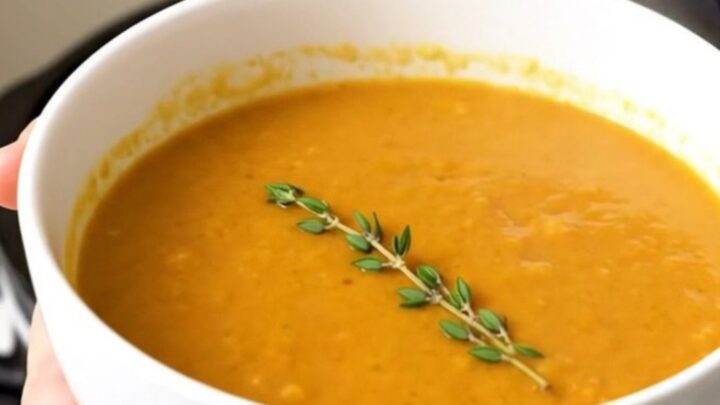
The final soup should be velvety and consistent in color. If you are serving immediately, ensure the soup is hot throughout before ladling it into bowls for serving. This is the final stage before the soup is ready to be plated and enjoyed.
Common mistakes
A common mistake is cutting the vegetables into uneven pieces, which leads to some parts becoming mushy while others remain hard. Always take the time to ensure your dice is consistent.
Another error is failing to fully submerge the vegetables; if the broth level is too low, the top layer of vegetables may steam rather than simmer, resulting in an uneven texture. Finally, avoid over-blending if you want to maintain a slight rustic quality, or under-blending if you prefer a perfectly uniform, smooth, and professional-grade texture for your soup.
How to tell it’s done
The soup is done when the vegetables are completely soft and offer no resistance when pierced with a fork. The liquid should have reduced slightly, and the aromatics should be well integrated into the broth. When blending, the mixture should become thick, smooth, and uniform in color.
If the soup appears too thin, you can continue to blend until the starch from the potatoes fully incorporates, creating a velvety, creamy consistency that coats the back of a spoon without feeling overly heavy or watery.
Up next · Part 3 of 3
2 variations · storage & make-ahead · 3 answers · printable card
Tips, FAQ & printable recipe (Part 3)← Back to the ingredients (Part 1)