Desserts · Part 2 of 3: Instructions
Slow Cooker Autumn Fig and Honey Jam Step-by-step instructions
- Prep
- Cook
- Total
- Serves
- 4
Before you start
Before beginning, ensure your slow cooker insert is clean and placed on a stable surface near a power outlet. Gather your fresh figs, white sugar, ground cinnamon, honey, and lemon juice. Have your measuring tools ready to ensure accuracy.
If you are planning to store the finished jam, prepare clean, sterilized jars and lids so they are ready to be filled immediately once the cooking process concludes. Keeping your workspace tidy will make the assembly process efficient and straightforward.
Ingredients at a glance (5)
- 1 lb fresh purple figs, quartered
- 1/2 cup white sugar
- 1/2 tsp ground cinnamon
- 1/4 cup honey
- 1 tbsp lemon juice
Instructions
Preparation of ingredients
- Prepare the fruitPlace the quartered fresh purple figs into the bottom of the slow cooker insert, ensuring they are distributed evenly across the base.Look for The figs should cover the bottom of the cooker in a single layer or slightly overlapping.Tip Ensure the figs are washed and dried before quartering to remove any debris.
At the end of this phase, the figs should be neatly quartered and placed in the slow cooker. The sugar and cinnamon should be evenly distributed over the fruit, and the honey and lemon mixture should be poured over everything, ready to begin the slow cooking process. Ensure the lid is securely in place before moving to the next phase.
Slow cooking phase
- Add aromatics and sweetenersScatter the white sugar over the figs, then sprinkle the ground cinnamon evenly across the top. In a glass measuring cup, whisk together the honey and lemon juice until well combined, then pour this mixture over the figs.Look for The sugar should coat the fruit pieces, and the honey mixture should drizzle evenly.Tip Whisking the honey and lemon juice together ensures the acidity is distributed throughout the jam.
During this phase, the slow cooker does the work. Check the jam after three hours. The fruit should be completely soft and the liquid should be turning into a thick, glossy syrup.
The aroma in the kitchen should be fragrant with cinnamon and sweet fig. If the jam still appears too thin, continue to cook it for an additional 30 minutes.
Finishing and cooling
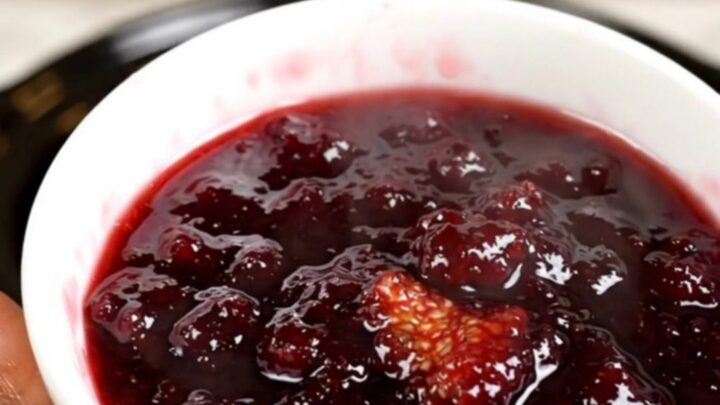
- Cook and serveCover the slow cooker and cook on the low setting for approximately three hours. Once the jam is dark purple, glossy, and steaming, remove it from the heat and transfer it to a serving bowl or storage jars.Look for The jam is ready when it has thickened significantly and the fruit has broken down into a glossy, dark purple consistency.Tip Allow the jam to cool slightly before serving to let the flavors settle and the texture firm up.
Once the jam reaches the desired thickness, turn off the slow cooker. The final product should be a deep, rich purple color with a glossy sheen. Allow the jam to cool slightly in the bowl or jars. As it cools, the texture will continue to set and thicken, making it perfect for spreading on crusty bread or serving with cheese.
Common mistakes
A common mistake is cooking the jam for too long, which can lead to a burnt sugar flavor or an overly stiff texture. Always check the consistency after three hours. Another mistake is failing to mix the honey and lemon juice thoroughly before adding; uneven distribution can lead to pockets of acidity or intense sweetness.
Finally, avoid lifting the lid of the slow cooker unnecessarily during the cooking time, as this releases heat and moisture, which can disrupt the thickening process.
How to tell it’s done
The jam is done when it has reached a thick, spreadable consistency and the fruit has completely broken down into a glossy, dark purple mixture. You will notice that the liquid has reduced and coated the back of a spoon.
When you stir the jam, it should move slowly and hold its shape. There is no protein to test, so rely on the visual cues of color and thickness to determine that it is ready to be transferred to storage containers.
Up next · Part 3 of 3
2 variations · storage & make-ahead · 3 answers · printable card
Tips, FAQ & printable recipe (Part 3)← Back to the ingredients (Part 1)