Desserts · Part 2 of 3: Instructions
Slow Cooker Apple Rum Raisin Clafoutis Step-by-step instructions
- Prep
- Cook
- Total
- Serves
- 6
Before you start
Before starting, ensure all ingredients are measured and ready for assembly. Peel, core, and chop the apples into uniform pieces. If using pre-soaked raisins, ensure they are drained of excess liquid to maintain the integrity of the batter.
Have the slow cooker insert clean and dry, positioned on a heat-resistant surface, and ensure all necessary equipment is within easy reach for a smooth assembly process.
Ingredients at a glance (4)
- 4 apples, peeled, cored and chopped
- 1/2 cup raisins, soaked in rum
- 1/2 cup cane sugar
- 2 cups prepared clafoutis batter
Instructions
Layering the base
- Prepare the Fruit BaseAdd the chopped apples into the bottom of the slow cooker insert. Distribute them evenly to ensure a flat base for the remaining ingredients.Look for Apples are spread in an even layer across the bottom of the slow cooker insert.Tip Cut the apple pieces into uniform sizes to ensure they cook at the same rate.
- Add Raisins and SugarScatter the rum-soaked raisins over the apples. Sprinkle the cane sugar uniformly across the top of the fruit layer to provide sweetness as the dessert cooks.Look for Raisins and sugar are distributed evenly over the apple layer.Tip Drain the raisins slightly if they are heavily saturated with rum to prevent excess liquid.
The fruit base should be arranged in an even, single layer at the bottom of the slow cooker. The raisins should be scattered uniformly to ensure every serving contains a balanced amount of fruit and sweetness.
The apple pieces should look uniform in size, suggesting they will cook at a consistent rate without any large chunks remaining too firm.
Adding the batter
- Pour the BatterSlowly pour the prepared clafoutis batter over the apple and raisin mixture. Ensure the batter covers the fruit entirely for a uniform custard texture.Look for Batter covers the fruit mixture completely and settles around the apple pieces.Tip Pour slowly to avoid disturbing the arrangement of the apples and raisins.
The batter should be poured slowly to create a smooth, even surface over the fruit. It should look thick enough to coat the apples without being overly heavy. Ensure the batter fills the gaps between the apple pieces, creating a uniform mixture that will rise and set into a custard during the cooking phase.
Final cook
- Cook and ServeCover the slow cooker and cook on low for approximately two hours until the custard is set. Ensure the internal temperature of the egg-based custard reaches 160°F (71°C) to be fully cooked. Serve warm on a plate.Look for Custard is set, golden, and firm to the touch in the center.Safe temperature 160°F (71°C) internal temperature (egg dishes)Tip Check the center with a small knife to ensure it comes out clean.
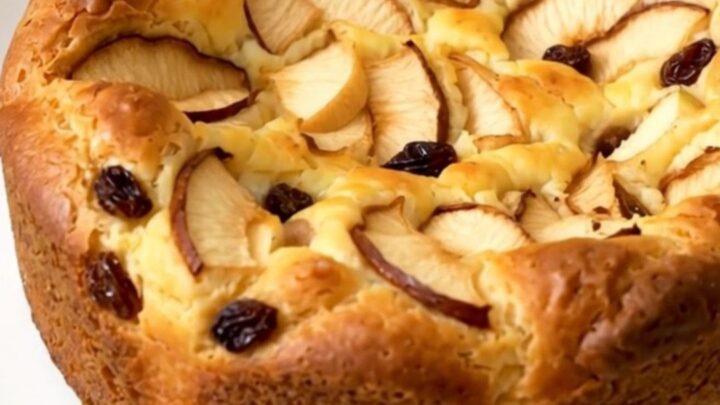
The finished clafoutis should be golden brown and look firm. The edges should appear slightly set away from the sides of the slow cooker. The aroma should be sweet and fragrant, with the scent of cooked apples and warm spices. Check that the center is no longer liquid and has reached the required safe internal temperature.
Common mistakes
Avoid overfilling the slow cooker, as the batter needs space to expand and set properly. If the batter is poured too quickly, it may displace the fruit, leading to an uneven distribution.
Avoid lifting the lid frequently during the cooking process, as this releases heat and steam, which are essential for the custard to set thoroughly. Finally, ensure the custard reaches the required temperature to avoid a raw or runny texture.
How to tell it’s done
The clafoutis is done when the custard in the center is fully set and firm to the touch. It should appear golden on the surface, and a small knife inserted into the middle should come out clean, free of raw liquid batter.
For food safety, the internal temperature of the egg-based custard must reach 160°F (71°C). Allow it to rest for at least 15 minutes before serving to ensure the texture settles properly.
- Egg dishes: 160°F (71°C) in the thickest part
Up next · Part 3 of 3
2 variations · storage & make-ahead · 3 answers · printable card
Tips, FAQ & printable recipe (Part 3)← Back to the ingredients (Part 1)