Dinner · Part 3 of 3: Tips & recipe card
Apple Bacon Cheddar Stuffing: Slow Cooker Holiday Side Tips, FAQ & printable recipe

- Prep
- Cook
- Total
- Serves
- 8
Tips for success
For a crispier top, after slow cooking, transfer the stuffing to a baking dish and broil for 2-3 minutes until the top is golden and crunchy.
Alternatively, you can cook the stuffing on HIGH for the last 30 minutes to encourage browning. If you prefer a more traditional stuffing texture, reduce the broth by 1/4 cup and cook for 15 minutes less.
To make this recipe ahead, prepare the stuffing mixture, cover, and refrigerate for up to 24 hours before cooking. You may need to add 30-45 minutes to the cooking time if starting from cold.
Leftover stuffing can be reheated in the microwave or in a 350°F oven. Store leftovers in an airtight container in the refrigerator for up to 4 days.
Variations
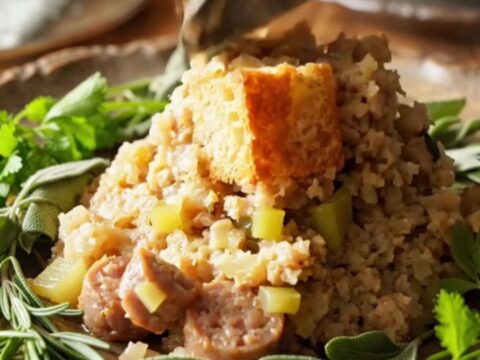
- Sausage and Apple Stuffing: Replace the bacon with 1 pound of cooked, crumbled breakfast sausage. Omit the salt and reduce the broth to 1 1/2 cups total. Add 1/2 cup dried cranberries for extra sweetness.
- Herb and Mushroom Stuffing: Add 8 ounces of sliced cremini mushrooms sautéed in butter to the bread mixture. Use 1/4 cup fresh parsley and 2 tablespoons fresh thyme instead of sage. Reduce the bacon to 1/2 cup.
- Pear and Gorgonzola Stuffing: Substitute 2 ripe but firm pears for the apples and use 1 1/2 cups crumbled Gorgonzola instead of cheddar. Add 1/2 cup chopped walnuts for crunch.
- Butternut Squash and Kale Stuffing: Add 2 cups of roasted butternut squash cubes and 2 cups of chopped kale (stems removed) to the bread mixture. Use 1 cup of Gruyère instead of cheddar and increase the broth to 2 cups.
Storage and make-ahead
- Fridge
- Store in an airtight container in the refrigerator for up to 4 days. Reheat in the microwave or oven until hot.
- Freezer
- Freeze the cooked stuffing in a freezer-safe container for up to 3 months. Thaw overnight in the refrigerator before reheating.
- Reheat
- Reheat in a 350°F oven for 15-20 minutes, or in the microwave in 1-minute intervals, stirring between, until hot.
Store leftover stuffing in an airtight container in the refrigerator for up to 4 days. Reheat in the microwave or in a 350°F oven until warmed through. The stuffing will absorb moisture as it sits, so add a splash of broth or cider when reheating if needed.
This stuffing can be assembled up to 24 hours in advance. Combine all the ingredients in the slow cooker insert, cover, and refrigerate. When ready to cook, place the insert in the slow cooker and cook on LOW for 3 1/2 to 4 hours, or until heated through and the apples are tender.
Serving ideas
Serve this stuffing as a side dish for Thanksgiving, Christmas, or any fall gathering. It pairs beautifully with roasted turkey, chicken, or pork.
The sweet-savory flavor profile also works well alongside green beans, mashed potatoes, and cranberry sauce. Garnish with fresh sage and extra bacon for a beautiful presentation.
For a hearty main dish, serve the stuffing topped with a fried or poached egg for brunch. It also makes a delicious filling for stuffed peppers or mushrooms.
Leftovers can be used to make stuffing waffles or as a topping for salads. This versatile dish is sure to become a holiday favorite.
Frequently asked questions
Can this stuffing be made without a slow cooker?
Is it necessary to use day-old bread?
Can this recipe be doubled?
What is the best way to reheat leftover stuffing?
Can this stuffing be frozen?
Apple Bacon Cheddar Stuffing: Slow Cooker Holiday Side

Ingredients
- 10 cups cubed sourdough bread (1-inch cubes)
- 2 Honeycrisp apples, diced
- 1 cup crispy thick-cut bacon, crumbled (about 8 slices)
- 2 cups sharp white cheddar, shredded
- 1/4 cup fresh sage leaves, chopped
- 1 1/2 cups apple cider
- 1/2 cup chicken broth
- 2 tbsp unsalted butter, melted
- 1/2 tsp kosher salt
- 1/2 tsp black pepper
Instructions
- Cut the sourdough bread into 1-inch cubes and place them in a very large mixing bowl. Dice the Honeycrisp apples into 1/2-inch pieces, leaving the skin on for texture. Cook the thick-cut bacon in a skillet over medium heat until crisp, then drain on paper towels and crumble into bite-size pieces. Shred the sharp white cheddar and chop the fresh sage leaves.
- In a small bowl, whisk together the apple cider, chicken broth, melted butter, kosher salt, and black pepper until well combined. Set the broth mixture aside while assembling the stuffing.
- Add the diced apples, crumbled bacon, shredded cheddar, and chopped sage to the bowl with the sourdough cubes. Toss gently with your hands or a wooden spoon until the ingredients are evenly distributed throughout the bread.
- Pour the cider broth mixture evenly over the bread mixture. Use a spatula or your hands to gently fold and turn the mixture until all the bread cubes are moistened with the broth. The bread should be damp but not soggy.
- Lightly grease the insert of a 6-quart slow cooker with butter or nonstick spray. Transfer the stuffing mixture into the slow cooker and spread it into an even layer. Press down gently with the back of a spoon to compact it slightly.
- Cover the slow cooker with the lid and cook on LOW for 3 1/2 hours. Do not lift the lid during cooking, as this releases heat and extends the cooking time. The stuffing is done when the apples are tender and caramelized, the cheese is melted, and the top is golden and slightly crisp around the edges.
- After cooking, turn off the slow cooker and let the stuffing rest, covered, for 10 minutes. This allows the bread to absorb any remaining liquid and the flavors to meld. Gently fluff the stuffing with a fork before serving.
- Spoon the warm stuffing into a serving dish. Garnish with extra crispy bacon crumbles and fresh sage leaves before serving. Serve immediately while warm.
Estimated nutrition per serving
- Calories
- 410
- Protein
- 18 g
- Carbohydrates
- 45 g
- Fat
- 18 g
- Fiber
- 3 g
- Sugar
- 12 g
Next recipe

Slow-Cooker Jalapeño Cheddar Cornbread Dressing
See the recipe → →This recipe is based on a short cooking video and is published under the pen name Clara Weller. It was checked before publication, but errors can slip through. Nutrition, when shown, is an estimate. Read more in our editorial policy and on our food safety page.
More recipes to try

Creamy Bacon and White Cheddar Sweet Potato Casserole
Total time: 3 h 50 min
Slow-Cooker Honey Thyme Butternut Squash Side Dish
Total time: 3 h 15 min
Crockpot Honey Rosemary Parmesan Acorn Squash
Total time: 3 h 40 min
Festive Cranberry Pecan Wild Rice Stuffing
Total time: 3 h 45 min
Classic Slow-Cooker Sourdough Stuffing for Easy Holiday Meals
Total time: 4 h