Dinner · Part 1 of 3: Ingredients
Slow Cooker Amish Molasses Chicken for Effortless Dinners
- Prep
- Cook
- Total
- Serves
- 6
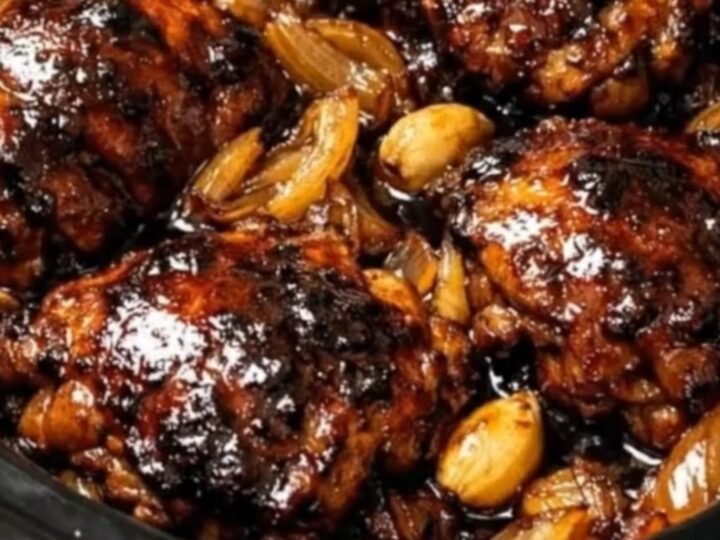
Looking for an effortless dinner that delivers deep, comforting flavors with minimal hands-on preparation? This slow cooker Amish molasses chicken is the ultimate set-and-forget meal. By combining juicy chicken thighs with rich molasses, whole garlic, and sliced onions, you create a deeply caramelized glaze that infuses the meat as it cooks. The result is exceptionally tender chicken that falls apart at the touch of a fork.
This recipe brings the rustic, hearty flavors of traditional Amish cooking straight to your modern kitchen. Slow cooking is the perfect method for chicken thighs, allowing the tough connective tissues to break down slowly while absorbing the robust sweetness of unsulphured molasses.
The addition of whole garlic cloves and sliced onions creates a savory counterpoint to the sweet glaze, resulting in a perfectly balanced sauce. It is a comforting, warm dish that requires very little active prep time, making it ideal for busy weekdays or lazy Sundays.
Ingredients
- 3 lb bone-in skinless chicken thighs
- 1 large yellow onion, sliced
- 8 whole garlic cloves, peeled
- 1/2 cup unsulphured molasses
Why this recipe works
The magic of this recipe lies in the slow-cooking process, which allows the molasses to caramelize gently without burning. Molasses has a high sugar content, which would easily scorch over direct high heat on a stovetop or in a hot oven.
In the gentle, moist environment of a slow cooker, the molasses slowly liquefies, blends with the natural juices released by the chicken, and thickens into a glossy, rich glaze that clings beautifully to the meat.
Using chicken thighs instead of breasts is crucial for the success of this long-cooking method. Chicken thighs contain more fat and connective tissue, which means they remain incredibly juicy and tender even after six hours in the cooker.
As the chicken cooks, it releases savory juices that dilute the thick molasses, creating a perfectly balanced braising liquid that self-bastes the chicken throughout the entire cooking cycle.
Notes and substitutions
When selecting ingredients, opt for unsulphured dark molasses rather than blackstrap molasses. Blackstrap molasses is highly concentrated and has a bitter, medicinal taste that can easily overpower the dish.
Unsulphured dark molasses provides the ideal balance of deep sweetness and smoky undertones. For the chicken, bone-in thighs yield the most flavorful results and help keep the meat moist, but boneless thighs can be substituted if you adjust the cooking time slightly.
You do not need any fancy equipment for this recipe—a standard six-quart slow cooker is perfect. To ensure the best results, resist the temptation to lift the lid during the first five hours of cooking. Every time the lid is removed, significant heat escapes, which can add up to twenty minutes to the total cooking time. A digital meat thermometer is also highly recommended to verify the chicken is safely cooked.
- bone-in skinless chicken thighs: boneless, skinless chicken thighs or chicken drumsticks, adjusting the cook time slightly shorter for boneless cuts
- unsulphured molasses: dark brown sugar mixed with a tablespoon of maple syrup, though the signature deep, smoky flavor will be less pronounced
Equipment
- 6-quart slow cooker
- cutting board
- chef's knife
- measuring cups and spoons
- tongs
- ladle
Up next · Part 2 of 3
5 steps · 6 h of cooking · what to look for at each stage
Step-by-step instructions (Part 2)