Dinner · Part 1 of 3: Ingredients
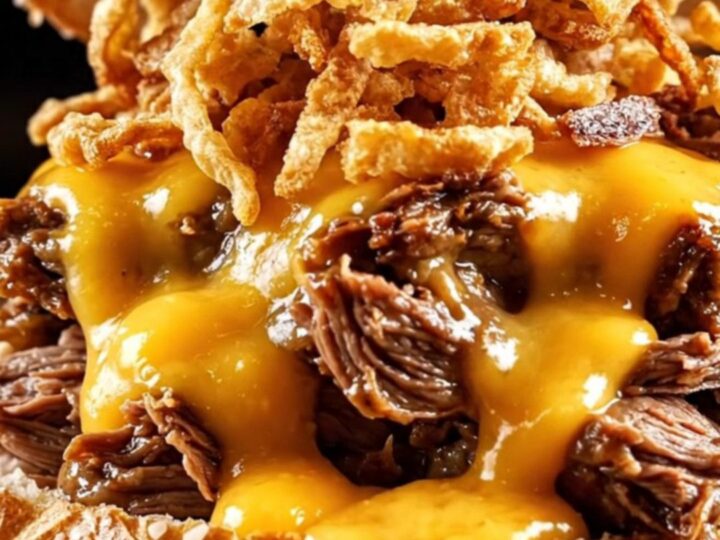
Amber Ale Beer Cheese Crockpot Beef on Pretzel Buns
- Prep
- Cook
- Total
- Serves
- 6
Beer cheese amber ale Crockpot beef loves pretzel buns! This is a dump-and-go slow cooker recipe that turns a few simple ingredients into a pub-style feast. A chuck roast simmers all day in Bavarian amber ale with Dijon and butter, then gets shredded and stirred with sharp cheddar beer cheese sauce. Pile it high on warm salted pretzel buns and top with crispy fried onions for a sandwich that's rich, malty, and deeply satisfying.
This recipe is all about letting the slow cooker do the heavy lifting. You simply place a beef chuck roast in the Crockpot, pour over amber ale, add Dijon, Worcestershire, garlic, and a stick of butter, then walk away. Eight hours later, the beef is fork-tender and ready to be shredded.
Stir in a generous amount of sharp cheddar beer cheese sauce, and you have a filling that's perfect for pretzel buns. The combination of malty beer, tangy mustard, and creamy cheese creates a sauce that clings to every strand of beef. It's the kind of meal that feels like a cozy Bavarian gastropub in your own kitchen, with minimal effort and maximum flavor.
Ingredients
- 3 lb beef chuck roast
- 1 1/2 cups Bavarian amber ale
- 2 tbsp Dijon mustard
- 1 tbsp Worcestershire sauce
- 4 cloves garlic, minced
- 1 stick butter
- 200 g sharp cheddar beer cheese sauce
- 6 warm salted Bavarian pretzel buns
- crispy fried onions, for serving
Why this recipe works
Slow cooking a chuck roast in beer and butter does two things: it breaks down the collagen in the meat, turning a tough cut into tender, shreddable strands, and it infuses the beef with the malty, slightly bitter notes of the amber ale.
The Dijon mustard adds a sharp tang that cuts through the richness, while the Worcestershire deepens the savory umami. Cooking on LOW for 8 hours ensures the meat reaches that perfect pull-apart texture without drying out, as the liquid keeps it moist and the butter adds richness.
Adding the beer cheese sauce after shredding, rather than during the long cook, keeps the cheese sauce's flavor bright and its texture smooth. The cheese sauce coats the warm beef strands like a velvety glaze, creating a cohesive, indulgent filling. The pretzel buns provide a chewy, salty contrast that stands up to the saucy beef, and the crispy fried onions add a welcome crunch. This method builds layers of texture and flavor that make every bite satisfying.
Notes and substitutions
Choose a well-marbled chuck roast for the best results. The fat renders during cooking, keeping the beef moist and adding flavor. If you prefer a leaner option, brisket works, but adjust the cooking time as it can dry out more quickly.
The amber ale is key: a Bavarian-style amber or a brown ale adds malty sweetness and a hint of toast. Avoid overly hoppy beers, which can turn bitter during the long cook. Non-alcoholic beer also works if you prefer to skip the alcohol.
The sharp cheddar beer cheese sauce can be store-bought or homemade. If making your own, use a good-quality sharp cheddar and a light beer to keep the sauce smooth. The sauce should be thick enough to coat the back of a spoon but still pourable.
Warm the sauce before adding it to the beef to help it incorporate evenly. If the sauce is too thick, thin it with a splash of warm ale. The crispy fried onions are optional but highly recommended—they add a textural contrast that brightens the rich beef.
- Bavarian amber ale: Any amber ale or brown ale; use non-alcoholic beer for a milder flavor.
- Sharp cheddar beer cheese sauce: Use a store-bought beer cheese sauce or make a quick homemade version with sharp cheddar, beer, and a roux.
- Beef chuck roast: Beef brisket or round roast; adjust cooking time if leaner.
- Pretzel buns: Soft hoagie rolls or brioche buns if pretzel buns are unavailable.
Equipment
- 6-quart slow cooker
- Two forks for shredding
- Measuring cups and spoons
- Chef's knife and cutting board
- Small bowl for mustard mixture
- Ladle for serving
Up next · Part 2 of 3
7 steps · 8 h of cooking · what to look for at each stage
Step-by-step instructions (Part 2)