Dinner · Part 1 of 3: Ingredients
Honey Chipotle Crockpot Pulled Beef Tortas
- Prep
- Cook
- Total
- Serves
- 6
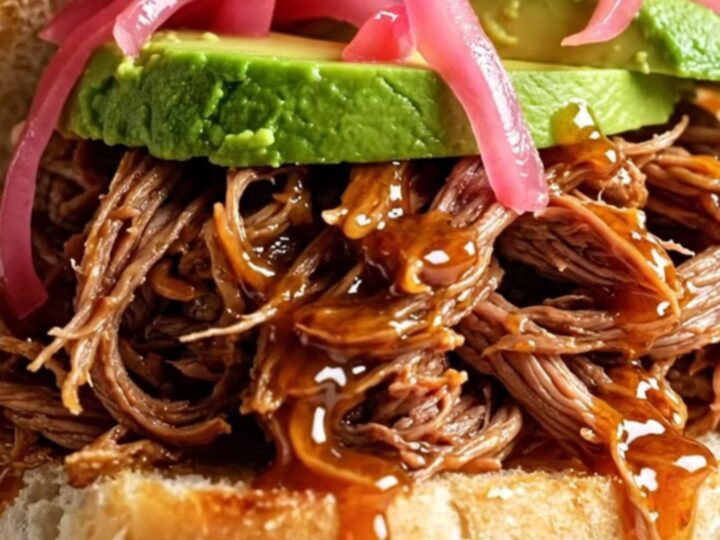
Imagine a slow cooker filled with a beef chuck roast, transformed over eight hours into a pile of tender, smoky-sweet shredded meat, glazed with honey and chipotle. That's the heart of these tortas. Piled onto a toasted telera roll with creamy avocado and tangy pickled onions, each bite balances rich heat, mellow sweetness, and bright freshness. This is a hands-off dinner that feels like a special occasion, yet comes together with minimal effort.
These honey chipotle Crockpot pulled beef tortas are the kind of meal that fills the kitchen with a warm, spicy-sweet aroma and delivers deep, layered flavor with almost no active work. A chuck roast simmers low and slow in a blended sauce of chipotles in adobo, raw honey, lime juice, cumin, and garlic, until it's fork-tender and bathed in a glossy, sticky glaze.
The beef is then shredded and piled onto toasted telera rolls with avocado and pickled red onions. The result is a sandwich that's simultaneously comforting and exciting—smoky, sweet, tangy, and rich.
Ingredients
- 3 lb beef chuck roast
- 100 g chipotles in adobo sauce
- 90 g raw honey
- 60 ml fresh lime juice
- 1 tbsp ground cumin
- 4 cloves garlic, minced
For serving
- 6 telera rolls, split and toasted
- 2 ripe avocados, sliced
- 1 cup pickled red onions
Why this recipe works
The magic of this recipe lies in the slow cooker's ability to break down the collagen in beef chuck over a long, gentle cook. Eight hours on LOW turns a tough, well-exercised cut into meat that pulls apart with the slightest pressure from a fork.
The low, steady heat also allows the honey and chipotle flavors to meld and concentrate, reducing into a glaze that clings to every strand of beef. This is the kind of transformation that only time can achieve, and the slow cooker does it effortlessly.
The sauce itself is a study in balance. Chipotles in adobo bring smoky depth and a moderate, lingering heat, while raw honey adds a floral sweetness that rounds out the spice. Fresh lime juice cuts through the richness with bright acidity, and cumin and garlic provide earthy, savory notes.
Blending these ingredients before adding them to the pot ensures every bite of beef is seasoned evenly, and the natural sugars in the honey help create that signature sticky glaze as the sauce reduces.
Notes and substitutions
Beef chuck roast is the ideal cut here because its generous marbling and connective tissue break down into moist, tender shreds. If you can't find chuck, brisket or bottom round will work, though you may need to adjust the cooking time slightly.
Chipotles in adobo are smoked jalapeños packed in a tangy tomato-vinegar sauce; they're sold in small cans in the Mexican foods aisle. The amount called for (100 grams, about half a small can) provides a medium heat level—adjust to taste if you prefer it milder or spicier.
Raw honey is preferred for its deeper, more complex sweetness, but any honey will do. Fresh lime juice is important; bottled juice lacks the bright, zesty character that helps balance the dish. Telera rolls are soft, oval Mexican sandwich rolls with a crisp crust; bolillo rolls or any sturdy sandwich roll can be substituted. For the pickled onions, use your favorite store-bought or homemade version—they add a crucial vinegary pop that cuts through the rich beef.
- beef chuck roast: Beef brisket or bottom round roast can be used; adjust cooking time as needed.
- raw honey: Regular honey or maple syrup can replace raw honey; maple syrup will add a slightly different flavor.
- telera rolls: Bolillo rolls or soft sandwich rolls work well if telera rolls are unavailable.
- pickled red onions: Quick-pickled onions or thinly sliced red onions tossed with lime juice can be substituted.
Equipment
- Slow cooker (5-6 quart)
- Blender (optional)
- Two forks
- Cutting board
- Chef's knife
- Measuring spoons
- Measuring cups
- Toaster or oven for rolls
Up next · Part 2 of 3
4 steps · 8 h of cooking · what to look for at each stage
Step-by-step instructions (Part 2)