Dinner · Part 2 of 3: Instructions
Slow-Cook Glazed Turkey Roast for Tender Results Step-by-step instructions
- Prep
- Cook
- Total
- Serves
- 6
Before you start
Before you begin, ensure your turkey breast is fully thawed if it was frozen, as a partially frozen roast will not cook evenly. Keep raw poultry refrigerated until ready to prepare, leaving it out at room temperature for no more than 30 minutes before roasting.
Preheat your oven early so it is at the correct temperature when you are ready to start. Gather your roasting pan, carving knife, and thermometer so everything is within reach during the cooking process.
Ingredients at a glance (2)
- 3 lb boneless turkey breast roast
- 1/2 cup sweet glaze, store-bought or made ahead
Instructions
Preparation and seasoning
- Prepare the turkeyPreheat your oven to 325°F (163°C). Place the chilled turkey roast directly into a foil roasting pan, leaving it out of the refrigerator for at most 30 minutes before roasting to maintain food safety.Look for The turkey is placed in the pan and ready for the oven.Tip Ensure the turkey is patted dry with paper towels before roasting for better browning.
The turkey should be neatly placed in the roasting pan. Ensure that the oven has reached a stable 325°F (163°C). The meat should be dry on the surface, which helps the heat distribute evenly. At this stage, everything is organized and ready to go, and the kitchen should be preheated and prepared for the long, slow roasting process that is about to begin.
Slow roasting and glazing
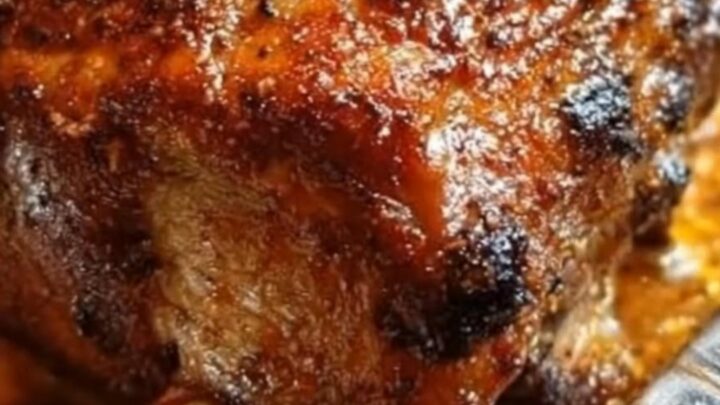
- Slow cook and glazePlace the turkey in the oven and roast until the internal temperature reaches 165°F (74°C). Halfway through the cooking process, brush the turkey generously with the sweet glaze. Continue cooking until the glaze is caramelized and the turkey reaches the required internal temperature of 165°F (74°C).Look for The glaze is bubbly and dark, and the meat is cooked through.Safe temperature 165°F (74°C) internal temperature (poultry)Tip Using a meat thermometer is the best way to monitor doneness without overcooking the meat.
During this phase, the turkey should look gradually more golden as it roasts. When you apply the glaze, ensure it covers the entire surface evenly. The kitchen will begin to smell savory and sweet as the sugars in the glaze start to brown.
Check the internal temperature periodically. The meat should look plump and feel slightly firm, indicating that it is moving toward the final stage of cooking.
Resting and final carving
- Rest and carveRemove the turkey from the oven and let it rest in the pan for at least 15 minutes before carving. This resting period allows the juices to redistribute, ensuring every slice remains moist and tender when served on a platter.Look for The turkey has rested and is ready to be sliced into succulent pieces.Tip Carve against the grain to maximize the tenderness of each bite.
After removing the turkey from the oven, it must rest undisturbed on a cutting board or platter. The meat will appear glistening and have a deep, caramelized color from the glaze. The aroma should be rich and inviting. Once the resting time is complete, the turkey is ready to be carved. The slices should be firm enough to hold their shape but tender enough to flake slightly under the knife.
Common mistakes
A common mistake is rushing the cooking process by using too high a temperature, which results in a dry and tough turkey. Avoid opening the oven door frequently, as this causes significant temperature fluctuations that can affect the timing.
Another error is failing to let the meat rest after cooking; slicing too soon allows all the precious juices to escape, leaving the meat dry. Always ensure the thermometer is inserted into the center of the thickest part of the roast.
How to tell it’s done
The turkey is done when the internal temperature reaches 165°F (74°C) at the thickest part of the breast. Using a digital meat thermometer is essential for accuracy. When you insert the probe, it should slide in easily without resistance.
The juices should run clear, and the meat should feel firm yet yielding to the touch. Remember to let the roast rest for at least 15 minutes before carving to allow the moisture to settle.
- Poultry: 165°F (74°C) in the thickest part
Up next · Part 3 of 3
2 variations · storage & make-ahead · 3 answers · printable card
Tips, FAQ & printable recipe (Part 3)← Back to the ingredients (Part 1)