Dinner · Part 2 of 3: Instructions
Slow-Braised Turkish Lamb Neck Stew with Garlic Confit Step-by-step instructions
- Prep
- Cook
- Total
- Serves
- 4
Before you start
Pat the lamb neck slices dry with paper towels so they brown properly. Peel the garlic cloves, quarter the onions, and slice the carrots. Have the tomato paste, pepper paste, bone broth, peppercorns, thyme, and salt measured and ready.
Heat the olive oil in a heavy clay pot or Dutch oven over medium-high heat before you begin searing. Prepare a piece of parchment paper large enough to cover the surface of the stew, and place a lid nearby for the braising step.
Ingredients at a glance (11)
- 800 g bone-in lamb neck slices
- 2 tbsp olive oil
- 1 head garlic, cloves peeled
- 2 medium onions, quartered
- 2 carrots, sliced
- 1 tbsp tomato paste
- 1 tbsp sweet pepper paste
- 500 ml bone broth
- 1 tsp black peppercorns
- 1 sprig fresh thyme
- 1 tsp salt
Instructions
Sear and Sauté
- Sear the Lamb NeckPat the lamb neck slices dry with paper towels. Heat the olive oil in a heavy clay pot or Dutch oven over medium-high heat until shimmering. Add the lamb neck slices in a single layer, working in batches if necessary, and sear for 3-4 minutes per side until deeply browned and caramelized on both flat sides. Transfer the seared lamb to a plate and set aside. Let it rest for 3 minutes before slicing.Look for The lamb should be deeply browned, not just gray, with a rich crust.Safe temperature 145°F (63°C) internal temperature (steaks, chops and roasts)Tip Do not crowd the pot—sear in batches to get a proper crust.
- Cook the AromaticsIn the same pot, add the quartered onions, sliced carrots, and peeled garlic cloves. Cook over medium heat, stirring occasionally, for 4-5 minutes until the onions are translucent and the garlic is fragrant. Add the tomato paste and sweet pepper paste, and stir constantly for 1-2 minutes until the pastes darken slightly and coat the vegetables.Look for The vegetables should be softened and the pastes should smell toasty.Tip Stir the pastes well to prevent them from burning on the bottom.
At the end of this phase, the lamb should be deeply browned on both sides with a rich, caramelized crust. The onions and carrots should be softened and translucent, and the garlic cloves should be fragrant but not browned. The tomato and pepper pastes should be well incorporated, coating the vegetables in a deep red, glossy mixture. The pot should have a delicious, savory aroma with no burnt spots on the bottom.
Braise Low and Slow
- Add Broth and SeasoningsReturn the seared lamb neck slices to the pot, nestling them among the vegetables. Pour in the bone broth, then add the black peppercorns, fresh thyme sprig, and salt. Bring the liquid to a gentle simmer, scraping up any browned bits from the bottom of the pot. Let it rest for 3 minutes before slicing.Look for The broth should be steaming and fragrant, with the lamb partially submerged.Safe temperature 145°F (63°C) internal temperature (steaks, chops and roasts)Tip Use a wooden spoon to deglaze the pot thoroughly.
- Cover and Slow-BraiseCover the pot with a piece of parchment paper, pressing it directly onto the surface of the stew, then place the lid on top. Reduce the heat to low and simmer gently for 3 hours, or until the lamb is fall-apart tender and the garlic cloves are soft and sweet. Check occasionally to ensure the liquid is barely bubbling. Let it rest for 3 minutes before slicing.Look for The meat should be fork-tender and the garlic cloves should be golden and soft.Safe temperature 145°F (63°C) internal temperature (steaks, chops and roasts)Tip Keep the heat low—a gentle simmer, not a rolling boil, yields the most tender meat.
After adding the broth and seasonings, the liquid should be gently simmering with small bubbles breaking the surface. The lamb should be partially submerged, and the broth should be fragrant with thyme and peppercorns.
As the three hours pass, the liquid will reduce slightly and become more viscous. The meat will shrink and pull away from the bone, and the garlic cloves will soften and turn golden. The kitchen will fill with a rich, savory aroma.
Rest and Serve
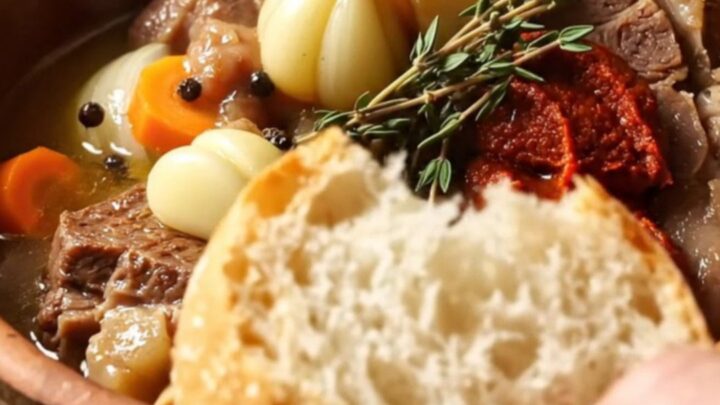
- Rest and ServeRemove the pot from the heat and let the stew rest, covered, for 10 minutes. Discard the thyme sprig. Using tongs, carefully lift the lamb neck slices out of the pot and place them in a deep terracotta dish or serving bowl. Ladle the broth, vegetables, and garlic cloves over the meat. Serve hot with crusty bread for dipping.Look for The meat should easily pull away from the bone, and the broth should be glossy.Safe temperature 145°F (63°C) internal temperature (steaks, chops and roasts)Tip Let the stew rest so the juices redistribute; the meat will be even more succulent.
After resting, the lamb should be so tender that the bones slide out cleanly. The broth should be glossy and thick enough to coat a spoon. The garlic cloves should be soft and sweet, and the carrots should be tender but still hold their shape. The stew should look deeply appetizing, with the meat glistening in the rich, amber broth. Serve immediately with crusty bread.
Common mistakes
One common mistake is searing the lamb over too high heat, which can burn the outside before the inside cooks. Use medium-high heat and watch carefully. Another is overcrowding the pot—if the lamb pieces are too close together, they will steam instead of brown, so sear in batches if needed.
Also, resist the urge to stir too often during the braise; let the stew simmer undisturbed to allow the flavors to meld and the meat to become tender. Finally, don't skip the parchment paper lid—it helps maintain a gentle, even simmer.
How to tell it’s done
The stew is done when the lamb is fall-apart tender and easily pulls away from the bone with a fork. The garlic cloves should be soft and golden, and the broth should be glossy and slightly thickened. To check the internal temperature, insert an instant-read thermometer into the thickest part of the meat; it should register at least 145°F (63°C).
However, because the meat is braised for three hours, it will be well beyond this temperature and incredibly tender. Let the stew rest for 10 minutes before serving to allow the juices to redistribute.
- Steaks, chops and roasts: 145°F (63°C) in the thickest part, then a 3-minute rest
Up next · Part 3 of 3
4 variations · storage & make-ahead · 5 answers · printable card
Tips, FAQ & printable recipe (Part 3)← Back to the ingredients (Part 1)