Dinner · Part 2 of 3: Instructions
Slow-Braised Osso Buco with Saffron Risotto Step-by-step instructions
- Prep
- Cook
- Total
- Serves
- 2
Before you start
Before starting, preheat the oven to 325°F (160°C). Pat the veal shanks dry and tie them with kitchen twine to keep the meat attached to the bone. Prepare the vegetables: dice the onion, carrot, and celery.
Measure out the wine, broth, and tomato paste. Have the lemon peel and rosemary ready. For the risotto, have the rice, saffron, and butter measured and the broth heated in a separate saucepan.
Ingredients at a glance (13)
- 2 bone-in veal shanks (osso buco, about 12 oz each)
- 2 tbsp olive oil
- 1 diced onion
- 1 diced carrot
- 1 celery stalk, diced
- 2 tbsp tomato paste
- 200 ml dry white wine
- 400 ml veal broth
- 1 strip lemon peel
- 1 sprig rosemary
- 200 g Carnaroli rice
- 1 pinch saffron threads
- 2 tbsp butter
Instructions
Sear and Build the Braise
- Prepare and Sear the Veal ShanksTie each veal shank around the circumference with kitchen twine to keep the meat attached to the bone during cooking. Pat the shanks dry with paper towels. Lightly dust the shanks with all-purpose flour, shaking off any excess. Heat the olive oil in a Dutch oven over medium-high heat until shimmering. Add the veal shanks and sear until deeply browned on both sides, about 4–5 minutes per side. Transfer the shanks to a plate and set aside.Look for The shanks should be mahogany brown on both sides, not just lightly golden.Tip Do not crowd the pan; sear in batches if necessary to get a proper crust.
- Sauté the AromaticsReduce the heat to medium. Add the diced onion, carrot, and celery to the same Dutch oven. Cook, stirring occasionally, until the vegetables are softened and lightly browned, about 5–7 minutes. Add the tomato paste and cook for 1 minute, stirring constantly, until the paste darkens slightly and coats the vegetables.Look for The vegetables should be tender and the tomato paste should smell slightly sweet and toasty.Tip Scrape up any browned bits from the bottom of the pot as you stir — they add flavor.
- Deglaze and Return the ShanksPour the dry white wine into the pot and bring to a simmer, scraping the bottom with a wooden spoon to release any browned bits. Let the wine reduce by half, about 3–4 minutes. Return the veal shanks to the pot, nestling them into the vegetables. Add the veal broth, lemon peel, and rosemary sprig. Bring to a gentle simmer.Look for The liquid should be bubbling gently around the shanks, not boiling hard.Tip The lemon peel and rosemary add bright aromatic notes; do not skip them.
At the end of this phase, the veal shanks should be deeply browned on all sides, and the vegetables should be softened and coated with tomato paste.
The wine should be reduced and the liquid should be bubbling gently around the shanks. The kitchen will smell of caramelized meat and aromatic vegetables.
Braise to Perfection
- Cover and Braise in the OvenCover the Dutch oven with its lid and transfer to an oven preheated to 325°F (160°C). Braise for 2 1/2 hours, or until the meat is fork-tender and nearly falling off the bone. Check once or twice during cooking to ensure the liquid is at a gentle simmer; if it reduces too much, add a splash of water or broth. Let it rest for 3 minutes before slicing.Look for The meat should be tender enough to pull apart easily with a fork.Safe temperature 145°F (63°C) internal temperature (steaks, chops and roasts)Tip The low, slow heat breaks down collagen, creating that silky, gelatinous texture.
- Rest the ShanksCarefully remove the Dutch oven from the oven and transfer the veal shanks to a plate. Cover loosely with foil and let rest for at least 3 minutes before serving. This allows the juices to redistribute, ensuring moist, tender meat.Look for The meat should be very tender but still hold together on the bone.Safe temperature 145°F (63°C) internal temperature (steaks, chops and roasts)Tip Resting is essential for whole cuts; it prevents the juices from running out when cutting.
- Finish the Pan SauceWhile the meat rests, skim any excess fat from the surface of the braising liquid. Set the Dutch oven over medium-high heat and bring the sauce to a boil. Cook until the sauce is reduced and slightly syrupy, about 8–10 minutes. Discard the lemon peel and rosemary sprig. Season with salt and pepper to taste.Look for The sauce should coat the back of a spoon and be glossy.Tip Reducing the sauce concentrates the flavors; do not rush this step.
After 2 1/2 hours, the meat should be fork-tender and nearly falling off the bone. The sauce should be reduced and slightly syrupy. The aroma will be rich and deeply savory, with notes of wine and herbs. The meat should rest for at least 3 minutes before serving.
Risotto and Plating
- Make the Saffron RisottoWhile the veal braises, prepare the risotto. In a small bowl, steep the saffron threads in 1/4 cup of warm broth or water. In a separate saucepan, bring the remaining broth to a simmer. In a large skillet or saucepan, melt the butter over medium heat. Add the Carnaroli rice and toast for 2–3 minutes, stirring constantly, until the edges of the grains become translucent.Look for The rice grains should be coated in butter and slightly translucent at the edges.Tip Toasting the rice helps it absorb liquid gradually, creating a creamy texture.
- Cook the Risotto to Creamy PerfectionAdd a ladleful of hot broth to the rice and stir until absorbed. Continue adding broth one ladle at a time, stirring frequently, allowing each addition to be absorbed before adding the next. After about 15–18 minutes, the rice should be tender but still slightly al dente. Stir in the saffron infusion and a final knob of butter. Season with salt to taste.Look for The risotto should be creamy and flowing, not stiff or soupy.Tip Stirring releases the rice's starch, creating the signature creamy texture.
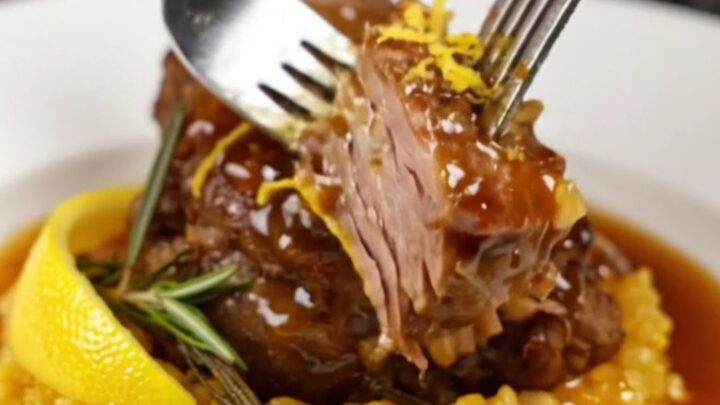
- Plate and ServeSpoon a generous portion of saffron risotto onto warm plates. Place a veal shank on top of the risotto. Ladle the reduced pan sauce over the meat and around the plate. Serve immediately, with the marrow from the bone as a delicacy.Look for The dish should look glossy and inviting, with the golden risotto contrasting with the deep brown shank.Tip Warm plates help keep the dish hot; the marrow is a delicacy — scoop it out and spread on bread.
The risotto should be creamy and flowing, with a vibrant golden color from the saffron. The rice should be tender but still have a slight bite. The final dish should be glossy and inviting, with the osso buco perched atop the risotto and the pan sauce spooned over.
Common mistakes
One common mistake is not searing the shanks long enough; a deep brown crust is essential for flavor. Another is boiling the braising liquid instead of keeping it at a gentle simmer, which can toughen the meat.
When making the risotto, avoid adding all the broth at once; add it gradually and stir frequently to achieve the creamy texture. Also, do not skip the resting period for the meat, as it allows the juices to redistribute and keeps the meat moist.
How to tell it’s done
The osso buco is done when the meat is fork-tender and easily pulls away from the bone, and the internal temperature reaches at least 145°F (63°C) for whole cuts, as measured with an instant-read thermometer.
Let the meat rest for at least 3 minutes before serving. The risotto is done when the rice is tender but still slightly al dente, and the mixture is creamy and flowing, not stiff. The pan sauce should be reduced and glossy, coating the back of a spoon.
- Steaks, chops and roasts: 145°F (63°C) in the thickest part, then a 3-minute rest
Up next · Part 3 of 3
4 variations · storage & make-ahead · 5 answers · printable card
Tips, FAQ & printable recipe (Part 3)← Back to the ingredients (Part 1)