Dinner · Part 2 of 3: Instructions
Slow-Braised Lamb Shank with Creamy Polenta and Rosemary Jus Step-by-step instructions
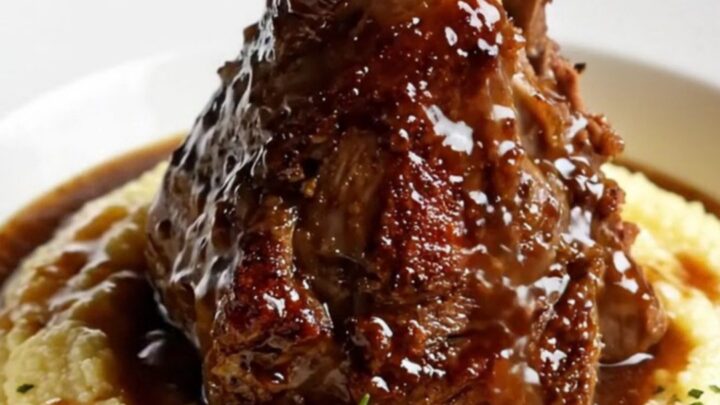
- Prep
- Cook
- Total
- Serves
- 4
Before you start
Before starting, read through the entire recipe and gather all your ingredients. Pat the lamb shanks dry with paper towels and season them generously with salt and pepper. Dice the onion, carrots, and celery, and smash the garlic cloves.
Measure out the wine, beef broth, and tomato paste. Have the rosemary and bay leaves ready. Preheat your oven to 320°F (160°C) so it's ready when you need it. Set out your Dutch oven and other equipment.
Ingredients at a glance (15)
- 2 large lamb shanks (about 1 lb each)
- 2 tbsp olive oil
- 1 medium onion, diced
- 2 medium carrots, diced
- 2 stalks celery, diced
- 4 cloves garlic, smashed
- 2 tbsp tomato paste
- 2 cups beef broth
- 1 cup red wine
- 2 sprigs fresh rosemary
- 2 bay leaves
- 3/4 cup polenta cornmeal
- 2 cups milk
- 3 tbsp butter
- 1/2 cup grated Parmesan cheese
Instructions
Phase 1: Sear and Sauté
- Sear the Lamb ShanksPat the lamb shanks dry with paper towels and season generously on all sides with salt and pepper. Heat the olive oil in a Dutch oven over medium-high heat until shimmering. Add the lamb shanks and sear, turning occasionally, until deeply browned on all sides, about 8 to 10 minutes total. Transfer the shanks to a plate and set aside. Let it rest for 3 minutes before slicing.Look for The shanks should be mahogany brown with a nice crust, not gray.Safe temperature 145°F (63°C) internal temperature (steaks, chops and roasts)Tip Don't crowd the pot; sear in batches if needed to get a good crust.
- Cook the AromaticsReduce the heat to medium. Add the onion, carrots, and celery to the pot and cook, stirring occasionally, until softened and lightly browned, about 5 to 7 minutes. Add the smashed garlic and cook for 1 minute more, until fragrant. Stir in the tomato paste and cook for 2 minutes, scraping up any browned bits.Look for The vegetables should be tender and the tomato paste a deep rust color.Tip Letting the tomato paste cook removes its raw flavor and deepens the sauce.
- Deglaze and BraisePour in the red wine and scrape the bottom of the pot with a wooden spoon to release any browned bits. Let the wine bubble and reduce by half, about 3 to 4 minutes. Add the beef broth, rosemary sprigs, and bay leaves. Return the lamb shanks to the pot, nestling them into the liquid. Bring to a simmer.Look for The liquid should be a rich reddish-brown and barely bubbling.Tip Scraping the bottom well ensures all the flavor from the sear goes into the sauce.
The lamb shanks are deeply browned on all sides, the vegetables are softened and lightly caramelized, and the pot has been deglazed with wine.
The kitchen smells richly of seared meat and wine. The liquid is bubbling gently, and the lamb shanks are nestled in the sauce, ready for the oven.
Phase 2: Braise and Polenta
- Cover and Braise Low and SlowCover the Dutch oven with a tight-fitting lid and transfer to an oven preheated to 320°F (160°C). Braise for 3 hours, or until the meat is fork-tender and nearly falling off the bone. Check once or twice to ensure the liquid is still simmering gently; add a splash of water if needed. Let it rest for 3 minutes before slicing.Look for The meat should be pulling away from the bone and easily pierced with a fork.Safe temperature 145°F (63°C) internal temperature (steaks, chops and roasts)Tip A low, gentle braise keeps the meat moist and tender.
- Make the Creamy PolentaAbout 30 minutes before the lamb is done, make the polenta. In a large saucepan, bring the milk and 1 cup of water to a gentle boil over medium heat. Slowly whisk in the polenta cornmeal, reduce the heat to low, and cook, stirring frequently, until thickened and creamy, about 20 to 25 minutes. Remove from heat and stir in the butter and Parmesan until melted and smooth.Look for The polenta should be thick and creamy, with no lumps.Tip Stir often to prevent sticking and ensure a silky texture.
- Rest the LambOnce the lamb is fork-tender, remove the Dutch oven from the oven and transfer the shanks to a plate. Tent loosely with foil and let rest for at least 5 minutes. The meat should reach an internal temperature of at least 145°F (63°C) before serving.Look for The meat should be very tender and the juices clear.Safe temperature 145°F (63°C) internal temperature (steaks, chops and roasts)Tip Resting helps the juices redistribute, keeping the meat moist.
The lamb shanks are fork-tender and the meat is pulling away from the bone. The polenta is thick, creamy, and smooth, with the butter and Parmesan fully melted in. The braising liquid has reduced slightly and is intensely aromatic with rosemary and wine.
Phase 3: Finish and Serve
- Strain and Finish the JusStrain the braising liquid through a fine-mesh strainer into a saucepan, discarding the solids. Skim off any excess fat from the surface. Bring the jus to a simmer over medium heat and let it reduce until slightly thickened and glossy, about 5 to 7 minutes. Season with salt and pepper to taste.Look for The jus should coat the back of a spoon and be intensely flavorful.Tip Reducing concentrates the flavors; don't over-reduce or it may become too salty.
- Plate and ServeSpoon a generous portion of the warm polenta into each bowl. Stand a lamb shank on top of the polenta, then ladle the glossy jus over the meat and around the plate. Serve immediately, garnished with a small sprig of fresh rosemary if desired.Look for The lamb should be so tender it begins to fall apart as you plate it.Tip For a restaurant look, wipe the rim of the bowl clean before serving.
The jus is strained, reduced, and glossy, coating the back of a spoon. The polenta is warm and velvety, and the lamb shanks are plated with the jus spooned over the top. The dish looks elegant and smells irresistible, ready to be served immediately.
Common mistakes
One common mistake is not searing the lamb shanks long enough; a deep brown crust is essential for flavor. Another is skipping the deglazing step—make sure to scrape up all the browned bits from the bottom of the pot.
Overcooking the polenta can make it gluey, so stir frequently and remove from heat as soon as it's creamy. Finally, don't rush the braise; the low temperature and long time are what make the meat so tender.
How to tell it’s done
The lamb is done when it is fork-tender, meaning a fork inserted into the meat twists easily and the meat begins to pull away from the bone. The internal temperature should reach at least 145°F (63°C), but because it's braised, it will likely be higher and that's fine.
The polenta is done when it's thick, creamy, and no longer gritty on the tongue. The jus should coat the back of a spoon and have a deep, concentrated flavor.
- Steaks, chops and roasts: 145°F (63°C) in the thickest part, then a 3-minute rest
Up next · Part 3 of 3
4 variations · storage & make-ahead · 5 answers · printable card
Tips, FAQ & printable recipe (Part 3)← Back to the ingredients (Part 1)