Dinner · Part 2 of 3: Instructions
Skillet Pork Chops with Garlic Potatoes Step-by-step instructions
- Prep
- Cook
- Total
- Serves
- 4
Before you start
Before turning on the stovetop heat, gather and prepare all your ingredients to ensure a smooth and stress-free cooking process. Pat the pork chops completely dry with paper towels.
Wash, peel if you prefer, and quarter the potatoes into uniform pieces so they cook evenly at the same rate. Dice the yellow onion, mince the garlic cloves, and measure out your broth and butter so everything is ready to go.
Ingredients at a glance (7)
- 4 bone-in pork chops, about 1 inch thick
- 1 1/2 lb potatoes, washed and quartered
- 1 yellow onion, chopped
- 4 cloves garlic, minced
- 4 tbsp butter
- 4 sprigs fresh thyme
- 1 cup broth
Instructions
Searing the Pork Chops
- Sear the Pork ChopsPlace the pork chops in a heavy cast-iron skillet over medium-high heat. Sear them without moving for 4 to 5 minutes per side, until a deep golden-brown crust forms. Transfer the seared chops to a plate and set them aside.Look for A golden-brown crust forms on both sides of the chops.Tip Ensure the skillet is hot before adding the chops to get a perfect sear.
At the end of this first phase, the pork chops should have a deep, golden-brown crust on both sides. The skillet will sizzle loudly, and the kitchen will fill with the rich, savory aroma of seared meat.
You will see caramelized browned bits forming on the bottom of the pan, which is exactly what you want. The chops will not be fully cooked through yet, but they are ready to be set aside.
Simmering the Potatoes and Onions
- Sauté the OnionsReduce the skillet heat to medium. Add the chopped yellow onions to the pan, using the moisture from the onions to scrape up the browned bits from the bottom of the skillet. Sauté the onions for 3 to 4 minutes until they begin to soften and turn translucent.Look for The onions are soft and translucent.Tip Use a wooden spoon to scrape up all the flavorful fond from the bottom.
- Simmer the PotatoesAdd the quartered potatoes and the broth to the skillet. Bring the liquid to a simmer, then cover the skillet with a lid. Let the potatoes simmer for 12 to 15 minutes, or until they are fork-tender and the broth has reduced by half.Look for The potatoes are easily pierced with a fork.Tip If the broth evaporates too quickly before the potatoes are tender, add a splash of extra water.
By the end of this phase, the potatoes should be fork-tender and the onions translucent and soft. The broth will have reduced significantly, turning into a thin, shimmering sauce infused with the flavors of the pan. The steam rising from the skillet will smell of sweet onions and rich broth. Ensure the potatoes are easily pierced with a fork before returning the pork chops to the pan.
Basting and Finishing
- Return Chops and Add AromaticsUncover the skillet and push the potatoes to the side. Return the pork chops and any accumulated juices to the pan. Add the butter, minced garlic, and fresh thyme sprigs to the empty spaces in the skillet, letting the butter melt and foam.Look for The butter melts, foams, and smells highly fragrant.Tip Keep the garlic in the melting butter so it cooks without burning.
- Baste and Finish CookingTilt the skillet slightly and use a large spoon to continuously baste the hot garlic butter over the pork chops. Cook for another 2 to 3 minutes until the chops reach an internal temperature of 145°F (63°C). Remove from heat and let the meat rest for 3 minutes before serving.Look for The pork chops are glazed and register 145°F (63°C) on a thermometer.Safe temperature 145°F (63°C) internal temperature (steaks, chops and roasts)Tip Basting keeps the meat incredibly moist and infuses it with garlic herb flavor.
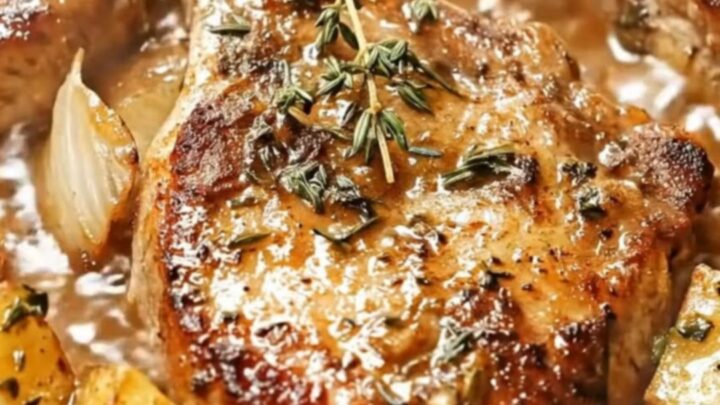
In this final phase, the butter will melt and foam, releasing a fragrant aroma of garlic and fresh thyme. The sauce should be glossy, bubbling gently, and thick enough to coat the back of a spoon. The pork chops will be glazed in the garlic butter, looking incredibly juicy and golden. A quick check with a meat thermometer will confirm the meat has reached its safe internal temperature.
Common mistakes
One common mistake is crowding the skillet when searing the pork chops, which traps moisture and causes the meat to steam instead of sear, preventing that beautiful golden crust from forming. If your cast-iron skillet is not large enough to fit all the chops comfortably, sear them in separate batches.
Another frequent error is rushing the potato simmering step; if the potatoes are still hard when the broth has mostly evaporated, simply add a splash of extra water and cover the pan for a few minutes longer.
How to tell it’s done
To ensure the pork chops are perfectly cooked and safe to eat, always use a digital meat thermometer inserted into the thickest part of the meat, away from the bone. The internal temperature must reach 145°F (63°C) to be safe.
Once this temperature is reached, remove the chops from the heat and let them rest for at least 3 minutes. This resting period allows the juices to redistribute throughout the meat, ensuring a tender bite.
- Steaks, chops and roasts: 145°F (63°C) in the thickest part, then a 3-minute rest
Up next · Part 3 of 3
2 variations · storage & make-ahead · 3 answers · printable card
Tips, FAQ & printable recipe (Part 3)← Back to the ingredients (Part 1)