Dinner · Part 2 of 3: Instructions
Skillet Garlic Butter Chicken Breasts in Twenty Minutes Step-by-step instructions
- Prep
- Cook
- Total
- Serves
- 5
Before you start
Before beginning, ensure all ingredients are measured and ready to go next to the stove. Mince the garlic cloves and finely chop the fresh parsley. Pat the chicken breasts dry with paper towels to remove excess moisture, which prevents a proper sear.
Season the chicken breasts on both sides with kosher salt and black pepper, and let them sit for no more than 30 minutes at room temperature before cooking. Have the chicken broth measured and the butter sliced, as the cooking process moves very quickly once the skillet is hot.
Ingredients at a glance (8)
- 5 boneless, skinless chicken breasts
- 1 tsp kosher salt
- 1/2 tsp freshly cracked black pepper
- 2 tbsp olive oil
- 4 tbsp unsalted butter
- 4 cloves garlic, minced
- 2 tbsp chopped fresh parsley, divided
- 1/2 cup chicken broth
Instructions
Searing the Chicken Breasts
- Season and Prep the Chicken BreastsPat the chicken breasts dry with paper towels to ensure a proper sear. Season both sides of the chicken breasts evenly with the kosher salt and freshly cracked black pepper. Do not let the raw poultry sit at room temperature for more than 30 minutes before cooking to maintain optimal food safety.Look for The chicken should be evenly coated with seasoning.Tip Drying the chicken thoroughly prevents steaming and guarantees a beautiful golden-brown crust.
- Sear the Chicken in the SkilletHeat the olive oil in a heavy 12-inch cast iron skillet over medium-high heat until sizzling. Carefully add the seasoned chicken breasts to the hot oil. Sear the chicken undisturbed for 5 to 6 minutes on the first side until a deep, golden-brown crust forms, then flip and cook for another 4 to 5 minutes.Look for A loud, sizzling sound indicates the skillet is hot enough.Tip Avoid crowding the pan; cook in batches if your skillet cannot comfortably fit all five breasts.
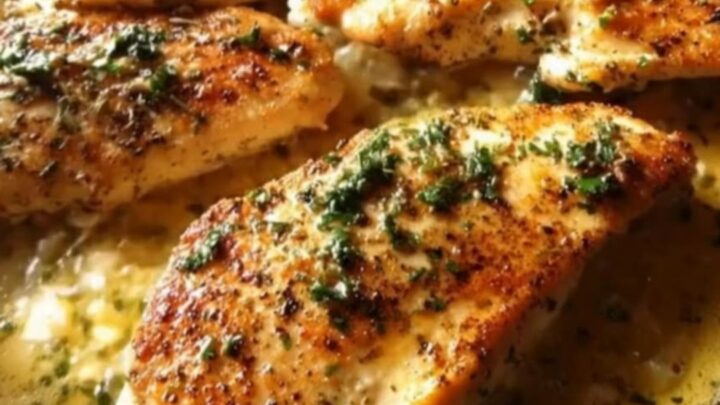
At the end of this phase, the chicken breasts will have a beautiful, deep golden-brown crust on both sides. The skillet will be hot, producing a steady sizzle, and a layer of caramelized browned bits will cover the bottom of the pan. The chicken will not be fully cooked through yet, but the exterior will be perfectly seared and aromatic.
Building the Garlic Butter Sauce
- Melt Butter and Sauté GarlicReduce the skillet heat to medium. Add the unsalted butter to the pan, letting it foam and melt around the chicken. Stir in the minced garlic and half of the chopped fresh parsley, cooking for about 1 minute until the garlic becomes highly fragrant and turns a pale golden color.Look for The butter will foam and the garlic will smell rich.Tip Watch the garlic closely to prevent burning, as burnt garlic turns bitter.
- Deglaze the Skillet with BrothPour the chicken broth directly into the hot skillet. Let the liquid simmer violently while using a wooden spoon to scrape up any browned bits stuck to the bottom of the cast iron pan. These caramelized bits hold immense flavor that enriches the entire pan sauce.Look for The broth should simmer rapidly and begin to reduce slightly.Tip Keep your face back to avoid steam when pouring the liquid into the hot pan.
At this point, the butter will have melted into a foaming, golden pool surrounding the chicken, infusing the pan with a rich aroma of toasted garlic and fresh herbs.
The violently simmering chicken broth will have lifted all the caramelized bits from the bottom of the skillet, transforming the liquid into a slightly reduced, bubbling, savory sauce.
Simmering and Finishing
- Simmer Chicken and Check TemperatureSpoon the simmering garlic butter sauce over the chicken breasts. Continue to simmer the chicken in the sauce until the thickest part of the poultry registers an internal temperature of 165°F (74°C) on a digital meat thermometer, ensuring it is fully cooked and safe to eat.Look for The chicken is cooked through and the sauce is glossy.Safe temperature 165°F (74°C) internal temperature (poultry)Tip Always insert the thermometer probe into the thickest section of the breast.
- Garnish and Rest Before ServingRemove the skillet from the heat source. Garnish the chicken with the remaining chopped fresh parsley. Allow the chicken breasts to rest directly in the skillet for 5 minutes before slicing, allowing the juices to redistribute throughout the meat for maximum tenderness.Look for The sauce will thicken slightly as it cools during the rest.Tip Resting is crucial for keeping chicken breasts juicy rather than dry.
By the end of the final phase, the chicken breasts will be fully cooked, reaching a safe internal temperature of 165°F (74°C). The garlic butter sauce will have thickened slightly into a glossy, velvety glaze that clings to the chicken. A final garnish of fresh parsley adds a vibrant green contrast to the golden-brown meat.
Common mistakes
The most common mistake when making this dish is moving the chicken breasts too early after placing them in the hot skillet. If the chicken sticks to the pan, it is not ready to be flipped; let it sear undisturbed until it naturally releases. Another error is burning the garlic.
Garlic burns quickly in a hot pan, so ensure the heat is reduced to medium before adding it, and stir constantly. Finally, do not skip the resting period, as slicing the chicken immediately will cause all the flavorful juices to run out onto the board.
How to tell it’s done
To determine if the chicken breasts are perfectly cooked and safe to consume, always use a digital meat thermometer. Insert the probe into the thickest part of the largest breast. The poultry is fully cooked and safe when it registers an internal temperature of 165°F (74°C).
The meat should feel firm to the touch, and any juices that escape should run completely clear, not pink. Avoid overcooking past this temperature, as chicken breasts quickly become dry and stringy.
- Poultry: 165°F (74°C) in the thickest part
Up next · Part 3 of 3
3 variations · storage & make-ahead · 3 answers · printable card
Tips, FAQ & printable recipe (Part 3)← Back to the ingredients (Part 1)