Dinner · Part 2 of 3: Instructions
Skillet French Onion Pork Tenderloin with Rich Onion Jus Step-by-step instructions
- Prep
- Cook
- Total
- Serves
- 4
Before you start
Before beginning the cooking process, ensure all ingredients are prepped and ready to go. Remove the pork tenderloin from the refrigerator about twenty to thirty minutes prior to cooking to take the chill off, allowing it to cook more evenly.
Thinly slice the onions, and measure out the seasoning and onion jus. Having everything measured and within arm's reach prevents the onions from burning and ensures a smooth, stress-free cooking flow.
Ingredients at a glance (4)
- 1 1/2 lb pork tenderloin
- seasoning, to taste
- 2 large sliced onions
- 1 cup onion jus
Instructions
Searing the Pork Tenderloin
- Seasoning the PorkPat the pork tenderloin completely dry with paper towels. Season all sides generously with the seasoning, pressing it gently into the meat so it adheres well.Look for The seasoning should form an even coating over the entire surface of the meat.Tip Patting the meat dry is essential for achieving a deep, golden sear rather than steaming.
- Searing the MeatHeat a heavy skillet over medium-high heat. Add the seasoned pork tenderloin and sear until a rich, golden-brown crust forms on all sides, about 2 to 3 minutes per side. Remove the pork from the skillet and set it aside on a plate.Look for A deeply browned crust should form, leaving dark caramelized bits on the skillet bottom.Tip Do not move the meat too much while searing to ensure a perfect crust.
At the end of this phase, the pork tenderloin should have a beautiful, deep golden-brown crust on all sides. The skillet will sizzle loudly, and a rich, savory aroma will fill the kitchen.
You should see browned bits forming at the bottom of the pan, which is the flavorful fond that will build the base of the sauce. The meat will still be raw in the center, which is expected at this stage of the recipe.
Caramelizing the Onions
- Caramelizing the OnionsReduce the heat to medium in the same skillet. Add the sliced onions, stirring to scrape up any browned bits from the bottom of the pan. Cook, stirring occasionally, until the onions are soft and golden caramelized, about 15 minutes.Look for The onions will shrink significantly, turning a deep golden-amber color with a sweet aroma.Tip If the onions begin to burn, reduce the heat slightly and add a splash of water to release the browned bits.
By the end of the onion-cooking phase, the sliced onions will have shrunk significantly and turned a deep, rich golden-amber color. They should be incredibly soft, sweet, and fragrant, with no remaining sharp raw onion scent. The pan will be filled with sweet caramelized onions that are ready to be combined with the pork and rich onion jus.
Finishing and Glazing
- Finishing and GlazingReturn the seared pork tenderloin to the skillet. Ladle the rich onion jus generously over the meat and caramelized onions. Reduce the heat to medium-low, cover, and cook until the pork reaches an internal temperature of 145°F (63°C), then let the meat rest for 3 minutes.Look for The thermometer must read 145°F (63°C) in the thickest part of the meat.Safe temperature 145°F (63°C) internal temperature (steaks, chops and roasts)Tip Letting the meat rest for 3 minutes allows the juices to redistribute, keeping the pork incredibly juicy.
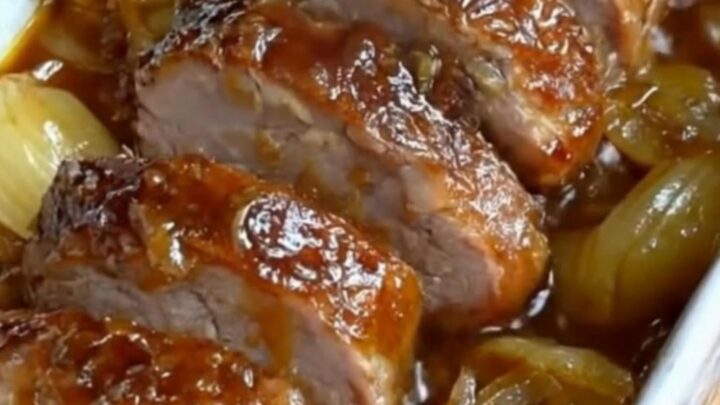
- Slicing and ServingTransfer the rested pork tenderloin to a cutting board and slice it into thick medallions. Arrange the sliced pork in a serving dish, spoon the caramelized onions and glossy onion jus over the top, and serve immediately while warm.Look for The meat should slice cleanly, showing a faint blush of pink in the center.Tip Use a very sharp knife to slice the tenderloin without tearing the delicate meat.
In this final phase, the pork tenderloin is cooked through to perfection, and the glaze is thick, bubbly, and incredibly glossy. The meat should feel firm but yielding to the touch. When sliced, the tenderloin will be juicy and tender, glistening under a generous ladle of the rich, savory onion jus. The steam rising from the dish carries the sweet, comforting scent of caramelized onions.
Common mistakes
One common mistake is rushing the onion caramelization process by using heat that is too high. High heat will burn the edges of the onions before their natural sugars have a chance to break down, resulting in a bitter taste rather than a sweet, savory glaze.
Another error is overcooking the pork tenderloin. Because tenderloin is an extremely lean cut of meat, even a few extra minutes in the pan can turn it dry and tough. Always use a digital meat thermometer to check for doneness.
How to tell it’s done
The pork tenderloin is perfectly cooked when a digital meat thermometer inserted into the thickest part of the meat registers an internal temperature of 145°F (63°C).
It is absolutely critical to remove the meat from the heat source immediately upon reaching this temperature and let it rest for at least three minutes before slicing. This resting period allows the juices to redistribute throughout the meat, ensuring every slice remains incredibly tender, moist, and flavorful.
- Steaks, chops and roasts: 145°F (63°C) in the thickest part, then a 3-minute rest
Up next · Part 3 of 3
2 variations · storage & make-ahead · 3 answers · printable card
Tips, FAQ & printable recipe (Part 3)← Back to the ingredients (Part 1)