Dinner · Part 2 of 3: Instructions
Sizzling Korean Bulgogi Ribeye Skillet with Crispy Garlic Step-by-step instructions
- Prep
- Cook
- Total
- Serves
- 4
Before you start
Before you begin cooking, ensure all your ingredients are prepped and ready to go, as the actual searing process happens very quickly. Thinly slice your scallions and have your garnishes measured out. If you are slicing the ribeye yourself, do so while the meat is partially frozen for the thinnest possible slices.
Make sure your cast-iron skillet is clean, dry, and seasoned. Clear your workspace and ensure your serving platter is ready nearby so you can plate the beef immediately after it finishes cooking to maintain the perfect temperature and texture.
Ingredients at a glance (9)
- 1 1/2 lb shaved ribeye
- 1/2 grated Asian pear
- 1/4 cup soy sauce
- 2 tbsp toasted sesame oil
- 2 tbsp brown sugar
- 5 minced garlic cloves
- 1/3 cup golden fried garlic slices
- 4 raw pasture-raised egg yolks
- sliced scallions, for serving
Instructions
Marinating Phase
- Marinating the BeefIn a large mixing bowl, combine the grated Asian pear, soy sauce, toasted sesame oil, brown sugar, and minced garlic. Add the shaved ribeye and toss until the meat is thoroughly coated in the marinade. Cover and refrigerate for at least 30 minutes to allow the flavors to penetrate the beef properly.Look for The beef should be well-coated in the sauce and smell fragrant with garlic and sesame.Tip Ensure the pear is finely grated to distribute its enzymes evenly, which helps tenderize the meat.
The beef should be completely submerged and well-coated in the marinade. The mixture should smell strongly of soy, sesame, and fresh garlic. Ensure the beef is kept in the refrigerator throughout the marination time to maintain food safety. After thirty minutes, the beef will look slightly darker as the soy sauce and pear enzymes begin to work on the texture.
Searing Phase
- Searing the BulgogiPlace a cast-iron skillet over high heat until it reaches 475°F (246°C). Work in batches to avoid crowding the pan, which ensures a proper sear. Cook the marinated beef for about 2 minutes per batch, letting the edges char and caramelize deeply to achieve the signature smoky flavor profile. Use a thermometer to ensure the beef reaches 145°F (63°C), then let it rest at least 3 minutes before serving.Look for Look for deep, dark caramelized edges on the meat and a sizzling sound throughout the cooking process.Safe temperature 145°F (63°C) internal temperature (steaks, chops and roasts)Tip Do not overcrowd the skillet, as this will steam the meat instead of searing it.
The skillet should be smoking slightly when the beef hits the surface, indicating it is at the correct temperature. You should hear a loud, aggressive sizzle immediately.
Watch the edges of the beef closely; they should turn dark brown and crispy within about two minutes. The meat should look caramelized and glossy, not watery or grey, indicating successful high-heat searing.
Garnishing Phase
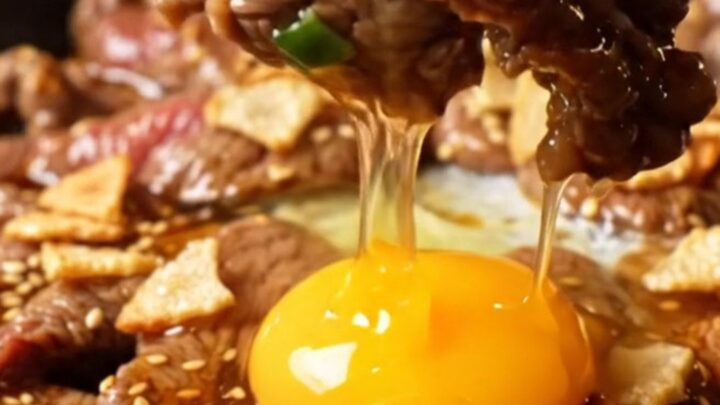
- Garnishing and ServingOnce the beef is cooked and rested, arrange the hot bulgogi on a serving platter. Top immediately with the crispy golden fried garlic slices and fresh sliced scallions. Carefully nestle a raw pasture-raised egg yolk into the center of each serving. Instruct guests to break the yolk and mix it into the hot meat before eating to create a rich, glossy finish, ensuring the egg is cooked to 160°F (71°C) if desired.Look for The yolk should be vibrant and glossy when placed on top of the dark, charred beef.Safe temperature 160°F (71°C) internal temperature (egg dishes)Tip If preferred, you can quickly warm the egg yolk slightly by placing it on the very hot meat for a few seconds.
The final dish should look vibrant and appetizing, with the dark, charred beef providing a bold base for the bright green scallions and the golden garlic chips. The egg yolk should sit perfectly on top, remaining intact until the diner breaks it. The overall dish should smell deeply savory, smoky, and aromatic, ready to be served immediately while piping hot.
Common mistakes
A common mistake is overcrowding the skillet, which causes the beef to steam in its own juices rather than searing. This prevents the development of that essential smoky char and can result in a soggy, greyish dish. Always cook the beef in small batches.
Another error is failing to get the pan hot enough; if the skillet is not at the proper temperature, the sugar in the marinade will not caramelize correctly. Finally, do not skip the resting period for the meat, as it allows the juices to redistribute for a better texture.
How to tell it’s done
The beef is done when it is fully browned with charred, caramelized edges and has reached an internal temperature of 145°F (63°C). Because the beef is shaved paper-thin, this happens very quickly, usually within two minutes of hitting the hot skillet.
If the beef is sliced correctly, it will be tender and juicy. The raw egg yolk is added at the end; while it is served raw, the heat from the beef will gently warm it. Ensure the beef is cooked to the safe temperature of 145°F (63°C) before serving.
- Steaks, chops and roasts: 145°F (63°C) in the thickest part, then a 3-minute rest
- Egg dishes: 160°F (71°C) in the thickest part
Up next · Part 3 of 3
2 variations · storage & make-ahead · 3 answers · printable card
Tips, FAQ & printable recipe (Part 3)← Back to the ingredients (Part 1)