Dinner · Part 2 of 3: Instructions
Silky Garlic Parmesan Fettuccine with a Glossy Cream Sauce Step-by-step instructions
- Prep
- Cook
- Total
- Serves
- 4
Before you start
Before starting, fill a large pot with water and bring it to a boil. Grate the parmesan cheese and chop the parsley. Measure out the butter, flour, and seasonings so they are ready to go.
Have a colander and a liquid measuring cup near the stove for reserving the pasta water. The entire process moves quickly once the pasta is cooking, so having everything prepped makes it seamless.
Ingredients at a glance (10)
- 8 oz fettuccine pasta
- Salt for the pasta water, to taste
- 1/2 cup unsalted butter
- 1 1/2 tbsp all-purpose flour
- 1 tbsp garlic powder
- 1 tsp black pepper
- 1 tsp Italian seasoning
- 1 cup freshly grated parmesan cheese
- 2 tbsp chopped fresh parsley
- 1 cup starchy pasta cooking water
Instructions
Boil the Pasta
- Boil the PastaBring a large pot of generously salted water to a rolling boil. Add the fettuccine and cook according to package directions until al dente. Before draining, reserve 1 cup of the starchy pasta cooking water. Drain the pasta and set it aside.Look for The pasta is tender but still has a slight bite at the center.Tip Reserve the pasta water before draining; it's the key to a silky sauce.
- Melt the ButterIn a wide skillet, melt the unsalted butter over medium heat. Once fully melted, whisk in the all-purpose flour, garlic powder, black pepper, and Italian seasoning. Cook for 1 minute, stirring constantly, until the mixture is fragrant and slightly thickened.Look for The butter mixture bubbles gently and smells toasty and garlicky.Tip Whisk constantly to prevent the flour from clumping.
The pasta is cooking in salted water. The pot should be at a vigorous boil, and the fettuccine should be submerged and stirred occasionally to prevent sticking.
When the pasta is al dente, reserve a cup of the starchy water before draining. The pasta should be tender but still have a slight bite. The reserved water will be used later to loosen the sauce.
Make the Sauce
- Make the SauceRemove the skillet from the heat. Immediately add the freshly grated parmesan cheese and chopped fresh parsley. Stir until the cheese melts into a smooth, glossy sauce. If the sauce seems too thick, whisk in a splash of the reserved pasta water to loosen it.Look for The cheese melts completely, leaving a velvety, pourable sauce.Tip Grate the parmesan fresh; pre-shredded cheese may not melt as smoothly.
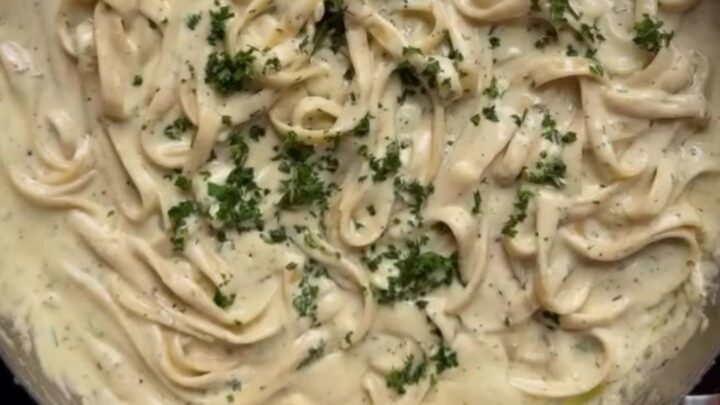
- Toss the PastaAdd the drained fettuccine to the skillet with the sauce. Use tongs to toss the pasta thoroughly, coating every strand with the creamy garlic parmesan sauce. If needed, add more reserved pasta water, a tablespoon at a time, until the sauce clings to the pasta.Look for Every strand is glossy and coated, with no dry spots.Tip Toss gently but thoroughly to avoid breaking the pasta.
The butter has melted and is bubbling with the flour and seasonings. The mixture should be fragrant and slightly thickened. After removing from heat, the parmesan and parsley are stirred in. The cheese should melt into a smooth, glossy sauce. If the sauce is too thick, whisk in a splash of pasta water. The texture should be velvety and pourable.
Toss and Serve
- Serve ImmediatelyTwirl a generous forkful of the pasta and place it in a serving bowl. Spoon any remaining sauce from the skillet over the top. Finish with an extra sprinkle of parmesan and parsley if desired. Serve hot.Look for The pasta is hot, silky, and beautifully glossy.Tip Serve right away for the best texture; the sauce thickens as it cools.
The fettuccine is added to the skillet and tossed with tongs until every strand is coated. The sauce should cling to the pasta, creating a glossy, creamy finish. If the sauce is too thick, add more pasta water. The dish should look silky and inviting. Serve immediately, twirling a forkful to show off the glossy sauce.
Common mistakes
One common mistake is adding the cheese over high heat, which can cause it to clump or become stringy. Always remove the skillet from the heat first. Another is using pre-shredded cheese, which may not melt smoothly.
Also, avoid overcooking the pasta; al dente is key because it will continue to cook slightly when tossed with the hot sauce. Finally, don't skip the pasta water—it's the secret to a silky sauce.
How to tell it’s done
The pasta is done when it is al dente—tender but still firm to the bite. The sauce is ready when the cheese has melted and the mixture is smooth and glossy. To test, drag a spoon through the sauce; it should leave a trail that slowly fills in.
The final dish should have each strand of pasta coated in a creamy, clinging sauce. If the sauce seems too thick, add more pasta water a tablespoon at a time.
Up next · Part 3 of 3
4 variations · storage & make-ahead · 5 answers · printable card
Tips, FAQ & printable recipe (Part 3)← Back to the ingredients (Part 1)