Dinner · Part 2 of 3: Instructions
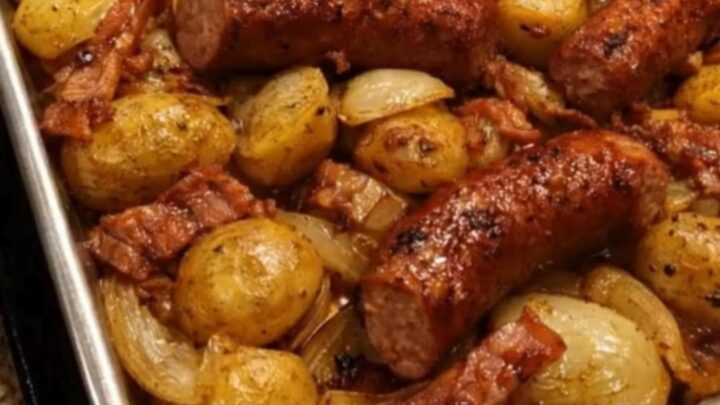
Sheet Pan Sausage, Potatoes & Crispy Bacon Step-by-step instructions
- Prep
- Cook
- Total
- Serves
- 4
Before you start
Before beginning, ensure that the oven is fully preheated to the required temperature. Have a large, clean rimmed baking sheet ready.
It is important to have all ingredients chopped and sliced before turning on the heat, as this allows for a smooth transition from preparation to roasting.
Keep a meat thermometer accessible to verify the temperature of the sausage at the end of the cooking process.
Ingredients at a glance (3)
- 1 lb smoked sausage, sliced into rounds
- 1 1/2 lb baby potatoes, halved
- 6 slices bacon, chopped into chunks
Instructions
Preparation Phase
- Prepare the IngredientsPreheat the oven to 400°F (200°C). Wash the baby potatoes thoroughly and cut them into halves. Slice the smoked sausage into uniform rounds and chop the bacon into bite-sized chunks to ensure even cooking across the baking sheet.Look for Potatoes are halved and sausage is sliced.Tip Ensure the potato pieces are relatively similar in size so they finish roasting at the same time.
All ingredients should be chopped into uniform sizes to ensure they cook at the same rate. The oven must be preheated to 400°F (200°C) before the pan is introduced to the heat.
Roasting Phase
- Arrange and RoastSpread the halved potatoes, sliced sausage, and bacon chunks across the surface of a large rimmed baking sheet in a single layer. Place the sheet into the center rack of the preheated oven and roast for 35 minutes, tossing halfway through to distribute the rendered bacon fat.Look for Potatoes are golden brown and bacon is crispy.Safe temperature 160°F (71°C) internal temperature (ground meat)Tip Use the rendered fat from the bacon to help crisp the edges of the potatoes.
The kitchen should be filled with the rich aroma of roasting sausage and bacon. Check that the potatoes are beginning to soften and turn color, and ensure that the bacon is rendering properly.
Finalizing Phase
- Rest and ServeRemove the baking sheet from the oven once the sausage reaches an internal temperature of 160°F (71°C). Allow the mixture to rest for 5 minutes before transferring to plates. This resting period helps the flavors meld and ensures the sausage stays juicy when cut.Look for Sausage is browned and potatoes are tender.Safe temperature 160°F (71°C) internal temperature (ground meat)Tip Check the center of the largest sausage piece with a thermometer to confirm it has reached the safe temperature.
The dish is finished when the sausage is fully cooked to 160°F (71°C) and the potatoes are tender throughout. Allow a short rest to ensure the juices redistribute before serving.
Common mistakes
A common mistake is overcrowding the baking sheet, which causes the ingredients to steam rather than roast. Ensure there is enough space between the potatoes and sausage so that hot air can circulate freely.
Another error is failing to toss the mixture halfway through; this step is vital for ensuring that the bacon fat is evenly distributed and that all components brown uniformly without sticking to the pan.
How to tell it’s done
The dish is considered done when the potatoes are fork-tender and possess a deep golden-brown exterior. The sausage should be browned and heated through to an internal temperature of 160°F (71°C).
The bacon should be rendered and crispy, with its fat coating the rest of the ingredients on the pan for optimal flavor and texture.
- Ground meat: 160°F (71°C) in the thickest part
Up next · Part 3 of 3
2 variations · storage & make-ahead · 3 answers · printable card
Tips, FAQ & printable recipe (Part 3)← Back to the ingredients (Part 1)