Dinner · Part 1 of 3: Ingredients
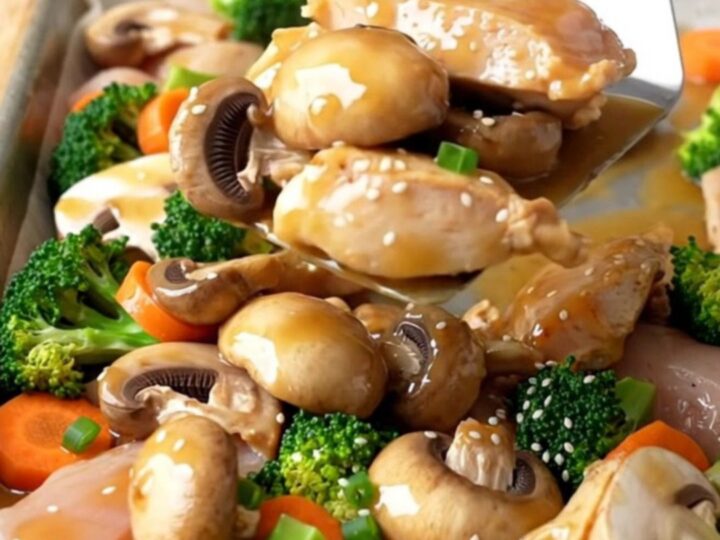
Sheet Pan Moo Goo Gai Pan Chicken: One-Pan Weeknight Dinner
- Prep
- Cook
- Total
- Serves
- 4
This sheet pan moo goo gai pan brings the classic Chinese-American takeout favorite to your weeknight table with minimal fuss. Tender chicken, earthy mushrooms, crisp-tender broccoli, and sweet carrots roast together on one pan, all coated in a savory garlic-ginger sauce that caramelizes beautifully in the oven. With just a handful of ingredients and about 25 minutes of hands-off cooking, you can have a satisfying, restaurant-quality dinner that the whole family will love. The best part?
Moo goo gai pan, which translates to 'mushroom chicken' in Cantonese, is a beloved Chinese-American stir-fry. This version swaps the wok for a sheet pan, allowing the ingredients to roast and caramelize in the oven while you attend to other things.
The high heat of the oven concentrates the flavors, giving the chicken a golden exterior while keeping it juicy, and the vegetables become tender with slightly charred edges. The garlic-ginger sauce clings to every piece, creating a glossy, savory coating that is both comforting and vibrant. This recipe is perfect for busy weeknights when you want a homemade meal without the constant stirring.
Ingredients
- 1 1/2 lb boneless skinless chicken breasts, cut into 1-inch chunks
- 8 oz cremini mushrooms, thickly sliced
- 3 cups broccoli florets
- 2 medium carrots, sliced into coins
Sauce
- 1/2 cup garlic ginger sauce
Topping
- 1 tbsp sesame seeds
- 2 tbsp sliced green onions
Why this recipe works
Roasting on a sheet pan at high heat (425°F) allows the chicken and vegetables to develop a deep, caramelized flavor that you cannot achieve in a quick stir-fry. The dry heat of the oven browns the chicken and mushrooms, creating a rich, savory crust while the interior stays moist and tender.
The vegetables roast quickly, becoming crisp-tender with slightly sweet, charred edges. This method is also incredibly efficient: everything cooks on one pan, so there is minimal cleanup and no need to stand over a hot stove.
The garlic-ginger sauce is the heart of this dish. Drizzled over the raw ingredients, it coats each piece evenly. As the pan roasts, the sauce reduces and thickens, clinging to the chicken and vegetables. The natural sugars in the sauce caramelize, adding a subtle sweetness that balances the savory garlic and ginger.
The sesame seeds and green onions, sprinkled on before baking, toast slightly and add a nutty aroma and fresh, sharp finish. The result is a cohesive, deeply flavorful dish that tastes like it took much more effort than it actually did.
Notes and substitutions
For the chicken, boneless, skinless breasts are ideal because they cook quickly and stay tender. Cut them into uniform 1-inch chunks to ensure even cooking. Cremini mushrooms are a great choice for their earthy flavor and meaty texture, but white button mushrooms or shiitakes also work well.
Broccoli florets should be cut into similar-sized pieces so they roast evenly. Carrots, sliced into coins, add a pop of color and sweetness. If you prefer a bit more crunch, use asparagus or snap peas instead.
The garlic ginger sauce is a time-saver. You can use a store-bought version, but be sure to check the label for gluten and soy if that is a concern. To make your own, combine soy sauce, honey, minced garlic, grated ginger, and a splash of rice vinegar. The sauce should be flavorful but not too thick, as it will reduce in the oven. Sesame seeds and green onions are the finishing touches, adding texture and freshness. You can also add a pinch of red pepper flakes for heat if you like.
- cremini mushrooms: white button mushrooms or shiitake mushrooms (stemmed and sliced)
- broccoli florets: broccolini or asparagus (cut into 2-inch pieces)
- garlic ginger sauce: store-bought stir-fry sauce or a mix of soy sauce, honey, garlic, and ginger
- chicken breasts: chicken thighs (boneless, skinless, cut into chunks)
Equipment
- Sheet pan
- Parchment paper
- Large bowl
- Spatula
- Chef's knife
- Cutting board
Up next · Part 2 of 3
6 steps · 25 min of cooking · what to look for at each stage
Step-by-step instructions (Part 2)