Dinner · Part 2 of 3: Instructions
Sheet Pan Kung Pao Kielbasa and Peppers Step-by-step instructions
- Prep
- Cook
- Total
- Serves
- 4
Before you start
Start by gathering all your ingredients and ensuring your vegetables are chopped into uniform pieces. Consistency is key when roasting, so aim for similar-sized chunks of bell pepper and half-moons of zucchini.
Ensure your oven is fully preheated to 400°F (200°C) before placing the tray inside, as this initial blast of heat is crucial for achieving the desired browning on the kielbasa and the slight char on the peppers. Have your sauce, peanuts, and green onions measured and ready to go for the final steps.
Ingredients at a glance (6)
- 1 lb kielbasa, sliced into thick coins
- 2 bell peppers (red and green), cut into chunks
- 2 zucchini, sliced into half-moons
- 1/2 cup kung pao sauce (store-bought or made ahead)
- 1/4 cup roasted peanuts
- 2 tbsp green onions, sliced
Instructions
Roasting the Base
- Prepare the Sheet PanPreheat the oven to 400°F (200°C). Line a large rimmed aluminum sheet pan with parchment paper to ensure easy cleanup and prevent sticking. Arrange the sliced kielbasa coins, bell pepper chunks, and zucchini half-moons in a single, even layer across the pan to ensure consistent roasting and browning throughout the cooking process.Look for The vegetables should be spread out without overlapping too much.Tip Cutting the zucchini into uniform half-moons helps them cook at the same rate as the peppers.
At this stage, the kitchen should be filled with the savory aroma of roasting sausage and peppers. The kielbasa coins will begin to brown on their edges, and the vegetables will start to soften as they release their moisture. Check to ensure the zucchini and peppers are not crowded on the pan; if they look too close together, use a larger pan or cook in two batches to guarantee they roast rather than steam.
Adding the Sauce
- Roast and SaucePlace the sheet pan in the preheated oven and bake for 15 to 20 minutes. Remove the pan and drizzle the kung pao sauce over the kielbasa and vegetables, tossing gently with a spatula to coat everything evenly. Return the pan to the oven for an additional 5 minutes to allow the sauce to caramelize and reach an internal temperature of 160°F (71°C) for the sausage.Look for The sauce should bubble and slightly thicken on the pan surface.Safe temperature 160°F (71°C) internal temperature (ground meat)Tip Ensure the sausage reaches a safe internal temperature of 160°F (71°C) to verify it is fully cooked.
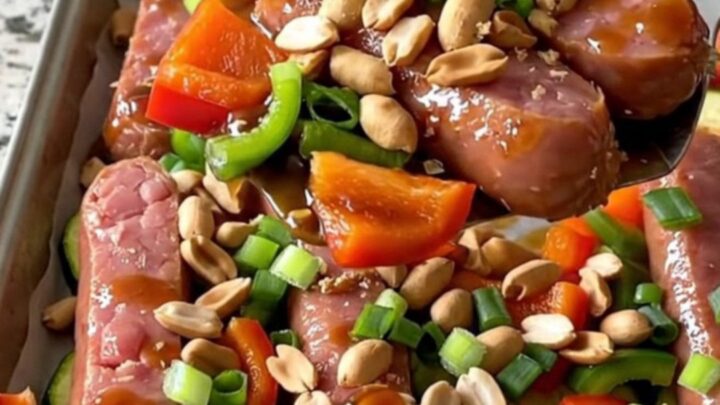
Once you have added the kung pao sauce, the pan will look glossy and vibrant. The sauce should bubble slightly, indicating that the sugars are caramelizing. Check that the sauce is distributed evenly across all ingredients. The kielbasa should look deep brown and caramelized at the edges. This is the moment where the flavors merge, so ensure every piece of vegetable is lightly coated, providing a consistent taste in every bite.
Finishing and Garnish
- Garnish and ServeRemove the pan from the oven and scatter the roasted peanuts and sliced green onions over the top. Let the dish rest for at least 5 minutes before serving to allow the flavors to meld and the sauce to set slightly. Serve directly from the sheet pan for a rustic presentation that keeps the meal warm.Look for The peanuts should be fragrant and the onions slightly wilted from the residual heat.Tip Adding the peanuts right at the end maintains their crunch.
The final product should be a beautiful, colorful spread with a rich, dark-red sauce. The peanuts should add a bright, crunchy contrast to the tender vegetables and savory sausage.
Verify that the sausage is heated through to 160°F (71°C) and that the green onions look fresh and bright. The dish should be ready to serve immediately, with the aromas of the sauce and roasted aromatics being the primary indicator that it is time to enjoy.
Common mistakes
A common mistake is overcrowding the pan, which causes the vegetables to steam instead of roast, leading to a mushy texture. Always ensure there is enough space between the pieces for hot air to circulate.
Another error is adding the peanuts and green onions too early; these delicate items should be added at the very end to maintain their texture and fresh color. Finally, failing to preheat the oven properly will prevent the sausage from browning correctly, resulting in a less flavorful final dish.
How to tell it’s done
The dish is perfectly done when the kielbasa is browned at the edges and reaches an internal temperature of 160°F (71°C). The bell peppers should be tender and lightly blistered, while the zucchini should be soft but still hold its shape.
The sauce should appear glossy and slightly thickened, clinging to the ingredients rather than pooling at the bottom of the pan. If you prefer more char on your vegetables, you can broil the pan for an additional minute, watching carefully to prevent burning the peanuts.
- Ground meat: 160°F (71°C) in the thickest part
Up next · Part 3 of 3
2 variations · storage & make-ahead · 3 answers · printable card
Tips, FAQ & printable recipe (Part 3)← Back to the ingredients (Part 1)