Dinner · Part 2 of 3: Instructions
One-Pan Honey Sage Chicken and Acorn Squash Step-by-step instructions
- Prep
- Cook
- Total
- Serves
- 4
Before you start
Before starting, heat the oven to 425°F (220°C) and line a sheet pan with parchment paper. Pat the chicken thighs dry with paper towels to help the skin crisp.
Slice the acorn squash into 1/2-inch half-moons—no need to peel, the skin is edible and becomes tender. Chop the fresh sage and measure the honey, butter, salt, and pepper. Have a small bowl ready for the honey butter and a pastry brush or spoon for drizzling.
Ingredients at a glance (7)
- 4 bone-in, skin-on chicken thighs
- 1 medium acorn squash, sliced into 1/2-inch half-moons
- 1/4 cup honey
- 1/4 cup unsalted butter, melted
- 2 tbsp fresh sage, chopped
- 1 tsp flaky sea salt
- 1/2 tsp freshly ground black pepper
Instructions
Prep and Season
- Prep the Pan and IngredientsHeat the oven to 425°F (220°C). Line a sheet pan with parchment paper. Arrange the chicken thighs and acorn squash slices in a single layer on the pan, leaving space between pieces so they brown evenly. Pat the chicken skin dry with paper towels.Look for The pan is full but not crowded; the chicken skin is dry to the touch.Tip For extra crisp skin, let the chicken sit uncovered in the fridge for 30 minutes before roasting.
- Make the Honey ButterIn a small bowl, stir together the honey and melted butter until smooth. Use a pastry brush or spoon to drizzle the honey butter evenly over the chicken and squash, coating all surfaces.Look for The honey butter is glossy and coats the chicken and squash lightly.Tip If the honey butter seizes, warm it briefly in the microwave for 5 seconds.
- Season with Sage and SaltSprinkle the chopped sage, flaky sea salt, and black pepper over the chicken and squash, making sure to season both sides of the chicken thighs.Look for The sage is evenly distributed; the salt and pepper are visible on the surface.Tip Use your hands to rub the seasoning into the chicken skin for even coverage.
- Roast the Chicken and SquashPlace the sheet pan in the oven and roast for 35 to 40 minutes, until the chicken skin is deep golden and crisp and the squash is tender when pierced with a fork. If the squash finishes before the chicken, remove it to a plate and continue roasting the chicken.Look for The chicken skin is crackling and browned; the squash edges are caramelized.Safe temperature 165°F (74°C) internal temperature (poultry)Tip Avoid flipping the chicken—leaving it undisturbed helps the skin crisp.
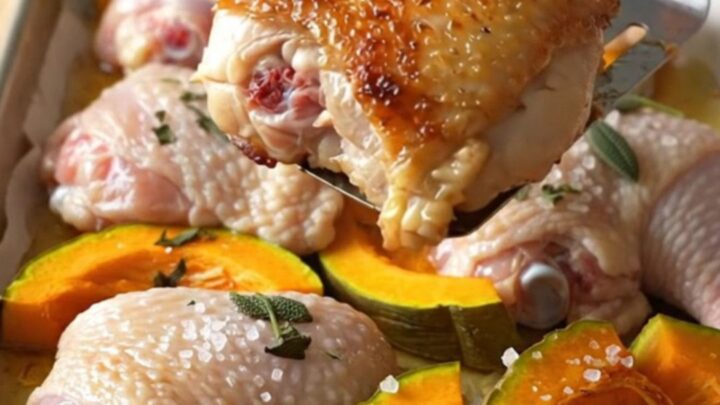
The pan is lined with parchment. Chicken thighs and squash slices are arranged in a single layer, with the chicken skin dry.
The honey butter is smooth and glossy, and the sage, salt, and pepper are sprinkled evenly. The pan looks colorful—green-edged orange squash, pale chicken, and dark green sage flecks.
Roast to Golden
- Rest the ChickenRemove the pan from the oven and let the chicken rest for 5 minutes. This allows the juices to redistribute, keeping the meat moist.Look for The chicken is resting, and the pan juices are settling.Safe temperature 165°F (74°C) internal temperature (poultry)Tip Resting is key—don't skip it or the juices will run out when cutting.
The oven is hot, and the pan is roasting. The chicken skin is turning golden and crisp, and the squash is softening and caramelizing at the edges. The honey butter is bubbling and coating everything. The kitchen smells of sage and honey. The chicken is not yet done—it needs to reach 165°F (74°C).
Rest and Serve
- Serve the Chicken and SquashUse a spatula to lift the chicken and squash from the pan, letting any excess honey butter drip back. Arrange on a platter and spoon any pan juices over the top. Serve hot.Look for The chicken skin is glossy with honey butter; the squash is tender and caramelized.Tip A metal spatula works best to lift the crispy chicken without tearing the skin.
The pan is out of the oven, and the chicken is resting. The skin is deep golden and crackling, and the squash is tender and glossy. The pan juices are thick and honeyed. Everything looks caramelized and inviting. The chicken has rested for 5 minutes and is ready to serve.
Common mistakes
One common mistake is overcrowding the pan—if the chicken and squash are too close, they steam instead of roast, and the skin won't crisp. Leave space between pieces.
Another mistake is flipping the chicken too early; letting it cook undisturbed allows the skin to render and crisp. Also, be careful not to burn the honey butter—if the pan starts to smoke, reduce the oven temperature slightly and continue cooking.
How to tell it’s done
The chicken is done when the skin is deep golden brown and crisp, and the internal temperature reaches 165°F (74°C) in the thickest part of the thigh, avoiding the bone.
The squash is done when it is tender and easily pierced with a fork, with caramelized golden edges. If the squash finishes before the chicken, remove it to a plate and continue roasting the chicken until it reaches temperature.
- Poultry: 165°F (74°C) in the thickest part
Up next · Part 3 of 3
4 variations · storage & make-ahead · 5 answers · printable card
Tips, FAQ & printable recipe (Part 3)← Back to the ingredients (Part 1)