Dinner · Part 2 of 3: Instructions
Sheet Pan Chimichurri Pork Tenderloin with Peppers Step-by-step instructions
- Prep
- Cook
- Total
- Serves
- 4
Before you start
Before starting, heat the oven to 425°F (220°C) and line a sheet pan with parchment paper. Rinse and halve the baby potatoes, and cut the red bell peppers into chunks. Pat the pork tenderloin dry with paper towels.
If using store-bought chimichurri, give it a stir; if homemade, prepare it ahead. Measure out the salt, black pepper, and red pepper flakes so they are ready to sprinkle. Have a spoon and spatula on hand for spreading the chimichurri and turning the vegetables if needed.
Ingredients at a glance (7)
- 1 1/2 lb pork tenderloin
- 1 1/2 lb baby potatoes, halved
- 2 red bell peppers, cut into chunks
- 3/4 cup chimichurri
- 1 tsp red pepper flakes
- 1 tsp kosher salt
- 1/2 tsp black pepper
Instructions
Preparation and Seasoning
- Prepare the PanHeat the oven to 425°F (220°C). Line a sheet pan with parchment paper. Place the pork tenderloin in the center of the pan. Arrange the halved baby potatoes and red bell pepper chunks around the pork, spreading them evenly so they are in a single layer.Look for The pork should be surrounded by vegetables, not overlapping.Tip Use a rimmed sheet pan to catch any juices.
- Season and DrizzleSeason everything with kosher salt and black pepper. Spoon the chimichurri evenly over the pork and vegetables, using a spoon to spread it. Sprinkle the red pepper flakes over the entire pan.Look for The chimichurri should coat the pork and vegetables lightly.Tip Reserve a little chimichurri for serving if desired, but the video uses all of it.
At this point, the pan is ready with the pork centered and the potatoes and peppers spread around it. The chimichurri is drizzled evenly, and the red pepper flakes are sprinkled on top. The pan looks vibrant and colorful, with the green sauce contrasting against the red peppers and golden potatoes. The pork is seasoned and ready for the oven.
Roasting and Resting
- Roast the Pork and VegetablesPlace the sheet pan in the oven and roast for 25 to 30 minutes, until the pork reaches an internal temperature of 145°F (63°C) and the potatoes and peppers are golden-edged and tender. The pork should be browned on the outside and juicy inside. Let it rest for 3 minutes before slicing.Look for The pork is golden and the vegetables are caramelized at the edges.Safe temperature 145°F (63°C) internal temperature (steaks, chops and roasts)Tip If the pork cooks faster than the vegetables, remove it and let the vegetables continue roasting.
- Rest the PorkRemove the sheet pan from the oven. Transfer the pork tenderloin to a cutting board and let it rest for at least 3 minutes. The internal temperature will continue to rise slightly during resting.Look for The pork should rest undisturbed.Safe temperature 145°F (63°C) internal temperature (steaks, chops and roasts)Tip Resting allows the juices to redistribute, keeping the meat moist.
After roasting, the pork is golden brown on the outside and the potatoes and peppers have caramelized edges. The kitchen smells of roasted garlic and herbs.
The pork should read 145°F (63°C) on a thermometer. After resting, the meat is juicy and the vegetables are tender. The pan has some browned bits and juices that will flavor the final dish.
Slicing and Serving
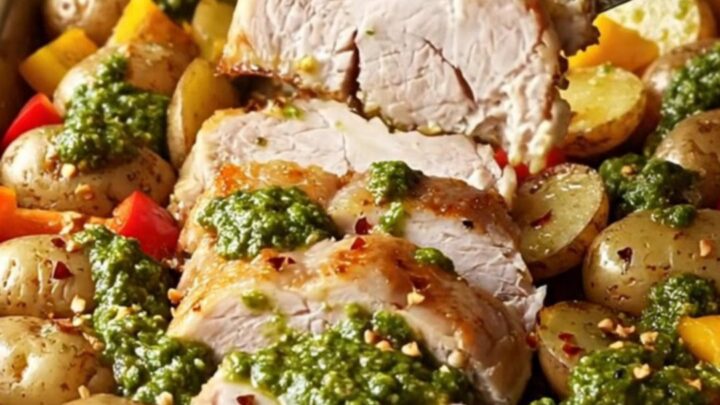
- Slice and ServeSlice the pork tenderloin into thick slices. Arrange the slices on a serving platter with the roasted potatoes and peppers. Spoon any pan juices over the top. Serve hot.Look for The pork slices are pale and juicy inside, golden outside.Tip Cut against the grain for the most tender slices.
The pork is sliced into thick, even pieces, revealing a pale, juicy interior. The slices are arranged with the roasted potatoes and peppers, and any pan juices are spooned over the top. The dish looks appetizing with the golden meat, colorful vegetables, and glistening sauce. It is ready to be served immediately while hot.
Common mistakes
A common mistake is overcrowding the pan, which traps steam and prevents browning. Spread the vegetables in a single layer and leave space around the pork. Another pitfall is overcooking the pork, which makes it dry; use a thermometer and pull it at 145°F (63°C).
Also, do not skip the resting time—cutting too soon lets the juices run out. Finally, be generous with the chimichurri; it is the main flavoring, so skimping can make the dish bland.
How to tell it’s done
The pork is done when an instant-read thermometer inserted into the thickest part registers 145°F (63°C). The meat should feel firm but yield slightly when pressed, and the exterior should be golden brown.
The potatoes should be fork-tender and golden at the edges, and the peppers should be soft and slightly charred. After resting, the pork's internal temperature will rise a few degrees, ensuring it is perfectly cooked and juicy.
- Steaks, chops and roasts: 145°F (63°C) in the thickest part, then a 3-minute rest
Up next · Part 3 of 3
4 variations · storage & make-ahead · 5 answers · printable card
Tips, FAQ & printable recipe (Part 3)← Back to the ingredients (Part 1)