Dinner · Part 2 of 3: Instructions
Sheet Pan Chicken Thighs and Melting Cabbage Step-by-step instructions
- Prep
- Cook
- Total
- Serves
- 4
Before you start
Before beginning, ensure all ingredients are at room temperature to promote even cooking. Pat the chicken thighs completely dry with paper towels to ensure the skin crisps up rather than steams.
Preheat your oven fully to 400°F (200°C) before placing the pan inside to ensure the roasting process starts immediately upon entry. Prepare your workspace by laying out the parchment paper on the sheet pan, and have your garlic butter, broth, and seasonings measured and ready for quick assembly.
Ingredients at a glance (6)
- 4 pieces bone-in skin-on chicken thighs
- 1 head green cabbage, cut into thick wedges
- 4 tbsp melted garlic butter
- 1/2 cup chicken broth
- 1/4 cup grated parmesan cheese
- 1 tsp dried thyme
Instructions
Preparation and assembly
- Assemble the sheet panPreheat the oven to 400°F (200°C). Line a rimmed sheet pan with parchment paper. Arrange the chicken thighs skin-side up and nestle the thick cabbage wedges in the gaps between the chicken pieces on the prepared pan.Look for The pan should be evenly filled without overcrowding.Tip Ensure the chicken skin is dry before placing it on the pan to guarantee maximum crispiness.
The chicken and cabbage should be arranged in a single layer on the parchment-lined pan. Ensure the thighs are skin-side up and the cabbage wedges are tucked snugly. The goal is to have an organized pan that allows for even exposure to the oven's heat, setting the stage for uniform roasting and caramelization.
Roasting the meal
- Season and roastWhisk the garlic butter with the chicken broth in a small pitcher and pour the mixture evenly over the chicken and cabbage. Sprinkle the parmesan cheese and dried thyme over the entire pan. Place in the oven and roast until the chicken is cooked through and the cabbage is soft and golden-edged.Look for The chicken skin should be golden brown and the cabbage should appear tender and caramelized.Safe temperature 165°F (74°C) internal temperature (poultry)Tip Baste the chicken with the pan juices halfway through for extra flavor.
The garlic butter and broth mixture should be distributed evenly. During the roasting, the kitchen should fill with the aroma of garlic and toasted thyme.
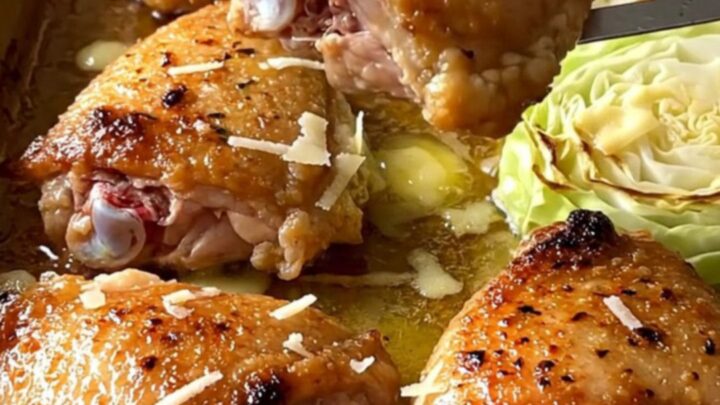
The chicken skin should begin to turn a deep golden brown, and the cabbage should start to soften and darken at the edges, signaling that the flavors are melding.
Final rest and serving
- Rest and serveRemove the sheet pan from the oven. Let the chicken rest for at least 5 minutes before serving to ensure the juices redistribute throughout the meat. Use a metal spatula to lift the chicken and cabbage onto plates.Look for The juices should run clear when the thickest part of the thigh is pierced.Safe temperature 165°F (74°C) internal temperature (poultry)Tip Drizzle any remaining pan liquid over the cabbage for a savory finish.
Once removed from the oven, the chicken should look glossy and crisp. After resting, the meat should be succulent and the cabbage should be tender enough to cut easily with a fork. The pan juices should be reduced to a flavorful, buttery consistency, ready to be served alongside the main components.
Common mistakes
A common mistake is overcrowding the pan, which traps moisture and leads to steamed, soggy chicken skin instead of a crisp exterior. Ensure there is enough space between the chicken and the cabbage for heat to circulate.
Another error is failing to dry the chicken skin; excess moisture prevents the fat from rendering properly. Finally, avoid using too much broth, as this can lead to a watery pan rather than a concentrated, flavorful sauce that glazes the cabbage perfectly.
How to tell it’s done
To ensure the chicken is safely cooked, use a meat thermometer inserted into the thickest part of the thigh, avoiding the bone. The internal temperature must reach at least 165°F (74°C).
At this point, the skin should be golden and crisp, and the meat should pull away slightly from the bone. The cabbage should be fork-tender and have browned, caramelized edges, indicating that it has fully absorbed the buttery, savory pan juices.
- Poultry: 165°F (74°C) in the thickest part
Up next · Part 3 of 3
2 variations · storage & make-ahead · 3 answers · printable card
Tips, FAQ & printable recipe (Part 3)← Back to the ingredients (Part 1)