Dinner · Part 2 of 3: Instructions
Sheet Pan Caraway Butter Pork Chops with Cabbage Step-by-step instructions
- Prep
- Cook
- Total
- Serves
- 4
Before you start
Before you begin, ensure your oven is fully preheated to 400°F (200°C), as a hot oven is vital for achieving the desired golden edges on the cabbage and potatoes. Prepare your vegetables by cutting the green cabbage into uniform wedges and halving the baby potatoes; keeping these pieces consistent in size is the secret to even roasting.
Ensure your pork chops are removed from the refrigerator about 20 minutes before cooking to take the chill off, which helps the meat cook more evenly, and keep your ingredients arranged on the counter for a seamless assembly process.
Ingredients at a glance (6)
- 4 slices boneless pork loin chops, about 1-inch thick
- 1 head green cabbage, cut into wedges
- 1 lb baby potatoes, halved
- 4 tbsp unsalted butter, melted
- 1 tsp caraway seeds
- 2 tbsp fresh parsley, chopped
Instructions
Assembling the Pan
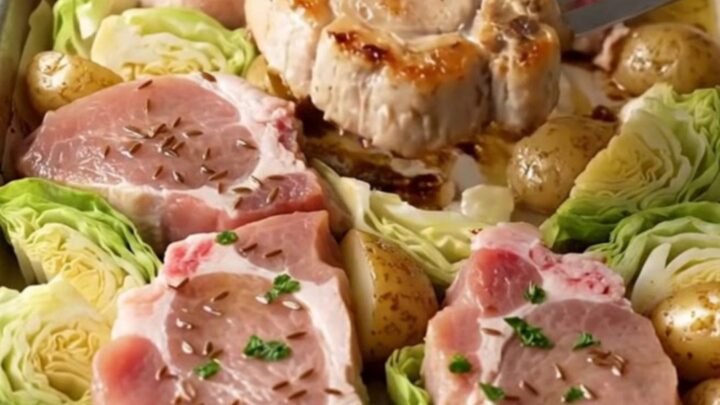
- Assemble the sheet panPreheat the oven to 400°F (200°C). Line a large rimmed sheet pan with parchment paper. Arrange the pork loin slices, cabbage wedges, and halved baby potatoes in a single layer on the prepared pan, ensuring they are not overcrowded to allow for proper roasting.Look for Vegetables and pork are in one flat layerTip Using a single layer ensures the vegetables brown rather than steam.
At the end of this phase, the sheet pan should be neatly arranged with the pork chops, cabbage wedges, and potatoes spread in a single layer. Everything should look organized and ready for the butter. Check that the parchment paper is properly tucked into the rim of the pan so that no juices leak out during the roasting process, and ensure the vegetables are positioned to maximize contact with the pan surface for better browning.
Roasting the Dish
- Season and bakeWhisk the caraway seeds into the melted butter in a small pitcher. Drizzle this mixture evenly over the pork, cabbage, and potatoes. Place the pan in the oven and roast for approximately 25 to 30 minutes, or until the pork reaches an internal temperature of 145°F (63°C). Let the meat rest at least 3 minutes before serving.Look for Butter is drizzled over all ingredientsSafe temperature 145°F (63°C) internal temperature (steaks, chops and roasts)Tip Ensure the butter coats the cabbage edges to help them crisp up nicely.
When the roasting is complete, the kitchen will smell fragrant with the aroma of toasted caraway seeds and roasted pork. The pork should appear golden-brown on the surface, the cabbage should have deeply caramelized edges, and the potatoes should be tender and lightly browned.
Use a probe thermometer to confirm the pork has reached 145°F (63°C). Everything should look vibrant and cooked through, with no signs of raw meat or undercooked vegetables present on the tray.
Final Garnish
- Garnish and serveRemove the pan from the oven and sprinkle the fresh parsley over the hot pork and vegetables. Let the pork rest for at least 5 minutes before serving to ensure the juices redistribute throughout the meat.Look for Pork is golden and vegetables have browned edgesSafe temperature 145°F (63°C) internal temperature (steaks, chops and roasts)Tip Fresh parsley adds a bright contrast to the earthy caraway seeds.
The final result should be a beautiful, rustic-looking dish with vibrant green parsley contrasting against the golden-brown pork and vegetables. After the 5-minute rest, the chops should be juicy and ready to plate. Check that the parsley is distributed evenly to add a fresh finish. The dish is now ready to be moved to plates, ensuring each serving gets a portion of the pork, cabbage, and potatoes along with some of the flavorful butter from the bottom of the pan.
Common mistakes
One common mistake is overcrowding the sheet pan, which traps moisture and causes the ingredients to steam rather than roast, resulting in soggy vegetables. Ensure there is enough space between the pork and the vegetables for the hot air to circulate.
Another mistake is cutting the potatoes into pieces that are too large, which will prevent them from becoming tender before the pork is finished. Finally, avoid skipping the resting period for the pork, as this is essential for maintaining the moisture and flavor of the meat.
How to tell it’s done
The pork is done when it reaches an internal temperature of 145°F (63°C) when measured with a meat thermometer in the thickest part of the chop. At this temperature, the meat will be cooked through but still remain succulent and tender.
The cabbage should be softened with charred, golden edges, and the potatoes should be easily pierced with a fork. Always let the meat rest for at least 5 minutes after removing it from the oven to allow the internal juices to settle before serving.
- Steaks, chops and roasts: 145°F (63°C) in the thickest part, then a 3-minute rest
Up next · Part 3 of 3
2 variations · storage & make-ahead · 3 answers · printable card
Tips, FAQ & printable recipe (Part 3)← Back to the ingredients (Part 1)