Breakfast · Part 2 of 3: Instructions
Savory Turkish Feta Pancakes with Peppers and Dill Step-by-step instructions
- Prep
- Cook
- Total
- Serves
- 4
Before you start
Before starting, gather all ingredients and measure them out. Whisk the eggs in a large bowl until they are fully beaten. Add the milk, oil, salt, and baking powder, and whisk until the mixture is frothy. Sift the flour into the bowl and fold it in gently.
Finally, fold in the crumbled feta, diced red peppers, and chopped dill. Have a large nonstick skillet or griddle ready, along with a spatula and a plate for the cooked pancakes. If you plan to keep the pancakes warm, preheat the oven to 200°F (95°C).
Ingredients at a glance (9)
- 2 large eggs
- 1 cup whole milk
- 1/4 cup vegetable oil
- 1 tsp salt
- 10 g baking powder
- 1 1/2 cups all-purpose flour
- 1/2 cup crumbled Turkish beyaz peynir feta
- 1/2 cup diced sweet red peppers
- 1/4 cup chopped fresh dill
Instructions
Phase 1: Mix the Batter
- Whisk the wet ingredientsIn a large mixing bowl, whisk the eggs until the yolks and whites are fully combined. Add the whole milk, vegetable oil, salt, and baking powder. Whisk vigorously for about 30 seconds until the mixture is light, aerated, and slightly frothy on top.Look for The wet mixture should be pale yellow, smooth, and have small bubbles on the surface.Tip Whisking well at this stage helps create a lighter pancake.
- Sift and fold the dry ingredientsSift the all-purpose flour directly into the wet mixture. Use a rubber spatula to fold the flour in gently, just until no dry streaks remain. The batter will be thick and lumpy—do not overmix.Look for The batter should be thick and cohesive, with a few small lumps remaining.Tip Overmixing develops gluten and makes pancakes tough.
- Add the feta, peppers, and dillFold the crumbled feta, diced sweet red peppers, and chopped fresh dill into the batter until evenly distributed. The batter will be chunky with pockets of cheese and vegetables.Look for The batter should be studded with colorful bits of pepper, green dill, and white feta.Tip If the feta is very salty, reduce the salt slightly or use a milder feta.
The wet ingredients should be well combined and slightly frothy after whisking. After adding the flour, the batter should be thick and cohesive, with no dry streaks.
The feta, peppers, and dill should be evenly distributed, creating a colorful, chunky batter. The batter should be thick enough to hold its shape when spooned onto the skillet.
Phase 2: Cook the Pancakes
- Heat the skilletPlace a large nonstick skillet or griddle over medium heat. Let it heat for 2 to 3 minutes until a drop of water sizzles and evaporates immediately. Add a small amount of oil or butter if needed, spreading it evenly.Look for The skillet should be hot enough that a water droplet dances and evaporates quickly.Tip Medium heat prevents burning while allowing the inside to cook through.
- Cook the first sidePour about 1/3 cup of batter per pancake onto the hot skillet. Spread it slightly with the back of a spoon to form a round pancake about 4 inches across. Cook for 2 to 3 minutes until the edges look set and bubbles form on the surface.Look for The edges will look dry and small bubbles will pop on the surface.Tip Do not flip too early—wait until the bottom is golden brown.
- Flip and brown the second sideCarefully slide a spatula under the pancake and flip it in one swift motion. Cook the second side for about 2 minutes until it is deeply golden brown and the center feels firm to the touch. The pancake should be cooked through to the center.Look for The second side should be bronzed and the pancake should feel springy when pressed.Safe temperature 160°F (71°C) internal temperature (egg dishes)Tip If the pancake browns too quickly, lower the heat slightly.
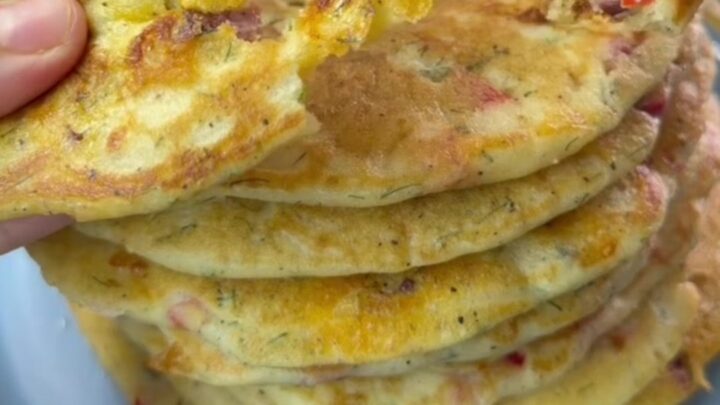
The first side should be golden brown with set edges and bubbles on the surface. After flipping, the second side should cook until deeply bronzed and the pancake feels firm in the center. The pancakes should be cooked through to the center, with no raw batter remaining. The kitchen should smell warmly of toasted cheese and herbs.
Phase 3: Serve and Enjoy
- Transfer to a platterTransfer the cooked pancakes to a serving platter. Keep them warm in a low oven (about 200°F/95°C) while cooking the remaining batter, if desired.Look for The pancakes should be evenly browned and slightly puffed.Tip Keeping them warm in the oven prevents them from cooling too quickly.
- Serve and break openServe the pancakes warm. Break one open to reveal the steamy, savory pockets of melted cheese and tender peppers inside. Enjoy immediately.Look for Steam rises from the interior, with visible pockets of melted feta and red pepper.Tip These pancakes are best eaten fresh out of the pan.
The pancakes should be transferred to a platter and kept warm if desired. When broken open, steam should rise from the interior, revealing melted cheese and tender pepper pieces. The texture should be moist and tender, with a crisp exterior. Serve immediately for the best experience.
Common mistakes
One common mistake is overmixing the batter, which can make the pancakes tough and dense. Mix just until the flour is incorporated, and don't worry about a few lumps. Another mistake is cooking the pancakes over too high heat, which can burn the outside while leaving the inside undercooked.
Use medium heat and be patient. Also, avoid overcrowding the skillet—cook one or two pancakes at a time to ensure even browning. Finally, don't skip the resting time for the batter; letting it sit for a few minutes allows the baking powder to activate and results in fluffier pancakes.
How to tell it’s done
The pancakes are done when they are deeply golden brown on both sides and feel firm to the touch in the center. To check for doneness, insert a toothpick into the center of a pancake; it should come out clean.
The internal temperature of the pancake should reach at least 160°F (71°C) to ensure the eggs are fully cooked. The edges will look set, and the pancake will release easily from the skillet when flipped. The cheese should be melted and the peppers tender.
- Egg dishes: 160°F (71°C) in the thickest part
Up next · Part 3 of 3
4 variations · storage & make-ahead · 5 answers · printable card
Tips, FAQ & printable recipe (Part 3)← Back to the ingredients (Part 1)