Dinner · Part 2 of 3: Instructions
Saucy Mongolian Beef Noodles in a Cast Iron Skillet Step-by-step instructions
- Prep
- Cook
- Total
- Serves
- 4
Before you start
Before turning on the stove, organize all ingredients near the skillet because stir-frying is an incredibly fast-paced cooking process. Slice the flank steak against the grain, cut the bell peppers into thin strips, and prep the noodles according to their packaging.
Have the savory sweet brown sauce measured and ready. Having everything prepped and within arm's reach prevents ingredients from overcooking while searching for utensils.
Ingredients at a glance (4)
- 1 lb flank steak, sliced
- 2 bell peppers, sliced
- 8 oz noodles, pre-cooked
- 1/2 cup savory sweet brown sauce
Instructions
Beef Preparation and Skillet Preheating
- Slice the Flank SteakSlice the flank steak against the grain into thin, bite-sized strips. Place the sliced beef into a bowl and keep it chilled in the refrigerator until ready to cook to ensure the meat remains fresh and safe.Look for The beef slices should be uniform in thickness.Tip Partially freezing the beef for 15 minutes makes slicing thin strips much easier.
The flank steak slices are thinly cut against the grain and ready for high-heat cooking, while the savory sweet brown sauce is measured and ready. The cast iron skillet is preheating over high heat until a faint wisp of smoke rises from the surface, indicating it is hot enough to sear the meat instantly.
High-Heat Searing and Sautéing
- Sear the Flank SteakHeat a large cast iron skillet over high heat. Add the sliced flank steak in a single, flat layer and sear undisturbed for 2 minutes to develop a deep crust. Toss and cook for 1 more minute until the internal temperature reaches 145°F (63°C). Transfer the beef to a plate and let it rest for 3 minutes.Look for The beef should have a dark, caramelized crust.Safe temperature 145°F (63°C) internal temperature (steaks, chops and roasts)Tip Do not crowd the pan, or the beef will steam instead of searing.
- Sauté the Sliced Bell PeppersIn the same hot skillet, add the sliced bell peppers. Sauté over high heat, tossing constantly, for about 2 minutes until they are tender-crisp with slightly charred edges.Look for The peppers should be bright and slightly blistered.Tip Keep the heat high to cook the peppers quickly without losing their crunch.
The flank steak has a beautifully caramelized crust on both sides and has reached a safe internal temperature of 145°F (63°C) before resting.
The sliced bell peppers are tossed rapidly over high heat, turning bright and tender-crisp with slightly charred edges while retaining their vibrant color and structural integrity.
Noodle Tossing and Glazing
- Toss the Noodles and SauceLower the heat to medium-high. Add the pre-cooked noodles directly to the skillet with the sautéed bell peppers, then pour the savory sweet brown sauce over the noodles, tossing immediately to coat them evenly.Look for The noodles should be fully coated in the liquid sauce.Tip Work quickly so the noodles do not stick to the bottom of the hot skillet.
- Combine and GlazeReturn the rested flank steak and any accumulated juices back into the skillet. Toss everything together continuously for 1 to 2 minutes until the sauce bubbles, thickens into a glossy glaze, and clings to the noodles and beef. Serve hot.Look for The sauce should be thick and glossy, with no excess liquid.Tip Remove from heat immediately once the sauce thickens to prevent it from burning.
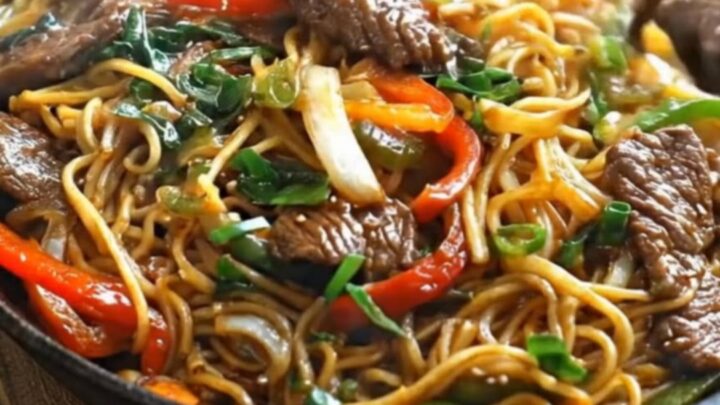
The noodles are fully incorporated into the skillet, and the savory sweet brown sauce has swirled over them, thickening into a glossy, rich glaze that clings tightly to every ingredient. Steam rises from the skillet, and the entire dish is uniform in color, with no excess thin liquid pooling at the bottom of the pan.
Common mistakes
One common mistake is crowding the cast iron skillet when searing the flank steak, which causes the meat to steam in its own juices rather than developing a caramelized crust.
To avoid this, sear the beef in a single layer, or work in batches if the skillet is small. Another frequent error is tossing the ingredients constantly; letting the beef sit undisturbed for the first minute is crucial for building that deep, savory sear.
How to tell it’s done
The flank steak is perfectly cooked when it develops a rich, dark brown crust on the exterior while remaining tender and juicy inside. To ensure food safety, the beef must reach an internal temperature of 145°F (63°C) when measured with a digital meat thermometer.
After reaching this temperature, transfer the beef to a clean plate and let it rest for at least 3 minutes to allow the juices to redistribute throughout the meat.
- Steaks, chops and roasts: 145°F (63°C) in the thickest part, then a 3-minute rest
Up next · Part 3 of 3
2 variations · storage & make-ahead · 4 answers · printable card
Tips, FAQ & printable recipe (Part 3)← Back to the ingredients (Part 1)