Desserts · Part 2 of 3: Instructions
Salted Caramel Stuffed Cinnamon Cruffins Step-by-step instructions
- Prep
- Cook
- Total
- Serves
- 6
Before you start
Before beginning, ensure all ingredients are at the appropriate temperatures. The croissant dough should be kept chilled until the moment you are ready to roll and laminate it. If your kitchen is warm, consider working on a cool surface like marble or granite.
Ensure your fluted molds are clean and lightly greased with butter to prevent sticking. Prepare your piping bag with the chilled salted caramel pastry cream so it is ready to go as soon as the pastries have cooled sufficiently. Preheating the oven early is critical for the initial rise.
Ingredients at a glance (4)
- 1 lb croissant dough, store-bought or made ahead
- 4 tbsp unsalted butter, melted
- 150 g Ceylon cinnamon caster sugar
- 80 g salted caramel pastry cream, made ahead
Instructions
Shaping the Layers
- Laminating and ShapingRoll the croissant dough into a thin sheet approximately 3 millimeters thick. Brush the surface evenly with the melted butter. Cut the dough into thin ribbons and roll them tightly into the fluted cruffin molds to create the signature layered structure.Look for The dough ribbons should be tightly coiled within the molds to ensure proper rising.Tip Keep the dough cold while working to maintain the integrity of the butter layers.
The dough should be rolled into thin, uniform ribbons and coiled tightly into the molds. Each coil should be snug but not packed too tightly, allowing space for the layers to expand and rise during the bake.
The dough should feel cool to the touch throughout the shaping process, ensuring the butter remains distinct between the layers for the best possible texture.
Baking and Coating
- Baking and CoatingPreheat the oven to 390°F. Place the molds on a baking sheet and bake for 19 minutes until deeply golden and flaky. Remove from the oven and while still warm, roll the pastries in the cinnamon sugar until evenly coated.Look for The pastries should sound hollow when tapped and have a deep golden brown color.Tip Roll in sugar while warm so it adheres properly to the buttery surface.
The cruffins should emerge from the oven with a deep, toasted golden color and a significant rise. They should smell intensely of butter and caramel. The cinnamon sugar should be ready in a shallow bowl to ensure the entire exterior is coated quickly while the pastries remain warm enough for the sugar to stick without melting into a syrup.
Final Filling
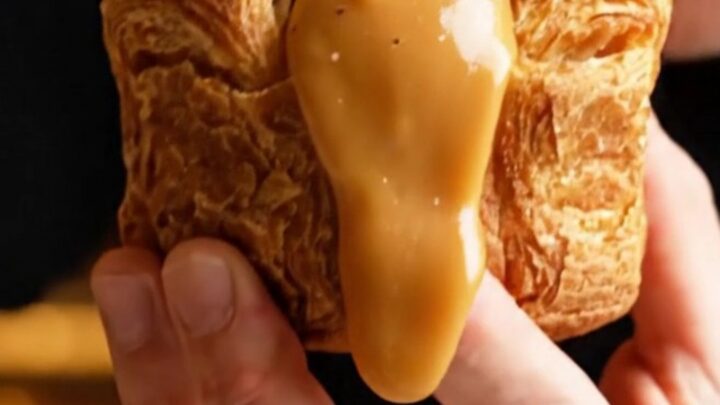
- FillingFill a piping bag with the salted caramel pastry cream. Insert the tip into the center of each cooled cruffin and pipe approximately 13 grams of cream into the core of each pastry. Serve immediately to enjoy the contrast of textures.Look for The pastry should feel slightly heavier once filled, indicating the core is full.Safe temperature 160°F (71°C) internal temperature (egg dishes)Tip Use a long, narrow piping tip for easier access to the center of the cruffin.
The cruffins should be cool to the touch before piping to prevent the salted caramel cream from softening or leaking. When filled, the pastry should feel sturdy and slightly heavier. The cream should be thick enough to stay within the center of the cruffin, providing a silky, smooth contrast to the crunchy, cinnamon-dusted exterior of the finished pastry.
Common mistakes
Avoid over-handling the dough, as this can warm the butter and cause the layers to merge, resulting in a dense pastry rather than a flaky one. Ensure the oven temperature is accurate; if the oven is too cool, the butter will melt before the structure sets, leading to greasy, flat cruffins.
Do not overfill the piping bag, as this can make it difficult to control the flow and may cause the pastry to burst if too much pressure is applied during the filling step.
How to tell it’s done
The cruffins are done when the exterior is a deep, golden brown and the layers feel firm and crisp to the touch. When tapped, the pastries should sound hollow, indicating they are fully baked through.
The internal temperature of the filling, which contains eggs, should reach 160°F (71°C) to ensure it is safe and properly set. Always check for a uniform color across the top and sides of the cruffins before removing them from the oven.
- Egg dishes: 160°F (71°C) in the thickest part
Up next · Part 3 of 3
2 variations · storage & make-ahead · 3 answers · printable card
Tips, FAQ & printable recipe (Part 3)← Back to the ingredients (Part 1)