Dinner · Part 2 of 3: Instructions
Rustic One-Pan Blistered Tomato and Sweet Pepper Shell Pasta Step-by-step instructions
- Prep
- Cook
- Total
- Serves
- 4
Before you start
Before you start, bring a large pot of salted water to a boil for the pasta. Cook the pipe rigate according to package instructions until al dente, then drain and set aside. While the pasta cooks, prepare the vegetables: wash the tomatoes and peppers, peel the onion and cut it into quarters, and separate the garlic cloves.
Have all your ingredients measured and within reach, as the cooking moves quickly once you start searing. The skillet should be large enough to hold the vegetables and later the pasta without overcrowding.
Ingredients at a glance (10)
- 1/4 cup olive oil
- 4 whole ripe tomatoes
- 2 whole red horn peppers
- 1 medium onion, quartered
- 5 cloves garlic
- Salt to taste
- Black pepper to taste
- 1 tsp dried oregano
- 300 g boiled pipe rigate shell pasta
- 1 cup shredded mozzarella cheese
Instructions
Sear and crush
- Sear the vegetablesHeat the olive oil in a large skillet over medium heat. Add the whole tomatoes, red horn peppers, quartered onion, and garlic cloves. Cover the skillet and let the vegetables sear until they are blistered and tender, about 10 to 12 minutes, turning occasionally to ensure even charring.Look for The tomatoes will split and release juice, the peppers will soften, and the garlic will turn golden.Tip Do not stir too often; let the vegetables sit to develop a nice char.
- Crush the vegetablesRemove the lid and use a spatula to crush the softened tomatoes, peppers, and roasted garlic directly in the skillet. Stir to combine into a chunky sauce. Season with salt, black pepper, and dried oregano. Let the sauce simmer uncovered for 5 to 7 minutes, until it thickens slightly.Look for The sauce will be thick and chunky with visible pieces of pepper and tomato.Tip Crush the garlic cloves well so they melt into the sauce.
After this phase, the vegetables should be blistered and tender, with charred spots on the tomatoes and peppers. The garlic will be golden and soft.
When you crush them, the mixture should form a thick, chunky sauce that smells sweet and savory. The sauce should be bubbling gently and have reduced slightly. Taste and adjust seasoning before moving on.
Combine pasta and cheese
- Add the pasta and cheeseAdd the boiled pipe rigate shell pasta to the skillet with the sauce. Toss gently to coat the pasta evenly. Sprinkle the shredded mozzarella cheese over the pasta and continue tossing until the cheese melts and clings to every shell.Look for The cheese will stretch and coat the pasta, making the sauce creamy and glossy.Tip Use tongs or a wooden spoon to toss without breaking the pasta.
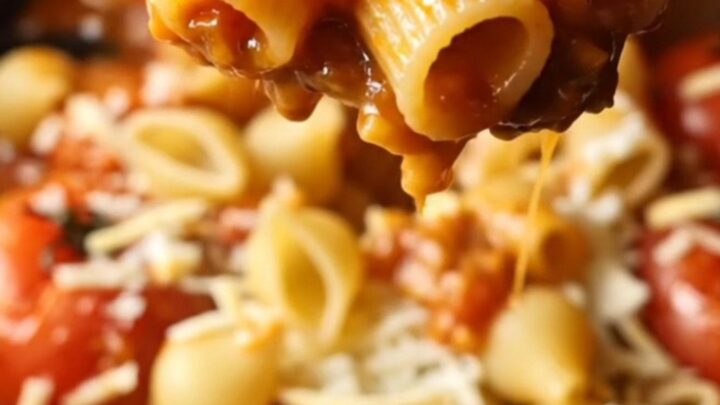
The pasta should be evenly coated with the sauce, and the mozzarella should be fully melted, creating a creamy, glossy texture. You should see cheese stretching as you toss. The shells should be filled with sauce and cheese. The dish looks inviting and rich, with a golden hue from the blistered tomatoes and peppers.
Serve hot
- Serve immediatelySpoon the pasta into bowls or onto a platter. Serve hot, with extra black pepper or a drizzle of olive oil if desired. The sauce should be thick and clinging to the pasta, with melted cheese in every bite.Look for The pasta is coated in a rich, chunky sauce with gooey cheese.Tip For extra cheesiness, add a little more mozzarella on top before serving.
The final dish is ready to serve. The pasta is hot, the sauce is thick and clinging, and the cheese is gooey. A spoonful should show the pasta shells coated in a rustic, chunky sauce with visible bits of pepper and tomato. The aroma is warm and inviting, with notes of roasted garlic and oregano. Serve immediately for the best texture.
Common mistakes
One common mistake is overcrowding the skillet, which steams the vegetables instead of searing them. Use a large enough pan and don't stir too frequently. Another is overcooking the pasta—cook it al dente because it will continue to cook slightly when tossed with the hot sauce.
Also, be careful not to burn the garlic; if it starts to darken too much, lower the heat. Finally, don't skimp on the cheese—it's what makes the sauce creamy and helps it cling to the pasta.
How to tell it’s done
The pasta is done when the sauce is thick and chunky, and the cheese is fully melted and clinging to the shells. The vegetables should be tender and easily crushed with a spatula. There is no protein in this dish, so no internal temperature check is needed.
To test, scoop a spoonful and let it cool slightly—the sauce should coat the pasta without being watery. If it seems too thin, let it simmer a minute longer. The dish is ready to serve immediately, while it's hot and the cheese is stretchy.
Up next · Part 3 of 3
4 variations · storage & make-ahead · 5 answers · printable card
Tips, FAQ & printable recipe (Part 3)← Back to the ingredients (Part 1)