Dinner · Part 2 of 3: Instructions
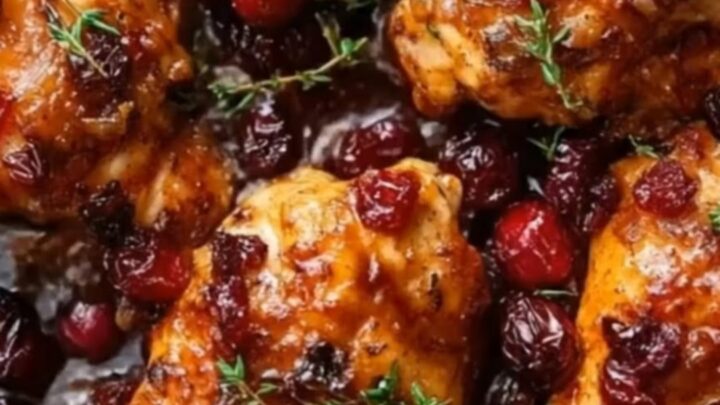
Rustic Cranberry Orange Glazed Chicken Skillet Step-by-step instructions
- Prep
- Cook
- Total
- Serves
- 4
Before you start
Before beginning, ensure all ingredients are measured and ready. Pat the chicken thighs thoroughly dry with paper towels to facilitate even searing. Prepare the orange juice and have the fresh cranberries and thyme sprigs within reach.
Clear adequate counter space near the stove to accommodate the skillet and the serving plate, and keep a meat thermometer nearby to accurately check for doneness once the cooking process is complete.
Ingredients at a glance (4)
- 4 pieces bone-in, skin-on chicken thighs
- 1 cup fresh cranberries
- 1/2 cup fresh orange juice
- 2 sprigs fresh thyme
Instructions
Searing the Chicken
- Sear the ChickenPlace the cast-iron skillet over medium-high heat. Once hot, carefully add the chicken thighs, skin-side down. Sear the chicken until the skin becomes golden brown and crispy, which helps develop a deep, savory foundation for the final dish. Ensure the heat remains steady to prevent burning the skin while rendering the fat.Look for Skin is golden brown and crispyTip Do not move the chicken until the skin releases naturally from the pan surface.
The chicken skin should be golden brown and crisp, with a rich color across the surface. This phase is complete when the fat has rendered and the skin has detached easily from the pan, indicating a proper sear that will hold up during the subsequent braising step in the acidic fruit mixture.
Creating the Glaze
- Simmer in GlazeFlip the chicken thighs over. Pour the fresh orange juice into the skillet, then add the fresh cranberries and thyme sprigs around the meat. Lower the heat to medium-low and allow the sauce to simmer gently. The cranberries will soften and burst, creating a thick, ruby-red, glossy glaze that coats the chicken perfectly.Look for Cranberries burst and sauce thickensTip Baste the chicken with the pan juices periodically for a more uniform flavor and shine.
The cranberries should begin to soften and burst, releasing their juices into the orange liquid. The sauce will gradually thicken as the natural sugars concentrate, turning into a beautiful, ruby-red, glossy coating.
Check that the thyme sprigs have released their aromatic oils into the simmering liquid before proceeding to the final stage.
Final Resting
- Finish and RestContinue simmering the chicken until it is cooked through and reaches an internal temperature of 165°F (74°C). Remove the skillet from the heat and transfer the chicken to a warm plate. Let the chicken rest for at least 5 minutes before serving to ensure the meat remains succulent and the juices are properly redistributed.Look for Chicken is fully cooked and juices run clearSafe temperature 165°F (74°C) internal temperature (poultry)Tip Use a meat thermometer inserted into the thickest part of the thigh, avoiding the bone, for accuracy.
The chicken should be fully cooked, tender, and coated in a thick, shiny glaze. After removing the skillet from the heat, the chicken must rest for 5 minutes. This allows the internal fibers to relax and the juices to redistribute, ensuring every bite is succulent and perfectly seasoned before the final serving.
Common mistakes
A common mistake is overcrowding the skillet, which causes the chicken to steam rather than sear; ensure there is space between the pieces. Another error is failing to let the chicken rest after cooking, which allows the juices to escape, leading to drier meat.
Avoid using high heat for the entire process, as the sugars in the fruit glaze can burn quickly if the heat is not properly managed during the final simmering phase.
How to tell it’s done
The chicken is done when the skin is deeply golden and crispy, and the meat is tender and cooked through. Using a meat thermometer, ensure the internal temperature of the thickest part of the thigh reaches 165°F (74°C).
The sauce should be reduced to a syrupy, glossy consistency that clings to the back of a spoon, and the cranberries should be soft and partially incorporated into the glaze.
- Poultry: 165°F (74°C) in the thickest part
Up next · Part 3 of 3
2 variations · storage & make-ahead · 3 answers · printable card
Tips, FAQ & printable recipe (Part 3)← Back to the ingredients (Part 1)