Dinner · Part 2 of 3: Instructions
Roasted Vegetable Pipe Rigate Pasta with Melted Cheese Step-by-step instructions
- Prep
- Cook
- Total
- Serves
- 4
Before you start
Before you start, set out all the ingredients. Halve the baby eggplants lengthwise, halve and seed the sweet red peppers, and cut the onion into wedges. Leave the tomatoes whole. Measure the olive oil, paprika, salt, and pepper.
Bring a large pot of salted water to a boil for the pasta. Have the shredded mozzarella and chopped parsley ready. The skillet should be large enough to hold the vegetables and later the pasta; a 12-inch skillet works well. Keep a cup of reserved pasta water nearby.
Ingredients at a glance (11)
- 4 baby eggplants, halved lengthwise
- 2 sweet red peppers, halved and seeded
- 4 whole tomatoes
- 1 yellow onion, cut into wedges
- 3 tbsp olive oil
- 2 tsp paprika
- 1 tsp kosher salt
- 1/2 tsp black pepper
- 10 oz pipe rigate pasta
- 1 cup shredded mozzarella cheese
- 1/4 cup fresh parsley, chopped
Instructions
Roast and Soften
- Roast the VegetablesHeat the olive oil in a large skillet over medium heat. Add the halved baby eggplants, sweet red peppers, whole tomatoes, and onion wedges. Season with paprika, salt, and black pepper. Toss gently to coat the vegetables in the oil and spices. Cover the skillet with a glass lid and reduce the heat to low. Let the vegetables steam and roast for 20 to 25 minutes, until the eggplant skins are soft and the tomatoes have burst. Stir once halfway through.Look for The vegetables are tender, the tomatoes have released their juices, and the kitchen smells sweet and smoky.Tip Cut the eggplant halves in half again if they are large, so they cook evenly.
- Uncover and ThickenRemove the lid and increase the heat to medium-high. Let the liquid bubble and reduce for 3 to 4 minutes, stirring occasionally, until the sauce has thickened and the vegetables have broken down into a chunky, rustic sauce. Use the back of the spoon to crush the tomatoes against the side of the skillet.Look for The sauce is glossy and thick enough to coat the back of a spoon.Tip Do not over-reduce; you want a little sauce to coat the pasta, not a dry skillet.
After this phase, the vegetables should be tender and fragrant. The eggplant skins have softened, the peppers have collapsed, and the tomatoes have burst, releasing their juices into a light sauce. The onion wedges are translucent and sweet.
The skillet should have a glossy, slightly thickened liquid at the bottom. The aroma is warm and smoky from the paprika. Before moving on, ensure the vegetables are fully cooked — they should yield easily to a fork. If they are still firm, cover and cook for a few more minutes.
Combine and Melt
- Boil the PastaWhile the vegetables roast, bring a large pot of generously salted water to a boil. Add the pipe rigate and cook according to the package instructions until al dente, usually 9 to 11 minutes. Reserve 1 cup of the pasta water before draining, then drain the pasta well.Look for The pasta is tender but still has a slight bite in the center.Tip Reserve more pasta water than you think you need; it is the key to a silky sauce.
- Combine Pasta and SauceAdd the drained pipe rigate to the skillet with the roasted vegetable sauce. Toss gently to coat every shell with the sauce. If the mixture looks dry, splash in some of the reserved pasta water, a tablespoon at a time, until the sauce clings to the pasta.Look for The pasta is evenly coated and the sauce has a loose, creamy consistency.Tip Use a wooden spoon to toss; the shells are delicate and can break if stirred too hard.
- Melt the CheeseSprinkle the shredded mozzarella over the pasta. Cover the skillet and let it sit over low heat for 2 to 3 minutes, until the cheese is melted and pulls into webs when lifted.Look for The cheese is fully melted and stretches when you lift a spoonful.Tip If you prefer a browner top, place the skillet under the broiler for a minute.
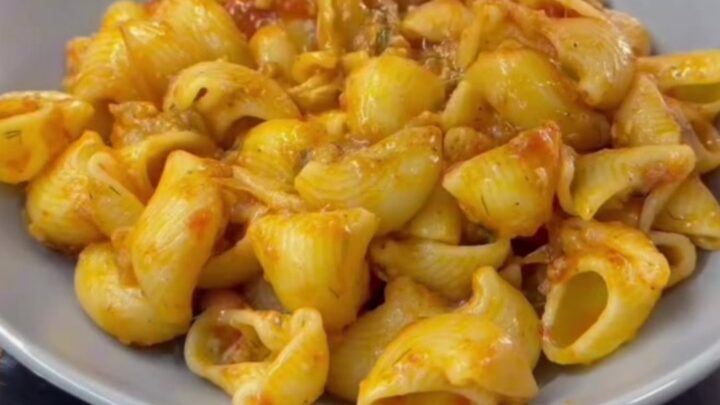
The pasta is now coated in the roasted vegetable sauce, and the mozzarella has melted into a creamy, stretchy layer. The sauce has thickened and clings to the pasta shells. The cheese pulls into long webs when you lift a spoonful.
The skillet should look cohesive, with no dry spots. Taste a bite to check for seasoning — add a pinch of salt or pepper if needed. The texture should be saucy but not watery, with the pasta well coated. If it seems dry, add a splash of reserved pasta water and toss.
Garnish and Serve
- Garnish and ServeRemove the skillet from the heat. Sprinkle the chopped parsley over the top. Serve hot, lifting heaping spoonfuls so the cheese stretches.Look for The parsley adds a fresh green contrast to the rich, cheesy pasta.Tip Serve straight from the skillet for a rustic, family-style meal.
The parsley adds a fresh, bright green contrast to the rich, cheesy pasta. The dish is ready to serve straight from the skillet. The cheese should still be warm and stretchy, and the sauce should coat each shell. The overall look is rustic and inviting, with the roasted vegetables visible among the pasta. Serve immediately while the cheese is melted and the dish is hot. The skillet can be brought to the table for a family-style presentation.
Common mistakes
A common mistake is overcooking the vegetables, which turns them into a mushy puree. Keep the heat low and check them occasionally. Another issue is a dry sauce — if the skillet looks dry before adding the pasta, splash in some of the reserved pasta water.
Do not drain the pasta too thoroughly; a little clinging water helps the sauce coat. Also, do not skip the lid during the roasting phase, as it traps steam and ensures the vegetables soften properly. Finally, add the cheese only after the pasta is in the skillet, so it melts into the dish rather than burning on the bottom.
How to tell it’s done
The vegetables are done when the eggplant skins are soft and easily pierced with a fork, and the tomatoes have burst and released their juices. The sauce should be thick and glossy, coating the back of a spoon. The pasta is al dente when it is tender but still has a slight bite in the center. The cheese is melted when it is fully smooth and stretches when you lift a spoonful. There is no raw protein in this recipe, so no internal temperature check is needed.
Up next · Part 3 of 3
4 variations · storage & make-ahead · 5 answers · printable card
Tips, FAQ & printable recipe (Part 3)← Back to the ingredients (Part 1)