Dinner · Part 2 of 3: Instructions
Roasted Tomato Pepper Pasta with Melted Mozzarella Step-by-step instructions
- Prep
- Cook
- Total
- Serves
- 4
Before you start
Heat the oven to 425°F (220°C). Halve the tomatoes, quarter the peppers and onion, and peel the garlic. Measure the olive oil and salt.
Have the pasta, water, mozzarella, and basil ready. You'll need a rimmed baking sheet, a blender or food processor, and a large skillet or Dutch oven with a lid.
Ingredients at a glance (11)
- 4 large ripe tomatoes, halved
- 2 red peppers, seeded and quartered
- 1 onion, quartered
- 6 cloves garlic, peeled
- 3 tbsp extra virgin olive oil
- 1 tsp kosher salt, plus more to taste
- 12 oz shell pasta (rigate)
- 3 cups water
- 8 oz shredded mozzarella cheese
- 1/4 cup fresh basil leaves, torn
- freshly ground black pepper, for serving
Instructions
Roast and Blend
- Roast the vegetablesHeat the oven to 425°F (220°C). On a rimmed baking sheet, toss the halved tomatoes, quartered red peppers, onion quarters, and garlic cloves with the olive oil and salt. Spread in a single layer. Roast for 25–30 minutes, until the vegetables are softened and charred in spots. Remove from the oven and let cool slightly.Look for The vegetables are tender, with blistered skins and a sweet aroma.Tip Use a baking sheet large enough to avoid overcrowding, which helps caramelization.
- Blend the sauceTransfer the roasted vegetables and any accumulated juices to a blender or food processor. Blend until smooth and creamy. Taste and adjust salt if needed. Set the sauce aside.Look for The sauce is thick and glossy, with a deep roasted color.Tip Blend in batches if necessary, and be careful with hot steam when opening the blender lid.
The vegetables are soft and charred, filling the kitchen with a sweet, roasted aroma. The blended sauce is smooth and thick, with a deep reddish-orange color. Taste it and adjust salt if needed. This is the flavor base for the entire dish, so make sure it's well seasoned.
Simmer and Melt
- Cook the pasta in the saucePour the sauce into a large skillet or Dutch oven. Add the shell pasta and water. Stir to combine. Bring to a boil over medium-high heat, then reduce to a simmer. Cover and cook, stirring occasionally, until the pasta is al dente and has absorbed most of the liquid, about 15–18 minutes.Look for The pasta is tender and the sauce has thickened to coat the shells.Tip Stir frequently to prevent sticking, especially toward the end of cooking.
- Fold in the cheeseRemove the skillet from the heat. Add the shredded mozzarella and torn basil. Fold gently until the cheese is melted and the sauce is creamy. The residual heat will melt the cheese without making it stringy.Look for The cheese is fully melted and the sauce is silky and cohesive.Tip Fold rather than stir vigorously to keep the pasta intact.
The pasta is cooking in the sauce, which is bubbling gently and thickening. The shells are absorbing the liquid, and the sauce is becoming creamier.
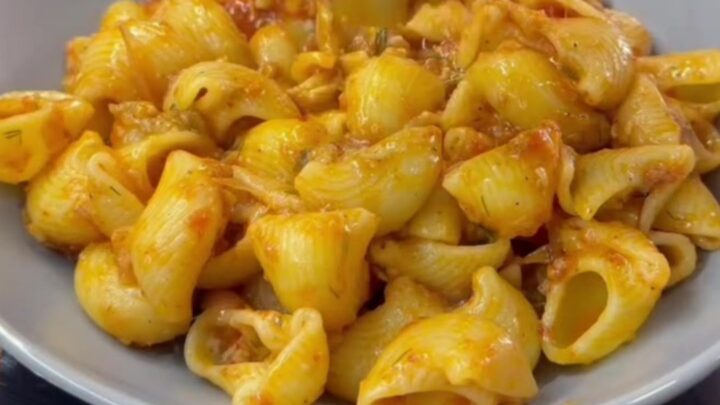
When the pasta is al dente, the mozzarella is folded in and melts into long, stretchy strands. The mixture looks glossy and cohesive.
Serve and Savor
- Serve with fresh basil and pepperSpoon the pasta into warm bowls. Top with additional fresh basil and a generous grinding of black pepper. Serve immediately while hot and creamy.Look for The pasta is glossy, with melted cheese pulling in long strands.Tip For an extra touch, drizzle with a little olive oil just before serving.
The pasta is piping hot, with a creamy, glossy sauce clinging to every shell. Fresh basil adds a pop of green, and black pepper provides a subtle bite. The cheese pulls in strings as you serve. It's ready to enjoy immediately.
Common mistakes
Avoid overcrowding the baking sheet, which prevents proper roasting and caramelization. Blend the sauce until completely smooth for the best texture.
When cooking the pasta, stir occasionally to prevent sticking, especially as the sauce thickens. Don't overcook the pasta; it should be tender but still have a slight bite. Add the cheese off the heat to prevent it from becoming rubbery.
How to tell it’s done
The pasta is done when it is al dente and has absorbed most of the sauce, leaving a creamy coating. The cheese should be fully melted and the sauce glossy.
If the pasta looks dry before it's tender, add a splash of water and continue cooking. There is no raw protein in this recipe, so no internal temperature check is needed.
Up next · Part 3 of 3
4 variations · storage & make-ahead · 5 answers · printable card
Tips, FAQ & printable recipe (Part 3)← Back to the ingredients (Part 1)