Dinner · Part 2 of 3: Instructions
Roasted Smashed Tomato Tagliatelle with Mozzarella Step-by-step instructions
- Prep
- Cook
- Total
- Serves
- 4
Before you start
Before you start, bring a large pot of salted water to a boil for the pasta. Have all your ingredients ready: tomatoes, peppers, and garlic washed; mozzarella shredded if not pre-shredded; basil leaves picked.
Heat a large skillet over high heat so it's screaming hot when the vegetables go in. Keep a potato masher and a measuring cup for the pasta water nearby. The whole dish comes together quickly once the vegetables roast, so having everything prepped makes the process smooth.
Ingredients at a glance (9)
- 6 medium ripe tomatoes
- 2 medium green peppers
- 6 cloves garlic
- 3 tbsp olive oil
- 1 tsp dried oregano
- 1/2 cup starchy pasta water
- 12 oz tagliatelle pasta
- 8 oz shredded mozzarella
- 1/4 cup fresh basil leaves
Instructions
Roast and Smash
- Roast the VegetablesHeat a large skillet over high heat. Add the olive oil, then the whole ripe tomatoes, green peppers, and garlic cloves. Sprinkle with dried oregano. Roast, turning occasionally, until the tomatoes are blistered and soft, the peppers are charred in spots, and the garlic is tender, about 15 minutes.Look for Tomatoes split and release juices, peppers have blackened edges, garlic is golden.Tip Keep the vegetables whole so they roast evenly and develop deep flavor.
- Smash into SauceUse a potato masher to crush the roasted tomatoes and peppers right in the skillet. Add the starchy pasta water and stir until a glossy, chunky sauce forms. Reduce the heat to low to keep warm.Look for The sauce is thick, glossy, and slightly chunky.Tip Smash to your preferred texture—chunky or smooth.
The skillet should be filled with blistered, charred tomatoes, peppers, and garlic. The tomatoes will have split and released their juices, and the peppers will have blackened edges.
The garlic will be soft and golden. When you smash them, the sauce should be chunky, glossy, and fragrant with oregano. If the vegetables are not charred enough, give them a few more minutes.
Cook and Combine
- Cook the PastaBring a large pot of salted water to a boil. Cook the tagliatelle until al dente according to package directions. Reserve at least 1/2 cup of the pasta water before draining.Look for Pasta is tender but still has a slight bite.Tip Use the reserved pasta water to loosen the sauce if needed.
- Combine Pasta and SauceAdd the drained tagliatelle directly to the skillet with the sauce. Use tongs to toss the pasta, coating every ribbon with the roasted tomato sauce. If the sauce seems thick, splash in a little of the reserved pasta water.Look for Pasta is evenly coated and glossy.Tip Toss over low heat so the sauce clings to the pasta.
The pasta is al dente, and the sauce is warm and glossy. When you add the pasta to the skillet, the sauce should coat it evenly, with no dry spots. The sauce should be thick enough to cling but loose enough to move. The pasta should be well-coated and every strand should be glistening with the roasted tomato mixture.
Cheese and Serve
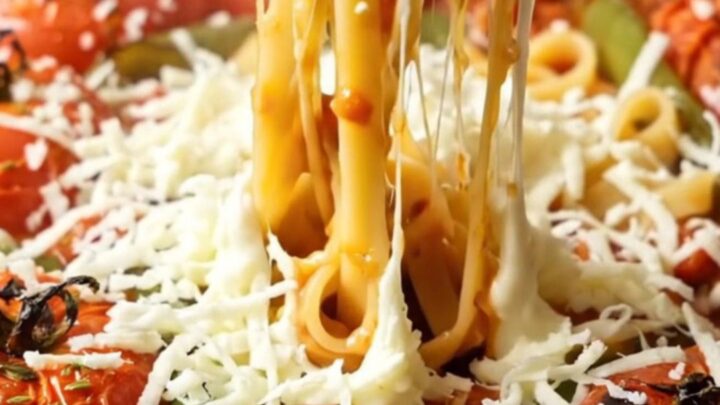
- Melt the MozzarellaSprinkle the shredded mozzarella over the pasta. Fold it in gently with the tongs until the cheese melts into long, stretchy strings. Continue folding just until the cheese is fully melted and the pasta is creamy.Look for Cheese pulls into long strands as you fold.Tip Do not overmix—stop when the cheese just melts.
- Serve with BasilTwirl a forkful of the pasta, top with fresh basil leaves, and serve immediately. The cheese pull should be long and dramatic.Look for Steam rises, basil adds freshness, cheese stretches.Tip Serve right away for the best cheese pull.
The mozzarella is melted and stretchy, pulling into long strings as you fold. The pasta is creamy and glossy, with no visible clumps of cheese. The basil leaves add a fresh, green contrast. The dish should look inviting, with steam rising and the cheese pull being the star. Serve immediately for the best texture.
Common mistakes
A common mistake is overcrowding the skillet, which steams the vegetables instead of roasting them. Use a large skillet and give the vegetables space. Another pitfall is overcooking the pasta—cook it just to al dente because it will continue to cook slightly in the sauce.
Also, do not add all the mozzarella at once; sprinkle it evenly and fold gently to avoid clumping. Finally, resist the urge to overmix once the cheese melts—too much stirring can make the cheese rubbery.
How to tell it’s done
The dish is done when the pasta is al dente, the sauce is glossy and coats the pasta evenly, and the mozzarella is fully melted and stretchy. The sauce should be thick enough to cling to the pasta but loose enough to flow slightly.
To test, twirl a forkful—the cheese should pull into long strands without breaking. The flavors should be sweet, savory, and slightly charred. If the sauce seems dry, add a splash of reserved pasta water and toss.
Up next · Part 3 of 3
4 variations · storage & make-ahead · 5 answers · printable card
Tips, FAQ & printable recipe (Part 3)← Back to the ingredients (Part 1)