Dinner · Part 2 of 3: Instructions
Roasted Butternut Squash Lasagna with Brown Butter and Hazelnuts Step-by-step instructions
- Prep
- Cook
- Total
- Serves
- 8
Before you start
Before beginning, ensure all ingredients are measured and ready. Roast the butternut squash and garlic until tender, allowing them to cool slightly before puréeing. Shred the Fontina cheese and crush the toasted hazelnuts so they are ready for assembly.
Preheat your oven to 375°F (190°C) and ensure you have a clean 9x13 inch baking dish prepared. Organizing your workspace in advance prevents rushing during the béchamel preparation and ensures a smooth assembly process.
Ingredients at a glance (10)
- 800 grams roasted butternut squash, puréed
- 1/4 tsp ground nutmeg
- 3 cloves roasted garlic
- 80 grams unsalted butter
- 6 leaves fresh sage
- 600 ml whole milk
- 1/4 cup all-purpose flour
- 1 pound fresh pasta sheets
- 250 grams Fontina cheese, shredded
- 1/4 cup toasted hazelnuts, crushed
Instructions
Squash Preparation
- Prepare the Squash PuréePlace the roasted butternut squash into a food processor. Add the roasted garlic cloves and ground nutmeg. Pulse the mixture until it reaches a perfectly smooth, velvety consistency. Set aside the purée in a mixing bowl until the assembly phase.Look for The mixture should be completely smooth with no visible lumps of squash or garlic.Tip Ensure the squash is at room temperature before blending to achieve the best texture.
The squash purée should be uniform in texture and vibrant in color. It should smell fragrant from the roasted garlic and nutmeg.
Check that the purée is thick enough to hold its shape when spread, rather than being overly runny or watery, which ensures the lasagna maintains its structure during the baking process.
Béchamel Creation
- Create the Sage Brown Butter BéchamelIn a heavy-bottomed saucepan, melt the butter over medium heat. Continue cooking the butter, swirling the pan frequently, until it turns a deep golden brown and develops a nutty aroma. Add the fresh sage leaves to the butter, then whisk in the flour. Gradually pour in the milk while whisking constantly to prevent lumps. Continue cooking over medium heat until the sauce thickens enough to coat the back of a spoon.Look for The sauce should be thick, creamy, and fragrant with the scent of toasted butter and sage.Tip Watch the butter closely during the browning process, as it can go from toasted to burnt very quickly.
The brown butter béchamel should have a glossy, smooth finish with a distinct nutty aroma. The color should be a rich, creamy beige, speckled with bits of fried sage. It should be thick enough to coat a spoon evenly, which indicates the flour and milk have emulsified perfectly to create a stable, velvety sauce.
Final Assembly and Bake
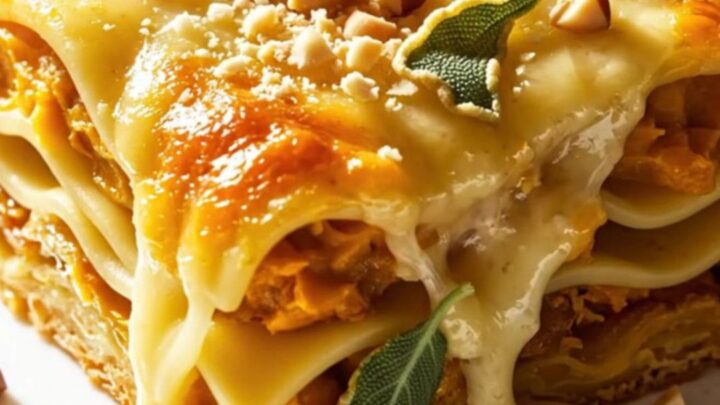
- Assemble and BakePreheat your oven to 375°F (190°C). Spread béchamel in a 9x13 inch dish. Layer pasta, squash purée, and Fontina cheese. Repeat layers, finishing with sauce and cheese. Bake for 35 minutes until golden and bubbling. Remove, top with crushed hazelnuts, and serve hot.Look for The lasagna is done when the top is golden brown and the sauce is bubbling vigorously around the edges.Tip Let the lasagna rest for 10 minutes after removing it from the oven to ensure clean slices when serving.
The lasagna is ready when the top layer of Fontina is melted and golden, and the sauce is bubbling evenly across the entire dish. The edges should be slightly crisp, and the aroma filling the kitchen should be savory and nutty. A quick check with a knife confirms the pasta is tender throughout.
Common mistakes
Avoid overheating the butter during the browning process, as burnt butter will impart a bitter flavor to the entire béchamel. Ensure your béchamel is smooth; if lumps form, whisk vigorously or strain the sauce before layering.
Do not overstuff the lasagna with too much squash purée in one layer, as this can make the dish soggy; distribute the ingredients evenly to maintain the structural integrity of the final bake.
How to tell it’s done
The lasagna is perfectly done when the top is golden brown and the edges show signs of bubbling sauce. The center should be hot and set, and the pasta layers should be tender when pierced with a knife.
Allow the dish to rest for at least 10 minutes to allow the layers to settle, which makes portioning much easier and prevents the sauce from running when sliced.
Up next · Part 3 of 3
2 variations · storage & make-ahead · 3 answers · printable card
Tips, FAQ & printable recipe (Part 3)← Back to the ingredients (Part 1)