Desserts · Part 2 of 3: Instructions
Rich and Fudgy Matilda Chocolate Cake Step-by-step instructions
- Prep
- Cook
- Total
- Serves
- 12
Before you start
Before beginning, ensure the workspace is clean and all equipment is ready. Take the frosting out of the refrigerator about 20 minutes before assembly so it reaches a spreadable consistency.
If the cake layers were stored in the freezer, they must be completely thawed. Have a flat plate, a long offset spatula, and a sharp knife nearby to facilitate the assembly and ensure a clean, professional look for the final presentation.
Ingredients at a glance (2)
- 3 layers chocolate cake layers, baked and cooled (store-bought or made ahead)
- 3 cups chocolate fudge frosting
Instructions
Layer Preparation
- Prepare the layersEnsure all three chocolate cake layers are completely cooled to room temperature before beginning assembly. If the layers have a rounded top, use a serrated knife to carefully trim them into flat, even circles to ensure the finished cake stands straight and stable on the serving platter.Look for The cake layers should be firm to the touch and entirely cool.Tip Cooling the layers thoroughly prevents the frosting from melting during assembly.
The cake layers must be perfectly flat and completely cold. Check for any uneven tops that might cause the cake to lean. If necessary, trim the tops with a serrated knife to create a level surface for the frosting. This ensures the structural stability of the three layers and makes the final cake look uniform and professional on the serving stand.
Assembly and Frosting
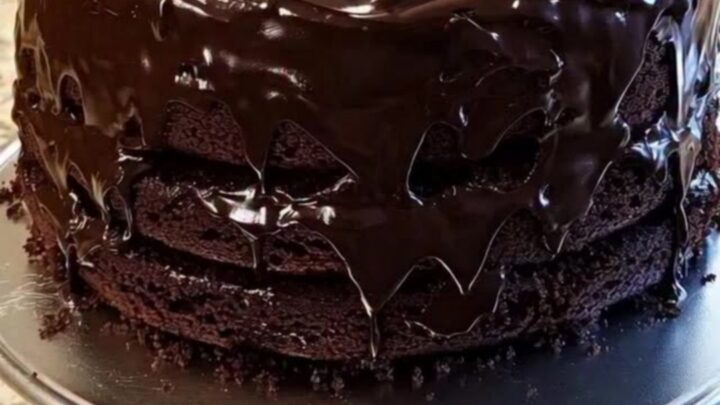
- Assemble the cakePlace the first cake layer on a flat serving plate or cake stand. Spread a generous, even layer of the chocolate fudge frosting over the top. Carefully place the second cake layer on top and repeat the frosting process. Finish by adding the final cake layer and covering the top and sides with the remaining frosting.Look for The frosting should be smooth and evenly distributed across the entire surface.Tip Use an offset spatula for the cleanest, most professional-looking finish on the sides.
The cake should look uniform, with the frosting neatly applied between the layers and covering the exterior. Ensure the sides are smooth and the top is flat.
The frosting should be consistent in thickness throughout. Check that no crumbs are showing through the frosting; if they are, apply a thin crumb coat first and chill briefly before the final layer.
Setting and Serving
- Set and serveAllow the assembled cake to rest in a cool area for at least 20 minutes to let the frosting set slightly. Once set, use a clean cake server to slice the cake into portions. Ensure the server cuts through the layers cleanly to reveal the beautiful contrast of the moist crumb and the rich fudge filling. If using a custard-based frosting, ensure it reaches 160°F (71°C) to be fully cooked.Look for The frosting should feel firm when gently touched with a clean finger.Safe temperature 160°F (71°C) internal temperature (egg dishes)Tip Wipe the knife blade between cuts to ensure every slice looks pristine and sharp.
The cake should be stable and the frosting should feel slightly firm to the touch. When slicing, the knife should pass through the layers with minimal resistance, and the slice should hold its shape when lifted with the cake server. The crumb should appear moist and dark, and the frosting should be rich and glossy without any signs of melting.
Common mistakes
A common mistake is attempting to frost the cake while the layers are still warm, which will cause the frosting to melt and slide off the sides.
Another error is using a frosting that is too thin; ensure it is whipped to a stiff, spreadable consistency. Finally, rushing the resting period can lead to messy slices, so always allow the cake enough time to firm up before cutting into it.
How to tell it’s done
The cake is considered done when the layers are completely cool and the frosting has been applied evenly across the entire surface. There is no raw protein in this finished recipe, but ensure all dairy-based components were kept properly chilled during storage to maintain freshness.
The texture should be soft and moist, with the frosting holding its shape firmly against the cake structure without sagging or sliding.
- Egg dishes: 160°F (71°C) in the thickest part
Up next · Part 3 of 3
2 variations · storage & make-ahead · 3 answers · printable card
Tips, FAQ & printable recipe (Part 3)← Back to the ingredients (Part 1)