Dinner · Part 2 of 3: Instructions
Quick Turkish Dumplings with Honeycomb Mold Step-by-step instructions
- Prep
- Cook
- Total
- Serves
- 6
Before you start
Before starting, set out all the ingredients. Bring the egg and water to room temperature if they were refrigerated. Grate the onion and squeeze out any excess liquid. Measure the flour, salt, and spices. Have the honeycomb mold, rolling pin, and a floured tray ready.
Bring a large pot of salted water to a boil just before cooking the dumplings. Have the yogurt, garlic, butter, and Aleppo pepper on hand for the sauce. The dough needs to rest for 20 minutes, so plan that time into the process.
Ingredients at a glance (13)
- 3 cups all-purpose flour
- 1 large egg
- 1 tsp salt
- 1 cup warm water
- 250 g minced beef
- 1 grated onion
- 1/2 tsp black pepper
- 1 tsp salt
- 1 cup plain yogurt
- 2 cloves garlic, minced
- 1 pinch of salt
- 3 tbsp unsalted butter
- 1 tsp Aleppo pepper flakes
Instructions
Make the dough and filling
- Make the doughIn a large bowl, combine the flour, egg, salt, and warm water. Mix with a wooden spoon until a shaggy dough forms, then turn out onto a floured surface and knead for 8–10 minutes until smooth and elastic. The dough should be firm but pliable. Cover with a damp towel and let rest for 20 minutes.Look for The dough is smooth, not sticky, and springs back when pressed.Tip If the dough is too dry, add water a teaspoon at a time; if too sticky, add a little flour.
- Prepare the fillingIn a medium bowl, combine the minced beef, grated onion, black pepper, and salt. Mix with a fork until well combined. The onion should be grated and squeezed of excess liquid if very watery. Keep the filling chilled while you roll the dough.Look for The filling is cohesive and well seasoned.Tip Grate the onion on the large holes of a box grater. Squeeze out excess moisture to keep the dumplings from getting soggy.
The dough should be smooth, elastic, and not sticky. It should rest under a damp towel for 20 minutes. The filling should be well combined and chilled.
The onion should be grated and squeezed of excess moisture. The dough should be firm enough to roll out thinly without tearing.
Shape the dumplings
- Roll and press the doughDivide the dough in half. On a floured surface, roll one half into a thin round sheet about 1/16-inch thick. Drape the sheet over the honeycomb mold, pressing lightly into each hexagon so the dough fits snugly. The dough should be thin enough to see the mold through it.Look for The dough is thin and evenly pressed into all the cells.Tip Keep the second half of dough covered with the damp towel while working.
- Fill the cellsDrop pea-sized balls of the filling into each hexagon indent. Use a small spoon or your fingers; each cell should be filled but not overflowing. Press the filling gently into the dough so it stays in place.Look for Each cell has a small mound of filling, about 1/2 teaspoon.Tip If the filling sticks, moisten your fingers with a little water.
- Seal and cut the dumplingsRoll the second half of dough into a thin sheet. Lay it over the filled mold, pressing around the edges to seal. Use a rolling pin to roll over the top, cutting the dumplings along the mold's edges. Turn the mold over and tap firmly to release the dumplings onto a floured tray.Look for The dumplings pop out cleanly, each with sealed edges.Tip Tap the mold sharply on the counter to release the dumplings. If any stick, use a small knife to loosen the edges.
The dough sheet is thin and pressed into the mold. The filling is placed in each cell, and the second sheet is laid on top. After rolling, the dumplings pop out cleanly, each with sealed edges. The tray is floured to prevent sticking.
Cook and sauce the dumplings
- Boil the dumplingsBring a large pot of salted water to a rolling boil. Carefully drop the dumplings into the boiling water in batches if necessary. Cook for 7 minutes, or until they float to the surface and are tender. The beef filling must reach 160°F (71°C).Look for The dumplings float and look slightly translucent, and the filling is cooked through.Safe temperature 160°F (71°C) internal temperature (ground meat)Tip Stir gently once after dropping to prevent sticking. Use a slotted spoon to remove them.
- Make the garlic yogurt sauceIn a small bowl, stir together the yogurt, minced garlic, and a pinch of salt. Set aside at room temperature while the dumplings cook.Look for The sauce is smooth and well blended.Tip Use whole-milk yogurt for a richer sauce. If the yogurt is very thick, thin with a tablespoon of water.
- Make the pepper butterIn a small skillet, melt the butter over medium heat. Add the Aleppo pepper flakes and swirl for 30 seconds until fragrant and sizzling. Remove from heat immediately to avoid burning.Look for The butter is foamy and the pepper flakes are fragrant, not burnt.Tip Watch carefully—the pepper can burn quickly. If it smells nutty, it's done.
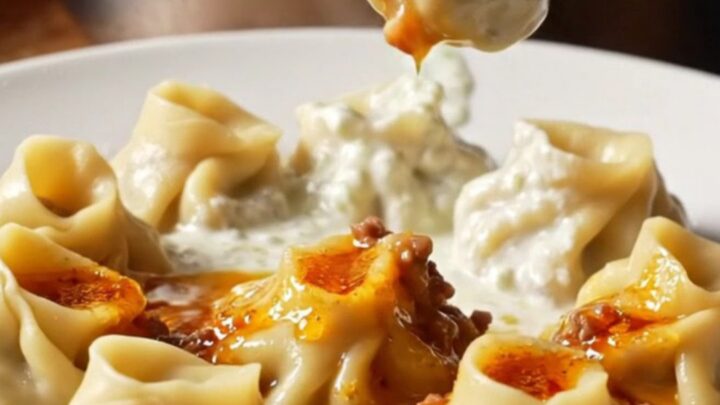
- Plate and serveDrain the cooked dumplings and divide among serving bowls. Spoon the garlic yogurt over the hot dumplings, then drizzle with the sizzling Aleppo butter. Serve immediately while hot.Look for The butter sizzles as it hits the yogurt, and the aroma is fragrant.Tip Serve in shallow bowls to catch the sauce. Extra pepper butter can be passed at the table.
The dumplings float after 7 minutes, and the filling is cooked through. The yogurt sauce is smooth and seasoned. The butter sizzles with the Aleppo pepper, and the dish is plated with the yogurt and butter over the hot dumplings. The butter should not burn.
Common mistakes
One common mistake is rolling the dough too thick, which results in doughy dumplings. Aim for a thin, almost translucent sheet. Another is overfilling the cells, which can cause the dumplings to burst during cooking.
Use a small amount of filling—about the size of a pea. Also, ensure the dough is sealed well around the edges; otherwise, the filling can leak out. Finally, don't overcrowd the pot; cook in batches if needed to keep the water at a rolling boil.
How to tell it’s done
The dumplings are done when they float to the surface and are tender to the bite. The dough should be cooked through, with no raw flour taste. The beef filling must reach an internal temperature of 160°F (71°C).
To check, cut a dumpling open and ensure the meat is no longer pink. The dumplings will look slightly translucent and plump when cooked. They should be drained promptly to prevent overcooking.
- Ground meat: 160°F (71°C) in the thickest part
- Egg dishes: 160°F (71°C) in the thickest part
Up next · Part 3 of 3
4 variations · storage & make-ahead · 5 answers · printable card
Tips, FAQ & printable recipe (Part 3)← Back to the ingredients (Part 1)