Breakfast · Part 2 of 3: Instructions
Quick Turkish Dill and Feta Pogaca Step-by-step instructions
- Prep
- Cook
- Total
- Serves
- 12
Before you start
Preheat the oven to 375°F (190°C) and line a baking sheet with parchment paper. Gather all ingredients: flour, baking powder, salt, sugar, yogurt, oil, dill, feta, and an egg yolk.
Finely chop the dill and crumble the feta if not already crumbled. Measure out the dry ingredients and have the wet ingredients ready. This recipe moves quickly, so having everything prepped ensures smooth assembly.
Ingredients at a glance (9)
- 3 cups all-purpose flour
- 1 tbsp baking powder
- 1/2 tsp salt
- 1 tsp sugar
- 1/2 cup plain yogurt
- 1/2 cup vegetable oil
- 1 bunch fresh dill, finely chopped
- 1 cup crumbled feta cheese
- 1 egg yolk
Instructions
Mix and Fold
- Mix the Dry and Wet IngredientsIn a large bowl, whisk together the flour, baking powder, salt, and sugar. In a separate bowl or the same bowl, add the yogurt and oil, then whisk until smooth. Pour the wet mixture into the dry ingredients and stir with a wooden spoon until a shaggy dough forms.Look for The dough will be soft and slightly sticky but holds together when pressed.Tip If the dough feels too dry, add a tablespoon of yogurt at a time until it comes together.
- Fold in Dill and FetaAdd the finely chopped dill and crumbled feta to the dough. Use your hands or a spatula to fold everything together until the dill and feta are evenly distributed throughout the dough. Avoid overmixing, which can make the buns tough.Look for The dough is flecked with green dill and white feta pieces.Tip Gently knead just until the cheese and herbs are incorporated; overworking the dough develops gluten and makes the buns dense.
After mixing, the dough should be soft, slightly sticky, and hold together when pressed. The dill and feta should be evenly distributed, with green flecks and white cheese visible throughout.
The dough should not be dry or crumbly—if it is, add a tablespoon of yogurt at a time until it comes together.
Shape and Glaze
- Shape the BunsTurn the dough out onto a lightly floured surface. Divide it into 12 equal pieces. Roll each piece into a smooth ball and place them on a baking sheet lined with parchment paper, spacing them about 2 inches apart.Look for The dough balls are smooth and evenly sized.Tip Lightly flour your hands to prevent sticking when shaping the dough.
- Apply Egg Wash and ScoreIn a small bowl, beat the egg yolk with 1 tablespoon of water. Brush the tops of each bun with the egg wash using a pastry brush. Use a fork to score a crisscross or line pattern on the top of each bun, pressing gently.Look for The tops are glossy and show a clear fork pattern.Tip Be gentle when scoring so you don't deflate the dough.
The dough balls should be smooth and evenly sized, about 2 inches apart on the baking sheet. After brushing with egg wash, the tops should be glossy and show a clear fork pattern. The scoring should be gentle but visible, creating a decorative pattern without deflating the dough.
Bake and Serve
- Bake Until GoldenPreheat the oven to 375°F (190°C). Bake the buns for 20 to 25 minutes, until they are puffed and golden brown on top. The egg wash gives them a shiny, appetizing crust.Look for The buns are deeply golden and feel firm to the touch.Safe temperature 160°F (71°C) internal temperature (egg dishes)Tip Rotate the baking sheet halfway through baking for even browning.
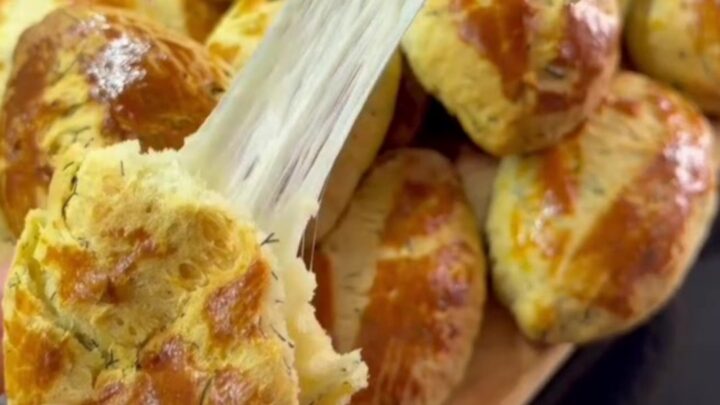
- Cool Slightly and Serve WarmRemove the baking sheet from the oven and let the pogaca cool on the sheet for 5 minutes. Then transfer them to a wire rack to cool slightly. Serve warm, breaking one open to reveal the tender, flaky interior with melted feta and fragrant dill.Look for The interior is moist and flaky, with visible pockets of melted cheese.Tip These are best enjoyed warm, but they are also delicious at room temperature.
The buns should be puffed and golden brown, with a shiny crust from the egg wash. The kitchen will smell of butter and herbs. A skewer inserted into the center should come out clean, and the internal temperature should reach 160°F (71°C). Let them cool slightly before serving.
Common mistakes
Overmixing the dough can develop too much gluten, resulting in tough buns. Be gentle when folding in the dill and feta. If the dough is too dry, add a little yogurt; if too sticky, dust with flour.
Shaping the buns too large will increase baking time, so keep them uniform. Also, avoid over-baking, which can dry out the crumb; start checking at 20 minutes.
How to tell it’s done
The pogaca are done when they are puffed and deeply golden brown on top, usually after 20 to 25 minutes. The internal temperature of the dough should reach at least 160°F (71°C) to ensure the egg yolk is fully cooked.
Tap the bottom of a bun—it should sound hollow. Let them cool for a few minutes before serving; the cheese will be molten and the crumb tender.
- Egg dishes: 160°F (71°C) in the thickest part
Up next · Part 3 of 3
4 variations · storage & make-ahead · 5 answers · printable card
Tips, FAQ & printable recipe (Part 3)← Back to the ingredients (Part 1)