Dinner · Part 2 of 3: Instructions
Quick Spicy Sesame Noodles with Chili Oil Step-by-step instructions
- Prep
- Cook
- Total
- Serves
- 2
Before you start
Before beginning, ensure all ingredients are measured and ready to go. Grate the garlic finely so it integrates seamlessly into the sauce.
Prepare the soft-boiled egg in advance by boiling it for exactly six and a half minutes, then plunging it into an ice bath to stop the cooking, ensuring the yolk remains jammy and rich.
Ingredients at a glance (8)
- 2 tbsp chili oil
- 2 tbsp sesame paste
- 1 tbsp soy sauce
- 1 clove garlic, grated
- 8 oz wide noodles
- 1/4 cup starchy cooking water
- 1/4 cup cucumber, sliced
- 1 large soft-boiled egg
Instructions
Creating the Emulsion
- Prepare the SauceIn a wide ceramic bowl, combine the chili oil, sesame paste, soy sauce, and grated garlic. Use a whisk to blend the ingredients vigorously until the mixture is completely smooth and emulsified, ensuring no lumps of sesame paste remain.Look for The sauce should be smooth, glossy, and have a uniform, rich color.Tip Whisking thoroughly at this stage is essential for a creamy texture that coats the noodles evenly.
The sauce is ready when the sesame paste and chili oil are fully integrated into a smooth, thick liquid. The garlic should be dispersed evenly, with no visible clumps of paste remaining.
The mixture should smell fragrant and nutty, with a vibrant color indicating that the chili oil is well-distributed throughout the bowl.
Binding the Noodles
- Cook and CombineBoil the noodles according to package instructions until tender. Use metal tongs to transfer the steaming noodles directly into the bowl with the sauce. Pour the hot starchy cooking water from a small pitcher over the noodles. Using chopsticks, toss the noodles vigorously until every strand is coated in a thick, rich sauce.Look for The noodles should look glossy and be thoroughly coated, with the sauce thickening into a creamy consistency.Tip Adding the starchy water helps bind the sauce to the noodles, creating a silky texture.
The noodles are ready when they are cooked through but still maintain a slight chew. Upon adding the starchy water and tossing, the sauce should transform from a thin liquid into a creamy, clinging coating.
The noodles should look shiny and be completely covered in the sauce, with no dry spots visible.
Final Assembly
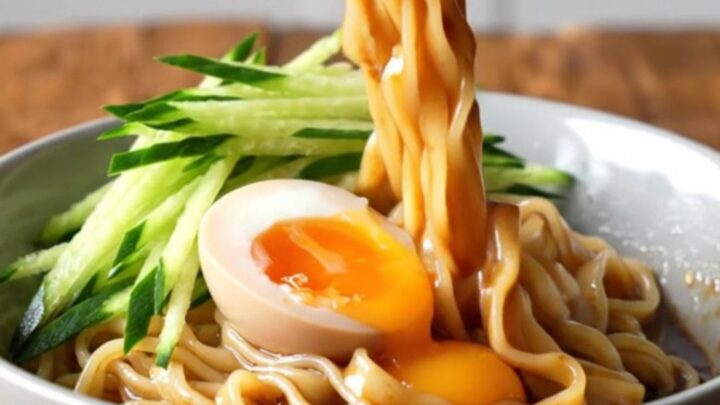
- Garnish and ServeTop the noodle bowl with fresh cucumber slices and the soft-boiled egg, halved to reveal the jammy yolk. Serve immediately while the noodles are hot to ensure the best texture and flavor profile. Ensure the egg, if not already cooked to 160°F (71°C), is handled properly for safety.Look for The dish is ready when the cucumber is crisp and the egg yolk is visible and runny.Safe temperature 160°F (71°C) internal temperature (egg dishes)Tip Use a sharp knife to slice the soft-boiled egg cleanly, keeping the yolk intact.
The bowl is complete when the cucumber slices are arranged neatly and the egg is placed on top. The contrast between the cold, crisp cucumber and the warm, spicy noodles provides a refreshing finish. Check that the sauce has not separated and that the noodles are hot and ready to be served immediately.
Common mistakes
Avoid using cold water to thin the sauce; the starchy cooking water is essential for the proper texture. Do not overcook the noodles, as they will become mushy when tossed with the hot sauce.
Finally, avoid adding too much chili oil at once; start with the suggested amount and adjust to your preference for spice to maintain the balance of the dish.
How to tell it’s done
The dish is finished when the noodles are tender and the sauce has thickened into a glossy, creamy consistency that clings to the strands. The egg should be firm on the outside with a warm, runny yolk. Always ensure the egg is cooked to 160°F (71°C) to meet safety standards for serving.
- Egg dishes: 160°F (71°C) in the thickest part
Up next · Part 3 of 3
2 variations · storage & make-ahead · 3 answers · printable card
Tips, FAQ & printable recipe (Part 3)← Back to the ingredients (Part 1)