Dinner · Part 2 of 3: Instructions
Quick Skillet Garlic Butter Chicken Breasts Step-by-step instructions
- Prep
- Cook
- Total
- Serves
- 2
Before you start
Before beginning the cooking process, ensure that the chicken breasts are brought out of the refrigerator about twenty minutes beforehand to take the chill off. This prevents the pan temperature from dropping too drastically when the meat is added.
Have all ingredients measured, the garlic minced, and the herbs ready to go. A clean workspace and a clear counter area will make the process smoother, allowing for focused attention on the searing and basting steps which move quickly.
Ingredients at a glance (4)
- 2 pieces chicken breasts
- 3 tbsp butter
- 3 cloves garlic, minced
- 1 tsp dried herbs
Instructions
Preparation
- PreparationPat the chicken breasts dry with paper towels to ensure a proper sear. Allow the chicken to sit for about ten minutes at room temperature before cooking to ensure even heat distribution during the searing process.Look for The chicken should be dry to the touch to prevent steaming rather than searing.Tip Removing excess moisture from the surface is the secret to achieving a deep, golden-brown crust.
At the end of this phase, the chicken breasts should be evenly coated with seasoning and have reached a room-temperature state. The surface should be dry, which is essential for the crust development. Check that all ingredients are organized and the skillet is ready to be heated, ensuring a seamless transition into the searing stage without any delays that could compromise the temperature of the pan.
Searing and Basting
- Searing and bastingHeat a heavy cast-iron skillet over medium-high heat. Add the chicken breasts to the hot pan and sear until golden brown. Flip the chicken and add the butter, minced garlic, and dried herbs to the pan. Baste the chicken continuously with the melting garlic butter until the chicken is cooked through to 165°F (74°C).Look for The butter should be foaming and aromatic without burning the garlic pieces.Safe temperature 165°F (74°C) internal temperature (poultry)Tip Tilt the skillet slightly to pool the butter, allowing for easier basting with a spoon.
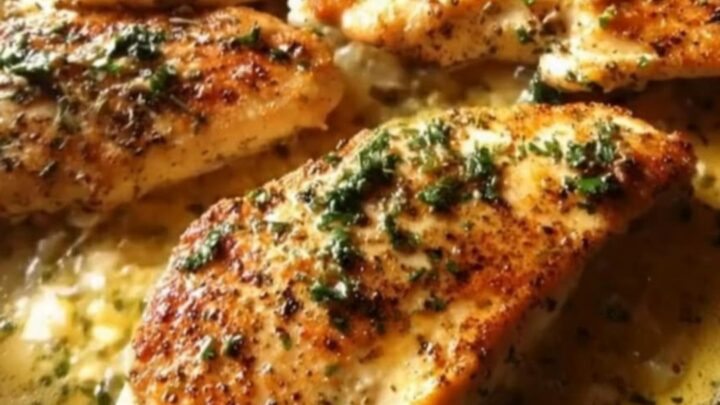
The chicken should display a deep, golden-brown crust on both sides. The kitchen should be filled with the rich, savory scent of toasted garlic and herbs. When basting, the butter should appear glossy and slightly thickened, coating the back of a spoon.
Before removing from the heat, verify the internal temperature of the thickest part of the breast to ensure it has reached the safe threshold of 165°F (74°C).
Resting and Serving
- Plating and restingRemove the chicken from the skillet and transfer it to a warm plate. Pour the remaining garlic butter from the pan over the chicken. Let the chicken rest for at least five minutes before slicing. This resting period allows the juices to redistribute throughout the meat, resulting in a tender and moist final bite.Look for The juices should be clear when the chicken is sliced.Tip Always let the meat rest; cutting too early will cause the precious juices to run out onto the plate.
The chicken should be resting on a warm plate, allowing the internal juices to settle. The garlic butter sauce remaining in the skillet should be thick enough to drizzle over the meat before serving. Check that the resting time has been at least five minutes, ensuring the meat is at the perfect temperature to be sliced and enjoyed, with all the flavors fully integrated and the texture at its peak.
Common mistakes
A common mistake is overcrowding the pan, which lowers the temperature and causes the chicken to steam in its own juices instead of searing properly. Another error is using too much heat, which can burn the garlic and herbs before the chicken is cooked through.
Always maintain a medium-high heat that provides a steady sizzle. Finally, skipping the resting time is a significant error, as it will lead to the juices escaping immediately upon slicing, resulting in dry chicken.
How to tell it’s done
The chicken is perfectly cooked when it reaches an internal temperature of 165°F (74°C) at its thickest point. A digital meat thermometer is the most reliable tool to check this.
Visually, the exterior should be a deep golden brown, and the juices should run completely clear when pierced. The meat should feel firm but yield slightly to pressure, indicating that it is cooked through while remaining tender and moist, rather than tough or rubbery.
- Poultry: 165°F (74°C) in the thickest part
Up next · Part 3 of 3
2 variations · storage & make-ahead · 3 answers · printable card
Tips, FAQ & printable recipe (Part 3)← Back to the ingredients (Part 1)