Dinner · Part 2 of 3: Instructions
Quick Saucy Pepper Steak Stir-Fry Step-by-step instructions
- Prep
- Cook
- Total
- Serves
- 4
Before you start
Before turning on the stove, ensure all ingredients are fully prepared and organized near the cooking station. Stir-frying is an incredibly fast-paced process that leaves no time for chopping or measuring once the pan is hot.
Slice the beef, cut the red bell peppers, and have your savory brown stir-fry sauce measured and ready. Having everything ready to go, a practice known as mise en place, prevents the pan from burning and guarantees a smooth, stress-free cooking experience.
Ingredients at a glance (3)
- 1 lb beef flank steak, sliced into thin strips
- 2 red bell peppers, sliced
- 1/2 cup savory brown stir-fry sauce (store-bought or made ahead)
Instructions
Searing the Beef
- Sear the Beef StripsHeat a heavy skillet or wok over high heat until smoking. Carefully add the sliced beef strips in a single layer, working in batches if necessary to avoid overcrowding. Sear the beef without moving it for one to two minutes until a deep brown, caramelized crust forms on the bottom.Look for Look for a deep brown, caramelized crust on the bottom of the beef strips.Tip Keep the pan extremely hot to ensure a quick, flavorful sear rather than steaming the meat.
- Finish Cooking and Rest the BeefToss the beef strips and stir-fry for one additional minute until they are cooked through and reach an internal temperature of 145°F (63°C). Transfer the seared beef to a clean plate immediately, ensuring to let the meat rest for at least three minutes to lock in the savory juices.Look for The beef should be browned on all sides and reach 145°F (63°C) on a thermometer.Safe temperature 145°F (63°C) internal temperature (steaks, chops and roasts)Tip Resting the meat is essential to keep the beef tender and prevent juices from running out.
At the end of this phase, the beef strips should have a beautifully caramelized, deep brown crust on the outside while remaining juicy.
The skillet will be hot, filled with the rich, savory aroma of seared meat, and the beef will have reached a safe internal temperature of 145 degrees Fahrenheit before being set aside to rest. This resting period allows the juices to redistribute throughout the meat, ensuring every bite remains tender.
Stir-Frying the Peppers
- Stir-Fry the Red PeppersAdd the sliced red bell peppers to the same hot skillet over high heat. Stir-fry vigorously for two to three minutes, constantly moving the peppers around the pan until they are vibrant and slightly blistered on the edges but still crisp.Look for The peppers should look bright in color and slightly blistered on the edges.Tip Do not overcook the peppers to maintain their signature crunch and vivid color.
At the end of this phase, the red bell pepper slices should look vibrant, slightly blistered on the edges, and glistening. They should smell sweet and roasted, remaining crisp-tender to the touch rather than soft, soggy, or overly wilted. This quick cooking preserves their natural sweetness and crunch, providing a perfect contrast to the tender beef. Ensure the pan remains hot throughout this process to achieve the best texture.
Glazing and Finishing
- Simmer and GlazePour the savory brown stir-fry sauce into the skillet with the peppers. Return the rested beef and any accumulated juices to the pan. Simmer everything together for one to two minutes until the sauce bubbles vigorously and thickens into a glossy glaze that coats the beef and peppers.Look for The sauce should be thick, bubbly, and cling beautifully to the beef and peppers.Tip Stir constantly as the sauce thickens to prevent any lumps from forming.
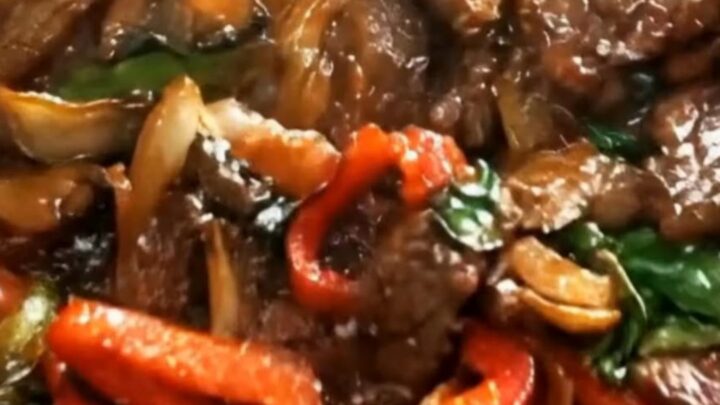
At the end of this final phase, the sauce should be bubbling vigorously, transforming from a thin liquid into a thick, glossy, mahogany-colored glaze. The glaze should cling perfectly to the tender beef and crisp peppers, filling the kitchen with an irresistible aroma of sweet soy, garlic, and ginger. The entire dish should look cohesive, with a beautiful shine coating every ingredient, ready to be served immediately over hot rice.
Common mistakes
One of the most common mistakes in stir-frying is overcrowding the pan. Adding too much beef at once lowers the temperature of the skillet, causing the meat to steam in its own juices instead of developing a rich, caramelized sear.
To avoid grey, tough beef, cook the meat in small batches, allowing plenty of space for steam to escape. Another frequent error is overcooking the red bell peppers, which turns them mushy and dull; keep the heat high and the cooking time short to preserve their bright color and satisfying crunch.
How to tell it’s done
The dish is perfectly cooked when the red bell peppers are crisp-tender and the beef is tender, caramelized, and has reached a safe internal temperature of 145°F (63°C) followed by a three-minute rest.
The sauce must be fully thickened, bubbling, and clinging to the ingredients rather than pooling as a thin liquid at the bottom of the skillet. A glossy, mirror-like sheen on the glaze indicates that the sauce has fully cooked through and reached the ideal consistency.
- Steaks, chops and roasts: 145°F (63°C) in the thickest part, then a 3-minute rest
Up next · Part 3 of 3
3 variations · storage & make-ahead · 3 answers · printable card
Tips, FAQ & printable recipe (Part 3)← Back to the ingredients (Part 1)