Breakfast · Part 2 of 3: Instructions
Quick Cinnamon Monkey Bread Rolls Step-by-step instructions
- Prep
- Cook
- Total
- Serves
- 8
Before you start
Before starting, set out the milk, egg, and cream cheese so they come to room temperature. Measure all ingredients and have a clean baking dish ready. Proof the yeast in the warm milk with a pinch of sugar to ensure it is active.
Prepare the cinnamon sugar and melt the butter for the coating. Line a baking sheet under the dish to catch any drips, and preheat the oven when the dough is almost done rising.
Ingredients at a glance (13)
- 3/4 cup warm milk
- 1/4 cup vegetable oil
- 1 large egg
- 1/4 cup granulated sugar
- 2 1/4 tsp active dry yeast
- 3 cups all-purpose flour
- 1/2 tsp salt
- 1/2 cup unsalted butter, melted
- 1 cup cinnamon sugar
- 4 oz cream cheese, softened
- 2 tbsp unsalted butter, softened
- 1 cup confectioners' sugar
- 1 tsp vanilla extract
Instructions
Dough and Rise
- Make the DoughIn a large bowl, combine the warm milk, vegetable oil, egg, and granulated sugar. Sprinkle the yeast over the mixture and let it sit for 5 minutes until foamy. Add the all-purpose flour and salt, then stir with a wooden spoon until a soft dough forms. Turn the dough out onto a lightly floured surface and knead for about 5 minutes until smooth and elastic.Look for The dough should be soft, smooth, and slightly tacky but not sticky.Tip If the dough is too sticky, add a little more flour, a tablespoon at a time.
- Let the Dough RisePlace the dough in a lightly greased bowl, cover with a clean kitchen towel, and let it rise in a warm spot for about 1 hour, or until doubled in size.Look for The dough should look puffy and doubled.Tip A warm oven (turned off) with the light on is a great place to let dough rise.
After mixing, the dough should be soft and smooth, pulling away from the sides of the bowl. It should rise until doubled in size, looking puffy and airy. The kitchen should smell yeasty and slightly sweet. If the dough has not doubled after an hour, give it more time in a warmer spot.
Shape and Coat
- Shape the Dough BallsPunch down the risen dough. Pinch off walnut-sized pieces and roll them into smooth balls. You should get about 24 to 30 small balls.Look for The balls should be uniform in size for even baking.Tip Lightly oil your hands to prevent the dough from sticking.
- Coat in Butter and Cinnamon SugarDip each dough ball into the melted butter, then roll it in the cinnamon sugar until fully coated. Place the coated balls in a greased baking dish, arranging them in a single layer with a little space between each.Look for Each ball should be generously coated and glistening.Tip Shake off excess cinnamon sugar to avoid overly sweet spots.
- Second RiseCover the baking dish with the towel and let the dough balls rise for about 20 minutes while the oven heats.Look for The balls will puff slightly and look airy.Tip This short rise helps the rolls become light and tender.
The dough balls should be uniform and smooth, each one glistening with butter and coated in cinnamon sugar. They should look like little sugar-dusted spheres, and the cinnamon aroma should be strong. The dish should look full but not overcrowded, with the balls just touching after the second rise.
Bake and Glaze
- Bake the RollsPreheat the oven to 350°F (175°C). Bake the rolls for 20 to 25 minutes, until golden brown and cooked through. The internal temperature should reach 160°F (71°C) in the center of a roll to ensure the egg is fully set.Look for The tops are deep golden brown and the sugar is bubbling around the edges.Safe temperature 160°F (71°C) internal temperature (egg dishes)Tip If the tops brown too quickly, loosely cover with foil for the last 5 minutes.
- Make the GlazeWhile the rolls bake, whisk the cream cheese, softened butter, confectioners' sugar, and vanilla extract in a bowl until smooth and glossy.Look for The glaze should be smooth, thick, and pourable.Tip If the glaze is too thick, add a teaspoon of milk to thin it.
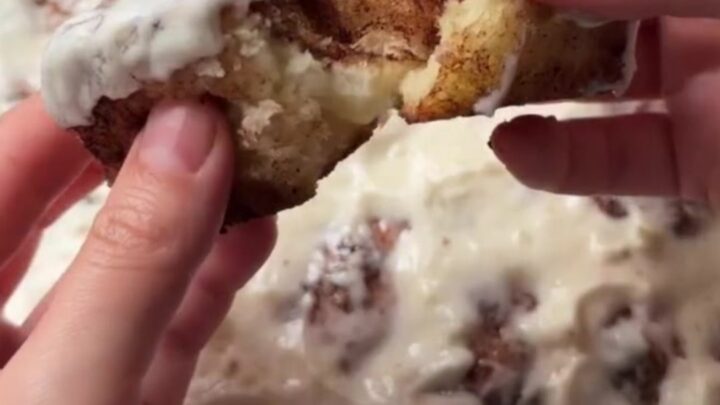
- Glaze and ServeRemove the rolls from the oven and let them cool for 5 minutes. Drizzle the glaze generously over the warm rolls, letting it seep into the crevices. Serve warm, pulling the rolls apart to reveal the gooey cinnamon-sugar layers.Look for The glaze melts slightly into the warm rolls, making them glossy.Tip Serve immediately for the best pull-apart experience.
The rolls should be golden brown with a sticky, caramelized crust. The glaze should be smooth and glossy, and when poured over the warm rolls, it should melt slightly and run into the gaps.
The pull-apart texture should be evident — the rolls should separate easily with a gentle tug, revealing soft, gooey layers.
Common mistakes
One common mistake is using milk that is too hot, which kills the yeast and prevents the dough from rising. Another is over-kneading, which makes the rolls tough.
Be sure to coat each dough ball evenly in butter and cinnamon sugar, but shake off excess to avoid overly sweet spots. Avoid overcrowding the dish — leave a little space so the rolls can puff up. Finally, do not skip the second rise; it is short but essential for light rolls.
How to tell it’s done
The rolls are done when they are deep golden brown on top and the sugar is bubbling around the edges. The internal temperature should read 160°F (71°C) in the center of a roll.
If the tops brown too quickly, cover loosely with foil. Let the rolls cool for 5 minutes before glazing; the glaze should be poured over warm rolls so it melts slightly and seeps into the crevices.
- Egg dishes: 160°F (71°C) in the thickest part
Up next · Part 3 of 3
4 variations · storage & make-ahead · 5 answers · printable card
Tips, FAQ & printable recipe (Part 3)← Back to the ingredients (Part 1)