Dinner · Part 2 of 3: Instructions
Provolone Sausage Rigatoni: Easy Crockpot Dinner Step-by-step instructions
- Prep
- Cook
- Total
- Serves
- 6
Before you start
Before starting, brown the Italian sausage in a skillet over medium-high heat until no longer pink, breaking it into crumbles. Drain any excess fat.
Measure the rigatoni, sauce, ricotta, and provolone. Have the slow cooker ready. No need to pre-cook the pasta; it will cook in the sauce. If using a slow cooker liner, add it now for easy cleanup.
Ingredients at a glance (5)
- 1 lb browned sweet Italian pork sausage crumbles
- 1 lb rigatoni pasta
- 1 jar roasted garlic tomato basil sauce
- 1 cup whole-milk ricotta cheese
- 2 cups shredded provolone cheese
Instructions
Building the Layers
- Layer the BasePlace the browned sweet Italian sausage crumbles in the bottom of a 6-quart slow cooker, spreading them into an even layer.Look for The sausage covers the bottom of the slow cooker evenly.Tip If using raw sausage, brown it in a skillet first for better flavor and texture.
- Add Pasta and SauceAdd the rigatoni pasta over the sausage, then pour the roasted garlic tomato basil sauce over the top, covering the pasta as much as possible.Look for The sauce coats the rigatoni and sausage, creating a thick layer.Tip Do not stir after adding the sauce; this helps the pasta cook evenly.
- Top with CheesesSpoon dollops of whole-milk ricotta over the sauce, then sprinkle the shredded provolone cheese evenly over the top.Look for The ricotta forms creamy pockets and the provolone covers the surface.Tip Use whole-milk ricotta for the creamiest texture.
After adding the sausage, pasta, sauce, and cheeses, the slow cooker should have distinct layers: sausage on the bottom, pasta in the middle, and sauce and cheese on top.
The cheese covers the surface, and the sauce is visible around the edges. This layering is key to even cooking and a cohesive final dish.
Slow Cooking and Melting
- Slow CookCover the slow cooker and cook on low for 4 hours, or until the pasta is tender and the cheese is melted and bubbly. Do not stir during cooking.Look for The sauce bubbles gently around the edges and the cheese is fully melted.Safe temperature 160°F (71°C) internal temperature (ground meat)Tip Resist the urge to lift the lid; each peek adds cooking time.
- Check DonenessAfter 4 hours, check that the pasta is al dente and the sausage reaches 160°F (71°C). If the pasta is still firm, cover and cook for 30 more minutes.Look for Pasta is tender but still has a slight bite, and the sauce is thick.Safe temperature 160°F (71°C) internal temperature (ground meat)Tip If the sauce seems thin, let it sit uncovered for 10 minutes to thicken.
During cooking, the sauce will bubble gently, and the cheese will melt and spread. The aroma of garlic and tomatoes fills the kitchen. After 4 hours, the pasta should be tender, and the cheese should be golden and bubbly. The sausage should be heated through and reach 160°F (71°C).
Serving the Dish
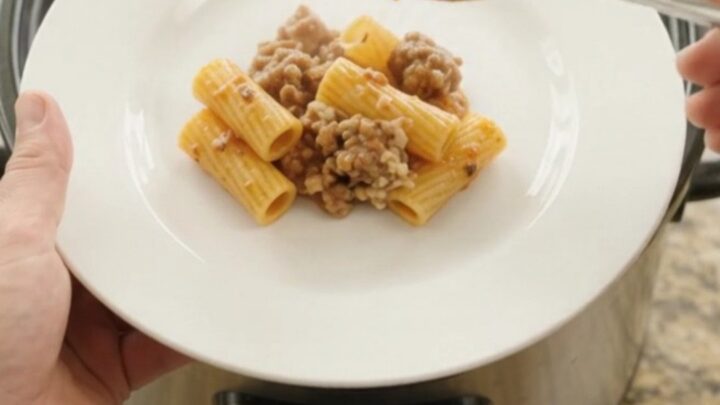
- ServeSpoon the hot pasta onto plates or into bowls, making sure to get some sausage, sauce, and cheese in each serving. Serve immediately.Look for The cheese stretches as you scoop, and steam rises from the pasta.Tip Pair with a simple green salad or garlic bread for a complete meal.
When you lift the lid, steam rises, and the cheese stretches as you spoon the pasta. The sauce should be thick enough to cling to the rigatoni, and the ricotta pockets should be creamy. Serve hot directly from the slow cooker, making sure each portion gets a good mix of sausage, pasta, and cheese.
Common mistakes
Common pitfalls include lifting the lid too often, which releases heat and extends cooking time. Stirring the pasta can cause it to clump and stick. Using too much sauce can make the dish soupy; the pasta needs just enough liquid to cook.
Overcooking the pasta will make it mushy. If the sauce is too thin at the end, let the dish rest uncovered for 10 minutes to allow excess moisture to evaporate.
How to tell it’s done
The dish is done when the pasta is tender with a slight bite (al dente) and the sauce has thickened slightly. The cheese should be fully melted and bubbly around the edges.
For food safety, the sausage must reach an internal temperature of 160°F (71°C). Use an instant-read thermometer to check the center of the dish. If the pasta is still hard, cook for an additional 30 minutes and check again.
- Ground meat: 160°F (71°C) in the thickest part
Up next · Part 3 of 3
4 variations · storage & make-ahead · 5 answers · printable card
Tips, FAQ & printable recipe (Part 3)← Back to the ingredients (Part 1)