Breakfast · Part 1 of 3: Ingredients
Potato and Cheese Stuffed Turkish Poğaça Buns: Soft, Savory, Irresistible
- Prep
- Cook
- Total
- Serves
- 12
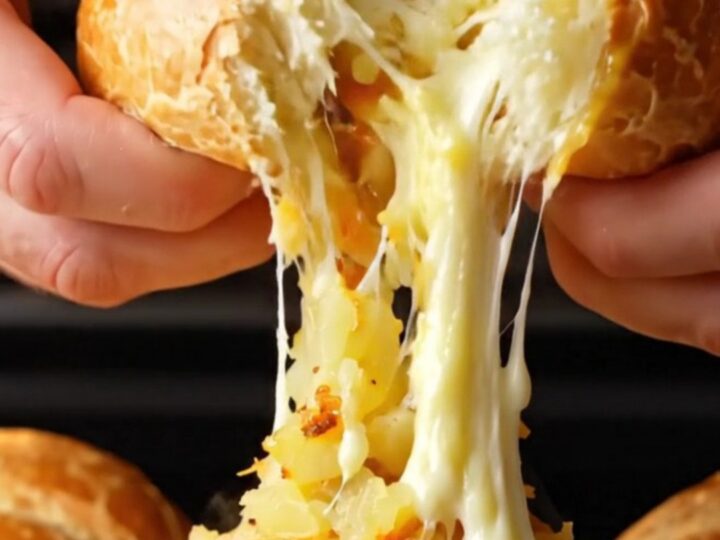
Imagine pulling apart a warm, golden bun to reveal a cloud of soft, steamy bread wrapped around a savory filling of spiced mashed potatoes and strings of molten cheese. These Turkish poğaça buns are exactly that: pillowy, buttery, and utterly satisfying.
The dough is enriched with milk and oil, giving it a tender crumb that practically melts in your mouth. The filling is a comforting blend of potatoes, sautéed onions, and warm spices, all held together by gooey kaşar cheese.
Turkish poğaça are soft, savory pastries often enjoyed with tea or as a breakfast treat. This version takes them to the next level with a hearty potato and cheese filling that’s both comforting and delicious. The dough is simple to make with pantry staples, and the filling comes together in minutes.
The key to that signature pillowy texture is a long rise and a gentle hand when shaping. Once baked, the buns are brushed with olive oil for a beautiful sheen and extra tenderness. Serve them warm, straight from the oven, for the full experience of the cheese pull that makes this recipe so irresistible.
Ingredients
- 5 cups all-purpose flour
- 1 cup warm milk
- 1/2 cup warm water
- 1/4 cup vegetable oil
- 2 1/4 tsp active dry yeast
- 1 tbsp granulated sugar
- 1 tsp salt
Filling
- 3 medium potatoes, peeled and boiled
- 1 medium onion, finely chopped
- 1 tsp ground cumin
- 1 tsp paprika
- 1/2 tsp black pepper
- 1 tsp salt
- 1 1/2 cups kaşar cheese, shredded
For brushing
- 1 egg yolk, beaten
- 2 tbsp olive oil
Why this recipe works
The dough is enriched with milk and oil, which tenderizes the gluten and creates a soft, plush crumb. The yeast is proofed with a little sugar to ensure it’s active and will give the dough a good rise.
Kneading until the dough is smooth and elastic develops the gluten structure needed to trap air and create that pillowy texture. A full hour of rising allows the dough to double in size, producing a light, airy interior that contrasts beautifully with the savory filling.
The filling is a classic combination of mashed potatoes and sautéed onions, seasoned with cumin, paprika, and black pepper. The potatoes provide a creamy, starchy base, while the onions add sweetness and depth.
Kaşar cheese, a Turkish semi-hard cheese with excellent melting properties, creates those long, gooey strings when the bun is torn open. The cheese also binds the filling together, ensuring every bite is rich and satisfying. Brushing the baked buns with olive oil adds a final touch of shine and flavor.
Notes and substitutions
Kaşar cheese is a Turkish cheese similar to provolone or mozzarella. It melts beautifully and has a mild, slightly salty flavor. If you can’t find kaşar, use a mix of mozzarella and cheddar for a similar stretch and taste. The potatoes should be boiled until very tender, then mashed while still warm for a smooth filling. Make sure the filling is completely cool before assembling the buns, or the heat can make the dough sticky and difficult to handle.
All-purpose flour works well for this recipe, giving the buns a soft but sturdy structure. Bread flour can be used for a chewier texture, but it’s not necessary. The dough should be soft and slightly tacky but not sticky. If it sticks to your hands, add a little more flour, a tablespoon at a time. The buns can be shaped into rounds or ovals; ovals are traditional for poğaça and make them easy to hold.
- kaşar cheese: mozzarella or provolone for a similar melt; or a mix of mozzarella and cheddar for extra flavor
- active dry yeast: instant yeast – use 25% less and skip the proofing step
- all-purpose flour: bread flour for a slightly chewier texture
- vegetable oil: melted butter or olive oil for a richer flavor
Equipment
- Large mixing bowl
- Clean kitchen towel
- Rolling pin
- Baking sheet
- Parchment paper
- Pastry brush
- Potato masher
- Skillet
Up next · Part 2 of 3
7 steps · 35 min of cooking · what to look for at each stage
Step-by-step instructions (Part 2)