Dinner · Part 2 of 3: Instructions
Poor Man’s Burnt Ends: Tender and Budget-Friendly BBQ Bites Step-by-step instructions
- Prep
- Cook
- Total
- Serves
- 6
Before you start
Before beginning the cooking process, ensure that the smoker or pellet grill is clean and fully stocked with wood pellets or chunks. Cut the beef chuck roast into uniform 1-inch cubes to guarantee even cooking. Measure out the barbecue sauce and have a disposable foil pan and heavy-duty aluminum foil ready at the prep station.
Ingredients at a glance (2)
- 3 lb beef chuck roast, cut into 1-inch cubes
- 1 1/2 cups barbecue sauce
Instructions
Initial Wood Smoke
- Smoke the beef cubesPreheat the smoker or pellet grill to 250°F (121°C) using oak, hickory, or cherry wood. Pat the cubed beef chuck roast completely dry with paper towels. Arrange the beef cubes directly on the smoker grates, leaving space between each piece for smoke circulation. Close the lid and smoke for 2 hours until a dark, firm crust forms.Look for The beef cubes should have a deep mahogany color and a firm exterior bark.Tip Keep the smoker lid closed as much as possible to maintain a steady temperature.
At the end of this first phase, the beef cubes will have transformed from raw meat into beautifully smoked bites. The exterior will feature a dark mahogany, firm crust, known as the bark, which has locked in the savory juices.
The meat will smell intensely smoky and rich, indicating that the wood flavor has successfully penetrated the surface.
Foil Braise
- Toss in sauce and braiseTransfer the smoked beef cubes from the grates into a disposable foil pan. Pour the barbecue sauce over the hot beef cubes and toss thoroughly until every piece is generously coated. Cover the pan tightly with heavy-duty aluminum foil to trap the steam and moisture, then return it to the smoker for 1.5 hours.Look for The beef cubes should feel tender when pierced with a toothpick.Tip Ensure the foil is sealed tightly around the edges of the pan to trap the steam.
After braising in the covered foil pan, the beef cubes will have softened significantly. The barbecue sauce will have combined with the rendered beef fat to form a rich, aromatic liquid. The cubes will look moist and glistening, and a toothpick inserted into the center of a meat cube should meet very little resistance.
Sticky Caramelization
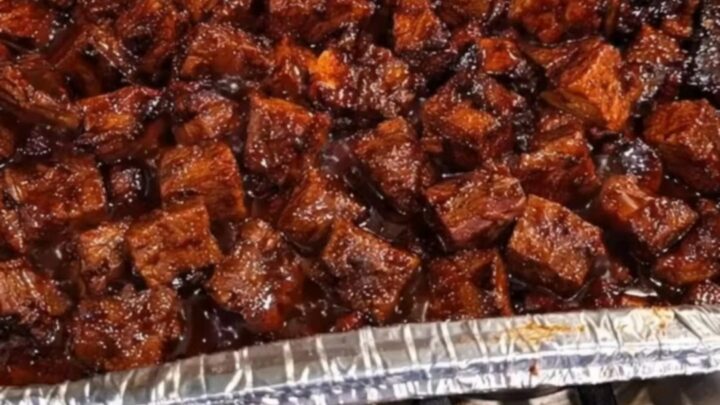
- Caramelize and restCarefully remove the aluminum foil from the pan. Toss the beef cubes once more in the bubbling sauce. Return the uncovered pan to the smoker for 20 to 30 minutes until the sauce caramelizes into a dark, sticky glaze and the beef reaches an internal temperature of at least 145°F (62°C). Let the meat rest for at least 3 minutes before serving.Look for The sauce should be bubbling, sticky, and beautifully caramelized on the edges.Safe temperature 145°F (63°C) internal temperature (steaks, chops and roasts)Tip Watch the pan closely during these final minutes to prevent the sugars in the sauce from burning.
At the completion of the final phase, the barbecue sauce will have thickened and darkened into a glossy, sticky glaze that clings perfectly to the caramelized edges of the beef. The pan will fill the air with a sweet, smoky, and savory aroma. The beef bites will look deeply charred in spots, indicating perfect caramelization.
Common mistakes
The most common mistake when preparing poor man's burnt ends is rushing the process or using too high a temperature. Cooking the beef chuck roast too quickly will prevent the tough connective tissues and intramuscular fat from rendering properly, resulting in tough, chewy bites instead of meltingly tender ones.
Another frequent error is failing to wrap the foil pan tightly during the braising phase, which allows essential moisture to escape and dries out the meat.
How to tell it’s done
To determine perfect doneness, use an instant-read meat thermometer inserted into the thickest part of several beef cubes.
The beef must reach a safe internal temperature of at least 145°F (62°C) and be allowed to rest for at least 3 minutes, though for optimal tenderness, barbecue cooks usually aim for a texture-based target around 195°F to 205°F (91°C to 96°C) where the collagen fully liquefies.
The meat should feel incredibly tender, almost like butter, when pierced.
- Steaks, chops and roasts: 145°F (63°C) in the thickest part, then a 3-minute rest
Up next · Part 3 of 3
2 variations · storage & make-ahead · 4 answers · printable card
Tips, FAQ & printable recipe (Part 3)← Back to the ingredients (Part 1)