Desserts · Part 2 of 3: Instructions
Pistachio Kunefe with Rose Cardamom Syrup Step-by-step instructions
- Prep
- Cook
- Total
- Serves
- 6
Before you start
Before starting, make sure the kadayıf pastry is fully thawed if frozen, and the cheese is shredded and at room temperature. Prepare the rose cardamom syrup first so it has time to cool completely—this is essential for the signature sizzle.
Have all your equipment ready: a 9-inch round pan, a large plate for flipping, and a clean work surface. The clarified butter should be melted and warm. Chop the kadayıf pastry into shorter strands and toss with the butter just before assembling, so it stays fluffy and easy to press.
Ingredients at a glance (9)
- 250 g fresh shredded kadayıf pastry
- 150 g clarified butter (ghee), melted
- 200 g unsalted fresh mozzarella or sweet Hatay cheese, shredded
- 50 g finely ground Antep pistachios
- 200 g granulated sugar
- 150 ml water
- 1 tsp lemon juice
- 2 pods crushed cardamom
- 1/2 tsp rose water
Instructions
Syrup and Pastry Prep
- Make the Rose Cardamom SyrupIn a medium saucepan, combine the granulated sugar, water, lemon juice, and crushed cardamom pods. Place over medium-high heat and bring to a boil, stirring occasionally until the sugar dissolves. Reduce the heat to maintain a gentle simmer and cook for 10 minutes. Remove from the heat, stir in the rose water, and let the syrup cool completely to room temperature. Strain out the cardamom pods if desired.Look for The syrup becomes slightly thickened and fragrant, with a light golden color. It should be cool before using.Tip Cool the syrup completely—pouring warm syrup over hot kunefe can make it soggy. The syrup will thin as it cools.
- Prepare the Kadayıf PastryPlace the shredded kadayıf pastry on a cutting board and chop it into smaller shreds, about 1/2-inch long. Transfer to a large bowl. Pour the melted clarified butter over the pastry and toss thoroughly with your hands or a spatula until every strand is coated and the mixture feels uniformly moist and clumpy.Look for The pastry should be evenly coated, looking like buttered short strands. No dry spots remain.Tip Chopping the pastry helps it compress into a compact crust. Toss gently to avoid breaking the strands too much.
- Press Half the Pastry into the PanBrush the bottom and sides of a 9-inch round copper or heavy-bottomed pan with a little melted butter. Press half of the buttered kadayıf pastry evenly into the bottom of the pan, using the palm of your hand to compact it into a firm, even layer about 1/4 inch thick. Make sure the layer reaches the edges.Look for The pastry layer is compact and even, with no gaps at the edges.Tip Use the back of a spoon or a flat-bottomed glass to press the pastry firmly. A compact base prevents the cheese from leaking through.
The syrup should be simmered for 10 minutes until slightly thickened, then cooled completely.
The kadayıf pastry is chopped and thoroughly coated with melted butter, looking like moist, golden strands. Press half into the pan to form a compact, even base—this is the foundation for the layers.
Assemble and Cook
- Layer the CheeseSpread the shredded mozzarella or sweet Hatay cheese evenly over the pressed pastry, leaving a 1/2-inch border around the edges. Press the cheese down gently to create an even layer. The cheese should cover the entire surface but not touch the sides of the pan.Look for The cheese forms a smooth, even layer, slightly recessed from the edges.Tip Use cheese that is well-drained and not too wet. Excess moisture can make the pastry soggy.
- Cover with Remaining PastryTake the remaining buttered kadayıf pastry and sprinkle it evenly over the cheese layer, covering it completely. Gently press the top layer down with your hands to compact it slightly, sealing the cheese inside. The top layer should be about 1/4 inch thick and meet the edges of the bottom layer.Look for The top is fully covered with pastry, forming a neat, even surface.Tip Press the top layer gently to avoid squeezing the cheese out. The edges should be sealed to prevent leaks.
- Cook Over Low Flame Until GoldenPlace the pan over low heat. Cook slowly, rotating the pan occasionally for even browning, until the bottom is deep golden brown and crisp. This takes about 8 to 10 minutes. Use a spatula to gently lift an edge to check the color. The top will still be pale.Look for The bottom is golden brown and crisp, with a nutty aroma. The pastry sizzles gently.Tip Low heat is essential—too high and the outside burns before the cheese melts. Rotate the pan every few minutes.
- Flip the KunefePlace a large flat plate or baking sheet over the pan. Carefully invert the kunefe onto the plate, then slide it back into the pan, cooked side up. Return to low heat and cook the other side until golden brown and crisp, another 8 to 10 minutes. The cheese should be fully melted and stretchy.Look for The flipped side is golden brown and crisp. The cheese is melted and pulls in long strands.Tip Use a plate that fits snugly over the pan to avoid spills. Be careful—the pan is hot and the syrup is not added yet.
The cheese is layered evenly, covered with the remaining pastry, and the whole thing cooks over low heat until the bottom is golden. After flipping, the second side cooks to a deep golden brown. The kitchen smells nutty and buttery, and the cheese is fully melted and stretchy.
Syrup, Garnish, and Serve
- Pour the Cool Syrup Over the Hot KunefeImmediately after flipping and while the kunefe is still piping hot, slowly pour the cooled rose cardamom syrup evenly over the entire surface. The syrup will sizzle and bubble as it hits the hot pastry. Let it absorb for a few minutes, then tilt the pan to spread any excess syrup.Look for The syrup sizzles and is absorbed, leaving a glossy, sticky surface. The pastry darkens slightly.Tip Pour the syrup in a steady stream, not all at once, to ensure even absorption. The contrast of cold syrup and hot pastry creates the signature crackle.
- Garnish with Pistachios and ServeGenerously dust the top of the kunefe with the finely ground pistachios, covering the surface evenly. Let the kunefe rest for about 5 minutes to set slightly. Cut into wedges or squares and serve warm. Lift a slice to show the stretchy cheese pull—serve immediately for the best texture.Look for The top is covered with bright green pistachios, and the cheese stretches when lifted.Tip Serve warm, not piping hot, so the cheese is molten but not burning. The syrup will have soaked in, making the pastry tender yet crisp.
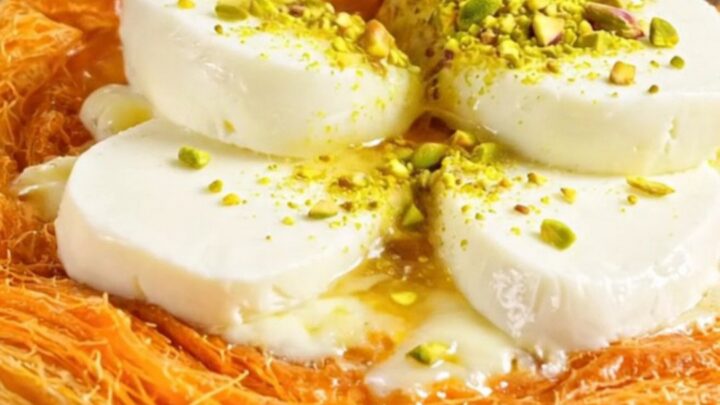
The cool syrup is poured over the hot kunefe, creating a dramatic sizzle and a glossy finish. The top is generously dusted with ground pistachios, and the dessert is cut into wedges. The cheese pulls beautifully, and the pastry is crisp yet tender with a floral sweetness.
Common mistakes
A common mistake is using too high heat, which burns the outside before the cheese melts. Always cook over low flame and rotate the pan for even browning. Another pitfall is a soggy crust—this happens if the syrup is poured too early or if the pastry wasn't pressed firmly enough.
Make sure the syrup is completely cool and pour it slowly. Also, avoid overfilling with cheese, which can cause leaks. Press the pastry edges well to seal.
How to tell it’s done
The kunefe is done when both sides are deep golden brown and crisp, and the cheese is fully melted and stretchy. To check, lift an edge with a spatula—the crust should be firm and golden, not pale or doughy.
The cheese should be molten and pull in long strands when you lift a piece. After pouring the syrup, the pastry will darken slightly and become glossy. Let it rest for a few minutes to set, but serve while still warm so the cheese remains gooey.
Up next · Part 3 of 3
4 variations · storage & make-ahead · 5 answers · printable card
Tips, FAQ & printable recipe (Part 3)← Back to the ingredients (Part 1)