Dinner · Part 2 of 3: Instructions
Philly Cheesesteak Stuffed Meatloaf for Comforting Dinners Step-by-step instructions
- Prep
- Cook
- Total
- Serves
- 6
Before you start
Before you begin, ensure that your workspace is clean and organized. Have your baking sheet ready and lined with parchment paper or a silicone mat for easy cleanup. Slice your bell peppers into thin, uniform strips so they cook evenly in the skillet.
Have your provolone cheese slices ready to go, as you will need them immediately after shaping the meat. It is also helpful to have a meat thermometer nearby to accurately check the temperature, ensuring that the meatloaf is cooked safely to the required internal temperature of 160°F (71°C).
Ingredients at a glance (5)
- 2 lb ground beef
- 2 bell peppers, sliced
- 2 tbsp butter
- 6 slices provolone cheese
- scallions, for serving
Instructions
Sautéing the peppers
- Prepare the fillingHeat the butter in a skillet over medium heat. Add the sliced bell peppers and sauté until they are soft and fragrant. Remove from heat and set aside to cool slightly before assembling.Look for peppers are soft and slightly brownedTip ensure the peppers are dry after washing to get a better sear in the butter
The peppers should be soft, tender, and slightly caramelized at the edges. They should smell sweet and savory. Ensure they are not too wet; if there is excess liquid in the pan, continue cooking for another minute to evaporate it before proceeding to the next step.
Shaping and rolling
- Assemble the meatloafLay out the ground beef on a flat surface or in a bowl. Shape the meat into a large rectangle. Layer the provolone cheese slices and the sautéed peppers over the meat. Carefully roll the meat tightly around the filling to create a loaf shape, ensuring the edges are sealed.Look for the loaf is tightly rolled with no gapsTip use a piece of parchment paper to help roll the meat if it is too soft
The meat should be shaped into a uniform rectangle that is easy to roll. The cheese and peppers should be distributed evenly across the surface, leaving a small border at the edges to help seal the loaf. Check that the seam is at the bottom to prevent opening.
Broiling to perfection
- Broil and servePlace the meatloaf on a baking sheet. Broil the meatloaf in the oven until the top is golden brown and the internal temperature reaches 160°F (71°C). Remove from the oven and let it rest for at least 10 minutes before slicing to ensure the juices redistribute. Sprinkle with scallions before serving.Look for crust is bubbly and golden brownSafe temperature 160°F (71°C) internal temperature (ground meat)Tip keep an eye on the oven during broiling to prevent burning
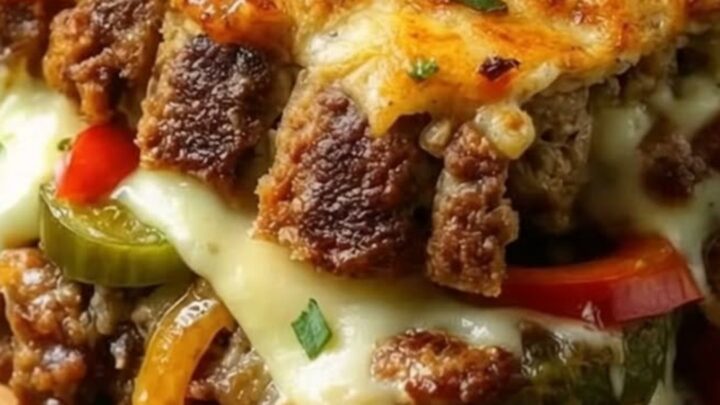
The top of the meatloaf should be deep golden brown and slightly crisp. The internal temperature must be verified with a thermometer to ensure it has reached 160°F (71°C). The kitchen should smell like roasted beef and melted cheese, indicating it is ready to rest.
Common mistakes
A common mistake is overcrowding the skillet when sautéing the peppers, which leads to steaming rather than browning. Ensure the peppers have enough space to sear properly for maximum flavor. Another error is rolling the meat too loosely, which can cause the cheese filling to leak out during the cooking process.
Take your time to seal the edges of the meatloaf thoroughly. Finally, failing to let the meatloaf rest is a major mistake; cutting into it too soon will cause the juices and melted cheese to run out, leading to a dry and messy result.
How to tell it’s done
To determine if the meatloaf is done, use a digital meat thermometer inserted into the thickest part of the center. The meat must reach an internal temperature of 160°F (71°C) to be considered safe for consumption.
Visually, the exterior should be deeply browned and have a slightly blistered, bubbly appearance from the broiling process. The sides of the meatloaf should feel firm to the touch.
If you notice any cheese leaking out significantly, this is a sign that the cooking is complete and it is time to remove it from the heat.
- Ground meat: 160°F (71°C) in the thickest part
Up next · Part 3 of 3
2 variations · storage & make-ahead · 3 answers · printable card
Tips, FAQ & printable recipe (Part 3)← Back to the ingredients (Part 1)