Breakfast · Part 2 of 3: Instructions
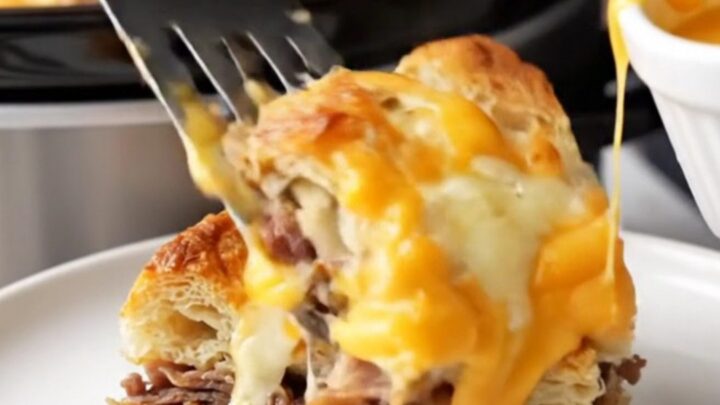
Philly Cheesesteak Breakfast Strata with Cheddar Sauce Step-by-step instructions
- Prep
- Cook
- Total
- Serves
- 6
Before you start
Before beginning, ensure that your ribeye is thinly shaved and seared in a hot skillet until just browned. The onions and peppers should also be sauteed until they are tender and caramelized to release their natural sweetness.
Have your bread cubed and toasted, and ensure the cheddar sauce is prepared and kept warm. Whisk the eggs thoroughly in a separate bowl until no streaks of white remain to ensure a uniform texture throughout the strata once it has finished cooking.
Ingredients at a glance (7)
- 6 cups toasted bread cubes
- 1 lb shaved ribeye beef, seared
- 1 cup sauteed onions
- 1 cup green peppers, sauteed
- 8 large eggs, whisked
- 2 cups shredded provolone cheese
- 1 cup warm cheddar sauce, made ahead
Instructions
Preparing the strata layers
- Layering the ingredientsPlace the toasted bread cubes into the bottom of the slow cooker. Add the seared shaved ribeye beef, sauteed onions, and green peppers in even layers over the bread.Look for The base should be evenly distributed across the bottom of the vessel.Tip Ensure the bread is toasted to prevent it from becoming overly mushy during the long cooking process.
The slow cooker insert should be evenly filled with the toasted bread cubes, caramelized onions, tender green peppers, and seared ribeye beef.
The ingredients should sit in loose, distinct layers without being packed down too tightly, ensuring there are ample pockets for the liquid egg mixture to penetrate through to the bottom.
Adding the custard base
- Adding the custard and cheesePour the whisked eggs over the bread and beef mixture. Top everything with the shredded provolone cheese, ensuring it covers the surface completely.Look for The eggs should soak into the bread layers while the cheese forms a top layer.Tip Pour the eggs slowly to allow them to penetrate the bottom layers effectively.
The whisked eggs should be completely absorbed into the bread and meat crevices without pooling excessively at the base of the insert. Across the entire top surface, the shredded provolone must form a solid, edge-to-edge blanket with no exposed bread edges that could dry out during the extended slow cooking process.
Final cooking phase
- Cooking and servingCook on low until the strata is puffed and fully set. The eggs must reach an internal temperature of 160°F (71°C) to be fully cooked. Serve warm with the cheddar sauce spooned over each slice.Look for The center should be firm and the cheese melted with a golden-tan top.Safe temperature 160°F (71°C) internal temperature (egg dishes)Tip Let the strata rest for 10 minutes before slicing to ensure clean portions.
The strata should emerge noticeably puffed and firm to the touch, with a gentle golden-tan hue across the fully melted provolone cheese. No liquid egg should seep out when the center is gently pressed with a spatula, confirming the interior has set into a cohesive, sliceable breakfast bake.
Common mistakes
A common mistake is using bread that is too soft, which can lead to a mushy texture. Always toast your bread cubes thoroughly first. Another error is failing to fully sear the beef beforehand, which leaves it tough and lacking flavor once baked.
Finally, do not rush the cooking process; slow cooking is essential for the eggs to set properly without becoming rubbery. Ensure the cheese is shredded evenly so it creates a consistent layer rather than large, un-melted clumps.
How to tell it’s done
The strata is done when the egg mixture is fully set in the center and the top is puffed and golden-tan. Use an instant-read thermometer to check the center of the dish; it should reach a temperature of 160°F (71°C) to ensure the eggs are completely cooked through.
The cheese should be melted throughout and lightly browned on the edges. If the center still wobbles significantly when the slow cooker is gently shaken, continue cooking until it firms up.
- Steaks, chops and roasts: 145°F (63°C) in the thickest part, then a 3-minute rest
- Egg dishes: 160°F (71°C) in the thickest part
Up next · Part 3 of 3
2 variations · storage & make-ahead · 3 answers · printable card
Tips, FAQ & printable recipe (Part 3)← Back to the ingredients (Part 1)