Dinner · Part 2 of 3: Instructions
Philly Cheesesteak Baked Rigatoni for a Hearty Pasta Night Step-by-step instructions
- Prep
- Cook
- Total
- Serves
- 4
Before you start
Before you begin cooking, ensure all your ingredients are prepped and ready to go. Slice your onions and peppers uniformly so they cook at the same rate. If you are using a pre-made cheese sauce, have it warmed on the stove or in the microwave so that it mixes easily with the pasta.
Preheat your broiler to 415°F (215°C) well in advance, as the final step requires high heat to achieve that perfect golden, blistered finish on the provolone cheese. Have your baking dish nearby so you can assemble the components quickly once the pasta is drained.
Ingredients at a glance (8)
- 500 g thinly shaved ribeye steak
- 1 onion, sliced
- 1 green bell pepper, diced
- 200 g cremini mushrooms, sliced
- 2 tbsp garlic butter
- 400 g rigatoni pasta
- 400 ml provolone-cheddar cheese sauce, warm
- 8 slices provolone cheese
Instructions
Searing and Aromatics
- Sear the steak and vegetablesHeat the garlic butter in a large skillet over medium-high heat. Add the shaved ribeye, sliced onions, diced bell peppers, and sliced cremini mushrooms. Sauté the mixture until the steak is fully cooked through to at least 145°F (63°C). Once cooked, remove from the heat and let the meat rest at least 3 minutes before combining with the other components.Look for The steak should be browned and the vegetables tender.Safe temperature 145°F (63°C) internal temperature (steaks, chops and roasts)Tip Do not crowd the pan; cook in batches if necessary to ensure the steak sears rather than steams.
The steak and vegetables should smell fragrant and look well-browned. The steak pieces must be cooked through, and the onions and peppers should be softened but not mushy.
The garlic butter should have incorporated into the juices, creating a savory, glistening coating on the meat and vegetables. This base is the foundation of the dish's flavor, so ensure the meat has a good sear before moving forward.
Pasta and Sauce Integration
- Prepare the pasta and sauceWhile the steak is cooking, boil the rigatoni in a large pot of salted water according to the package instructions until al dente. Drain the pasta thoroughly using a colander. Return the cooked pasta to the pot or a large mixing bowl and pour in the warm provolone-cheddar cheese sauce, tossing well until every piece of rigatoni is coated in the creamy, rich mixture.Look for The pasta should be evenly coated with the thick sauce.Tip Reserve a splash of pasta water to adjust the consistency of the sauce if it appears too thick.
The rigatoni should be coated uniformly in the warm cheese sauce. There should be no dry spots, and the sauce should look smooth, glossy, and thick enough to cling to the pasta. If the sauce looks too thin, continue to stir gently over low heat for a minute to reduce it slightly. The pasta should look appetizing and be ready for the final assembly in the baking dish.
Broiling to Perfection
- Assemble and broilCombine the steak and vegetable mixture with the sauced rigatoni and transfer the mixture into a baking dish. Spread it out evenly and arrange the slices of provolone cheese over the top to create a full blanket. Place the dish under a broiler preheated to 415°F (215°C) for 4 minutes, or until the cheese is blistered and golden brown. Let the dish rest for 5 minutes before serving.Look for The cheese should be melted, bubbly, and slightly browned on top.Tip Watch the broiler closely to prevent the cheese from burning during the final minutes of cooking.
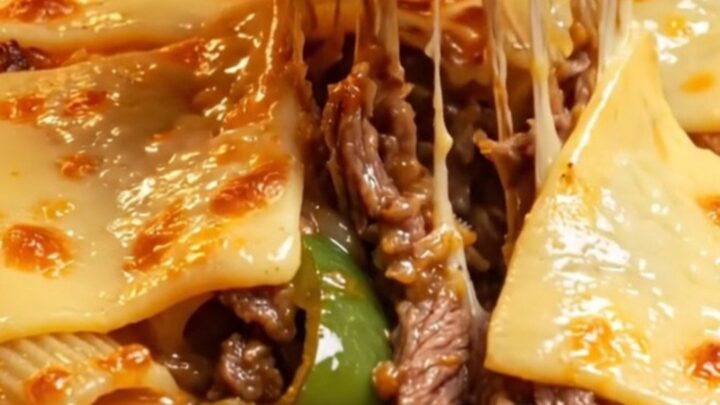
The cheese blanket should be completely melted with characteristic blistered, golden-brown patches across the surface. The edges of the pasta dish may be bubbling slightly, indicating that the heat has penetrated through the center. The aroma should be intensely savory and smoky. Once the cheese reaches this state, remove it from the heat immediately to prevent burning the top layer.
Common mistakes
Avoid overcooking the pasta during the boiling stage; it should be slightly firmer than al dente, as it will continue to cook slightly in the oven. Another common mistake is using too much cheese sauce, which can make the dish overly soupy; start with the recommended amount and adjust if necessary.
Finally, do not skip the resting period after broiling; allowing the dish to sit for 5 minutes helps the sauce thicken slightly, making it much easier to serve and ensuring a better texture in each portion.
How to tell it’s done
The dish is finished when the provolone cheese on top is fully melted, bubbling, and exhibits charred, golden-brown spots. The steak should be fully cooked, reaching a safe internal temperature of 145°F (63°C).
The rigatoni should be tender but still hold its shape. Since the pasta is pre-boiled and the meat is seared, the oven time is primarily to meld the flavors and brown the cheese, so keep a close eye on the broiler to avoid over-browning.
- Steaks, chops and roasts: 145°F (63°C) in the thickest part, then a 3-minute rest
Up next · Part 3 of 3
2 variations · storage & make-ahead · 3 answers · printable card
Tips, FAQ & printable recipe (Part 3)← Back to the ingredients (Part 1)