Dinner · Part 2 of 3: Instructions
Perfect Cast Iron Ribeye Steak with Herb Butter Step-by-step instructions
- Prep
- Cook
- Total
- Serves
- 2
Before you start
Before you turn on the stove, ensure all your ingredients and tools are fully prepped and within arm's reach. This is a fast-paced cooking process that requires your undivided attention.
Pat the steak thoroughly dry with paper towels, smash the garlic cloves, and measure out your butter and fresh herbs. Place your heavy cast iron skillet on the burner and have your tongs, spoon, and instant-read meat thermometer ready next to the stove.
Ingredients at a glance (5)
- 1 1/2 lb boneless ribeye steak, 1.5 inches thick
- 3 tbsp unsalted butter
- 4 cloves garlic, smashed
- 3 sprigs fresh thyme
- 2 sprigs fresh rosemary
Instructions
Preparation
- Prep the SteakPat the boneless ribeye steak completely dry with paper towels to ensure a perfect sear. Let the steak sit at room temperature for up to thirty minutes before cooking to ensure even heat penetration throughout the meat during the searing process.Look for The steak should feel completely dry to the touch before cooking.Tip Dry meat is essential for achieving a deep, caramelized crust.
At the end of this initial preparation phase, the boneless ribeye steak should be completely dry on all sides. The skillet should be sitting on the stove, cold but clean, with the butter and fresh herbs nearby. This careful preparation ensures that the meat is primed to develop a spectacular crust without any excess moisture interfering with the sear.
The High-Heat Sear
- Sear the Steak in Hot Cast IronHeat a 12-inch cast iron skillet over high heat until it is smoking hot. Carefully lay the dry steak into the hot skillet, laying it away from you to avoid any hot air splashes. Sear the steak without moving it for about two minutes, then flip and sear the other side to build a deep, dark crust.Look for A thick, dark brown crust should form on the bottom before flipping.Tip Use heavy tongs to press the steak down slightly for even contact with the pan.
By the end of the searing phase, the steak will have a dark, deeply caramelized, and slightly blistered crust on both flat sides. The kitchen will be quite smoky, and you will hear a loud, energetic sizzling sound from the skillet. The meat will still be quite firm to the touch but is now ready for the heat to be lowered and the aromatics to be introduced.
Butter Basting and Resting
- Butter Baste with HerbsReduce the heat to medium and add the unsalted butter, smashed cloves garlic, fresh thyme, and fresh rosemary to the skillet. Tilt the pan slightly and use a large spoon to rapidly and continuously ladle the foaming, melted butter over the top of the steak for two to three minutes.Look for The butter should foam up and turn a rich golden brown as it cooks.Tip Keep the herbs and garlic in the butter pool to infuse the fat with flavor.
- Check Temperature and RestInsert an instant-read thermometer into the thickest part of the meat to verify it reaches a safe internal temperature of 145°F (63°C). Once reached, transfer the steak to a warm cutting board and let the meat rest for at least 3 minutes to allow the juices to redistribute throughout the steak before slicing.Look for The thermometer must read at least 145°F (63°C) before removing from heat.Safe temperature 145°F (63°C) internal temperature (steaks, chops and roasts)Tip Never skip the resting period, or all the delicious juices will run out onto your board.
At the conclusion of the basting phase, the butter will have transformed into a foaming, golden-brown liquid smelling intensely of toasted garlic, rosemary, and thyme.
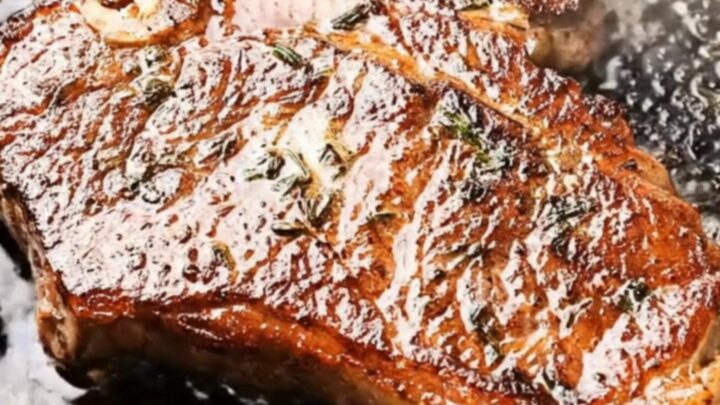
The steak will have a glossy, herb-flecked glaze. After checking that the internal temperature has reached a safe 145°F (63°C), the steak is placed on a cutting board to rest quietly for at least three minutes.
Common mistakes
The most common mistake is using a skillet that is not hot enough, which boils the steak in its own juices instead of searing it. Another frequent error is moving the steak around constantly in the pan; let it sit undisturbed to build a proper crust.
Lastly, adding the butter too early will cause the milk solids to burn and turn bitter under high heat, so always wait until the initial sear is complete.
How to tell it’s done
To guarantee both safety and perfect doneness, always use an instant-read meat thermometer inserted horizontally into the thickest part of the steak.
According to USDA guidelines, whole cuts of beef must reach a minimum internal temperature of 145°F (63°C) followed by a mandatory three-minute resting period. This resting time allows the muscle fibers to relax and reabsorb the hot juices, keeping the meat incredibly tender and succulent.
- Steaks, chops and roasts: 145°F (63°C) in the thickest part, then a 3-minute rest
Up next · Part 3 of 3
2 variations · storage & make-ahead · 3 answers · printable card
Tips, FAQ & printable recipe (Part 3)← Back to the ingredients (Part 1)