Dinner · Part 1 of 3: Ingredients
Pepper Jack Poblano Hominy Fiesta Chicken Crockpot
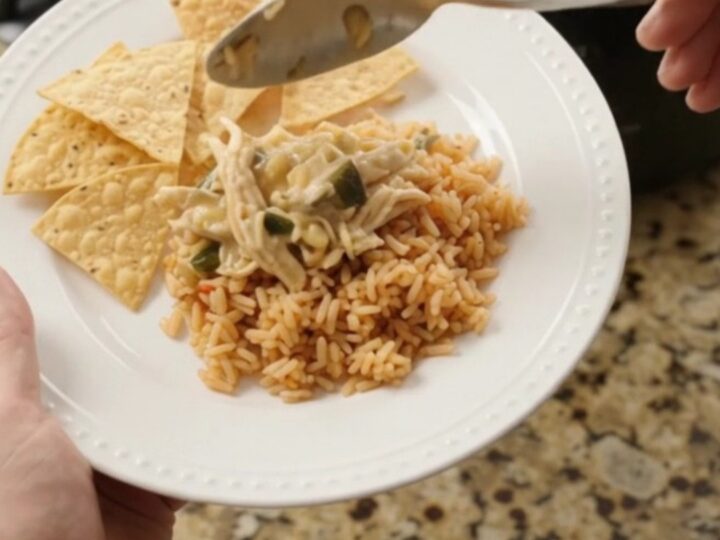
- Prep
- Cook
- Total
- Serves
- 6
This Crockpot fiesta chicken is the ultimate set-it-and-forget-it dinner. With just five simple ingredients, you can have a creamy, cheesy, and slightly spicy meal that tastes like you spent hours in the kitchen.
The combination of tender chicken, roasted poblano peppers, and plump hominy simmered in a rich pepper jack queso sauce is pure comfort food. Perfect for busy weeknights, this recipe requires minimal prep and delivers maximum flavor. Serve it with tortilla chips or over rice for a satisfying meal that everyone will love.
Slow cooker recipes are a lifesaver for busy cooks, and this one is a standout. The idea is simple: layer chicken breasts with roasted poblanos, hominy, and a duo of melted cheeses, then let the slow cooker work its magic.
The result is a luscious, creamy dish with a gentle heat from the pepper jack and roasted poblanos, balanced by the mild sweetness of hominy. This recipe is perfect for a weeknight dinner or a casual gathering, and it’s sure to become a family favorite. Just dump everything in, walk away, and come back to a bubbling pot of deliciousness.
Ingredients
- 3 boneless skinless chicken breasts
- 1 cup diced roasted poblano peppers
- 1 can (15 oz) white hominy, drained
- 1 cup white queso blanco dip
- 1/2 cup shredded pepper jack cheese
Why this recipe works
Slow cooking chicken breasts at a low temperature keeps them incredibly moist and tender, allowing them to shred effortlessly.
The creamy queso and pepper jack create a rich, velvety sauce that clings to every bite, while the roasted poblanos add a smoky depth and the hominy provides a pleasant chew. This method ensures the flavors meld together beautifully without any fuss.
The dump-and-go nature of this recipe means there’s minimal hands-on time. By layering the ingredients rather than stirring, the chicken stays in contact with the sauce as it cooks, resulting in a cohesive dish.
The cheese melts into the sauce, creating a luscious texture that is both satisfying and comforting. This is a foolproof way to get a restaurant-quality meal with almost no effort.
Notes and substitutions
For the best flavor, use a high-quality white queso blanco dip that melts smoothly. Avoid aged cheeses like sharp cheddar, which can become grainy when melted in a slow cooker. Roasted poblano peppers add a mild, smoky heat; you can find them canned or roast fresh poblanos at home. White hominy is traditional, but yellow hominy works just as well.
This recipe is very forgiving. If you prefer more heat, add a diced jalapeño or a pinch of cayenne. You can also swap the chicken breasts for boneless thighs, which will be even more forgiving and flavorful. For a thicker sauce, remove the lid during the last 30 minutes of cooking to let some moisture evaporate. The leftovers are fantastic in tacos, burritos, or over nachos.
- white queso blanco dip: Use a jarred queso or a homemade white cheese sauce. Avoid aged cheddar, which can turn grainy.
- pepper jack cheese: Use Monterey Jack with a pinch of cayenne or a few dashes of hot sauce for a similar kick.
- roasted poblano peppers: Use a can of diced green chiles (drained) for a milder heat, or roasted bell peppers for no heat.
- white hominy: Yellow hominy works too, or substitute with drained canned corn for a different texture.
Equipment
- 6-quart slow cooker
- Cutting board
- Chef's knife
- Measuring cups
- Can opener
- Serving spoon
Up next · Part 2 of 3
5 steps · 4 h of cooking · what to look for at each stage
Step-by-step instructions (Part 2)