Desserts · Part 2 of 3: Instructions
Peanut Butter Caramel Crunch Dark Chocolate Fudge Bars Step-by-step instructions
- Prep
- Cook
- Total
- Serves
- 16
Before you start
Gather every ingredient and tool before you start, because the chocolate has to be spread while it is still glossy and soft. Chop the roasted peanuts and set half aside for pressing on top. Slice the banana thin and crush the crunchy cereal lightly by hand. Grate the dark chocolate bar over a box grater and keep the shavings in a bowl.
Line the metal baking tray with parchment paper so it covers the bottom and rises up the sides. Warm the caramel sauce gently so it drizzles in thin lines. Set a long knife, a clean cloth and the cutting board close to the tray. Working in this order keeps the chocolate in its window of workability, which is the single most important factor in a clean, glossy slab.
Ingredients at a glance (7)
- 8 oz dark chocolate bar, grated and melted
- 1/2 cup roasted peanuts, divided, chopped
- 1/2 cup caramel candy pieces, plus warm caramel sauce for drizzling
- 1/4 cup store-bought or made ahead caramel sauce, warmed
- 1 banana, sliced thin
- 1/2 cup crunchy cereal pieces
- chocolate crumbs for dusting, optional
Instructions
Build the chocolate base
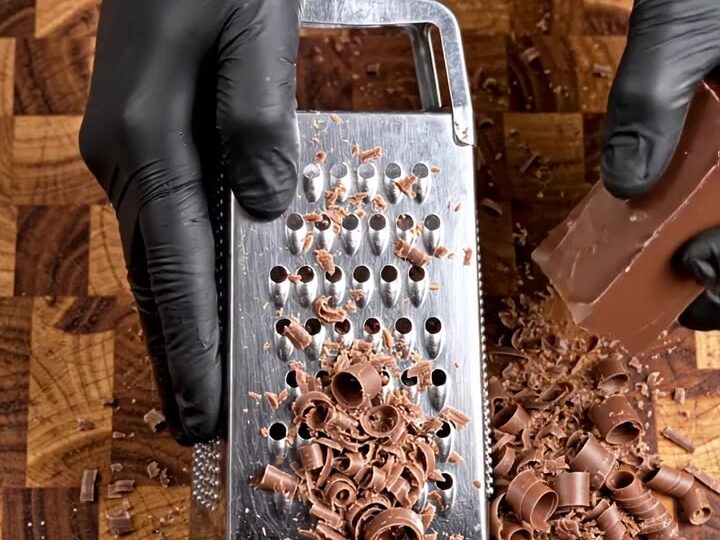
- Prepare the chocolate and toppingsChop the roasted peanuts with a chef's knife and set half aside for pressing on top. Slice the banana thin and crush the cereal pieces lightly. Grate the dark chocolate bar over a box grater so fine shavings and curls pile up on the board.Look for Fine chocolate shavings and curls collect on the board, and the peanuts are chopped in even pieces.Tip Chill the chocolate bar for ten minutes before grating so the shavings stay neat and do not smear.
The grated chocolate has melted into a smooth, glossy layer that spreads evenly across the parchment. Check that it covers the tray edge to edge without thin patches or streaks, and that no lumps of unmelted shavings remain. The surface should look shiny and feel slightly thick when you tilt the tray.
If it looks dull or grainy, warm it again in short bursts and stir until it is smooth before moving on to the toppings. Do not add the caramel until the base looks uniform, because uneven chocolate will show through the finished bars and make the slices less tidy.
Add caramel, peanuts and crunch
- Build the glossy chocolate baseLine a metal baking tray with parchment paper. Melt the grated chocolate gently until smooth, then spread the shavings and melted chocolate evenly into the tray to form a thick, glossy base layer.Look for The chocolate spreads smooth and shines evenly across the parchment.Tip Heat the chocolate in short bursts and stir between them so it does not scorch or seize.
- Add the caramel lattice and crunchWarm the caramel sauce until pourable. Drizzle it in lattice lines across the melted chocolate, then scatter the caramel candy pieces, banana slices and cereal. Press the reserved chopped peanuts over the top so they sink slightly into the surface.Look for Caramel lines stay visible on the glossy chocolate, and the peanuts sit partly embedded.Tip Warm the caramel for a few seconds only so it drizzles thinly without melting the chocolate.
The caramel lines sit visibly on top of the glossy chocolate, with the candy pieces, banana slices and cereal scattered evenly across the surface. Look for the reserved peanuts pressed slightly into the chocolate so they stay anchored when it sets. The caramel should be thin and pourable, not thick or clumped, and the banana should lie flat without sliding. Before you move on, make sure no area is left bare or overloaded with toppings, because this is the last chance to rearrange them while the chocolate is still soft enough to hold them in place.
Set and slice the fudge
- Set and slice the fudgeLeave the tray at room temperature until the chocolate looks firm and glossy with no soft or runny spots. Lift the parchment, then slice the cooled slab with a long knife into neat rectangular bars.Look for The surface looks firm and glossy, and a knife cuts through without dragging.Tip Wipe the knife between cuts with a warm, dry cloth for the cleanest edges.
- Plate and dust the barsArrange the bars on a board or plate so they show the dense dark chocolate interior. Dust them lightly with chocolate crumbs just before serving.Look for Bars stand neatly with the cut sides visible and a light dusting on top.Tip Dust only at serving so the crumbs stay crisp and do not darken.
The fudge is ready to cut when the chocolate looks firm and glossy across the whole surface, with no soft, tacky or runny spots. Press a corner gently with a clean finger to confirm it feels set and does not dent. The caramel should look fully firm and the peanuts should stay locked in. Wipe the knife between cuts for the neatest edges, and cut straight down with a long, steady stroke. If any area still feels soft, return the tray to a cool spot and wait before slicing, since cutting too early drags the toppings out of place.
Common mistakes
The most common mistake is working with chocolate that is too cold or too hot. If the chocolate cools before you spread it, the base turns thick and streaky, and the bars will look dull. If it is overheated, it can seize and turn grainy, which ruins the glossy finish. Another frequent error is drizzling caramel that is too hot, which can melt into the chocolate and disappear rather than forming visible lattice lines.
Overloading the top with peanuts or cereal also causes trouble, because the excess does not sink into the surface and can fall off when you slice. Finally, cutting before the slab is fully set drags the toppings and leaves ragged edges. Keep the tray in a cool spot, check each stage, and slice only once the surface is firm and glossy.
How to tell it’s done
The fudge is done when the chocolate looks firm and glossy across the entire tray with no soft, tacky or runny spots. Press a corner gently; it should feel set and spring back slightly without leaving a dent. The caramel lines should look firm and the peanuts should stay embedded.
Because this recipe has no meat, poultry, fish, shellfish or eggs, there is no safe internal temperature to reach. Slice a test piece first: the cut should be clean, with a dense dark chocolate interior and the toppings holding in place. If the slab still looks soft or shiny in a way that suggests wetness, give it more time at a cool room temperature before cutting.
Up next · Part 3 of 3
4 variations · storage & make-ahead · 5 answers · printable card
Tips, FAQ & printable recipe (Part 3)← Back to the ingredients (Part 1)